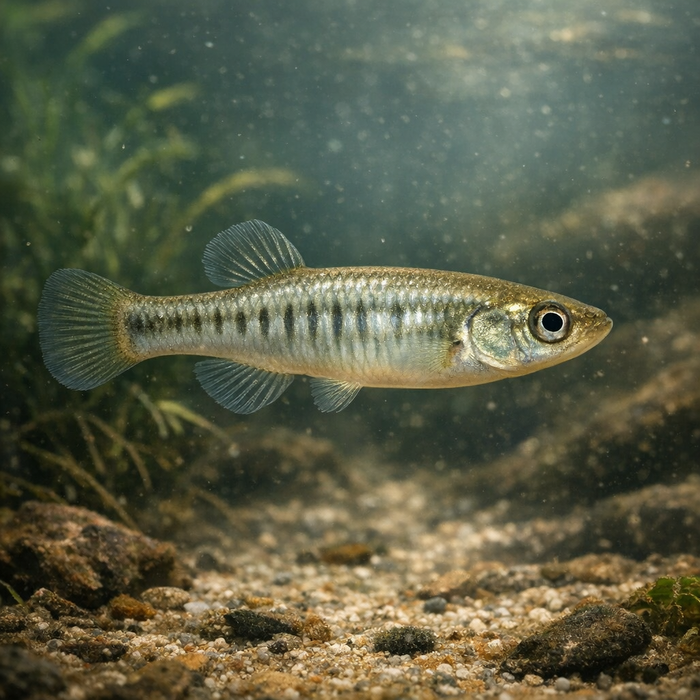
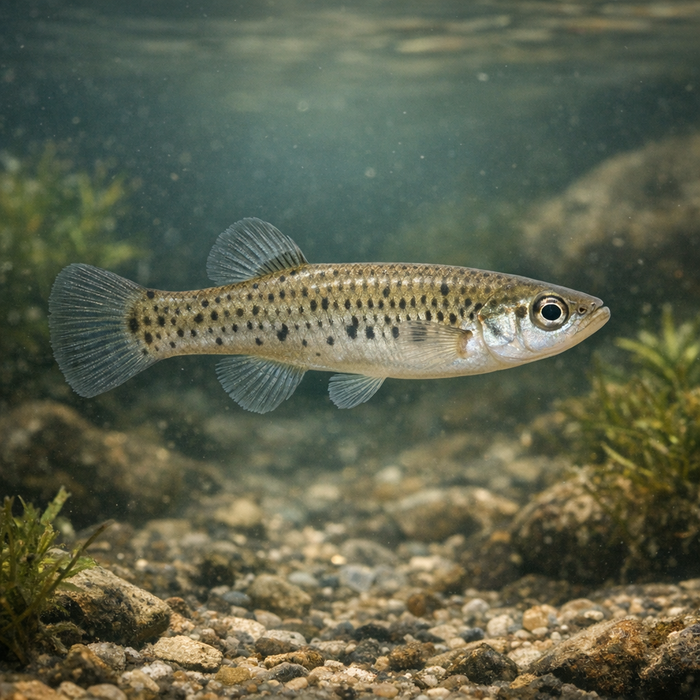
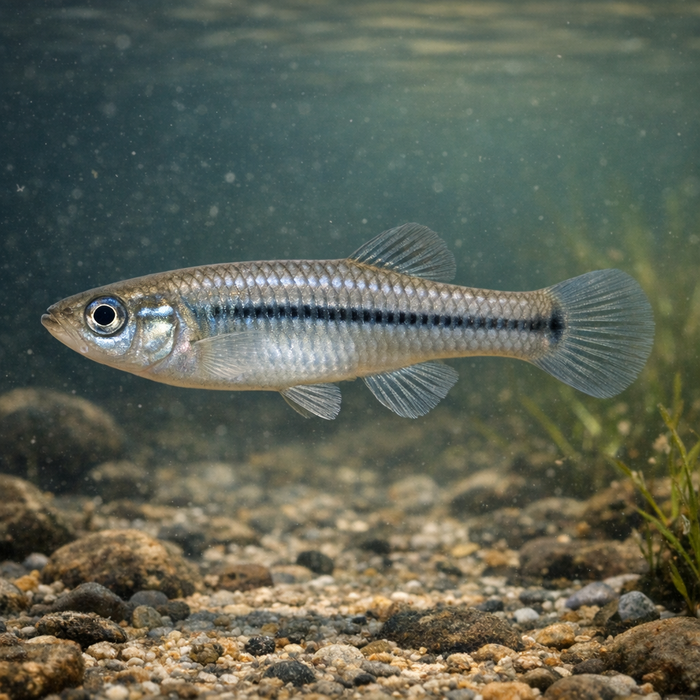
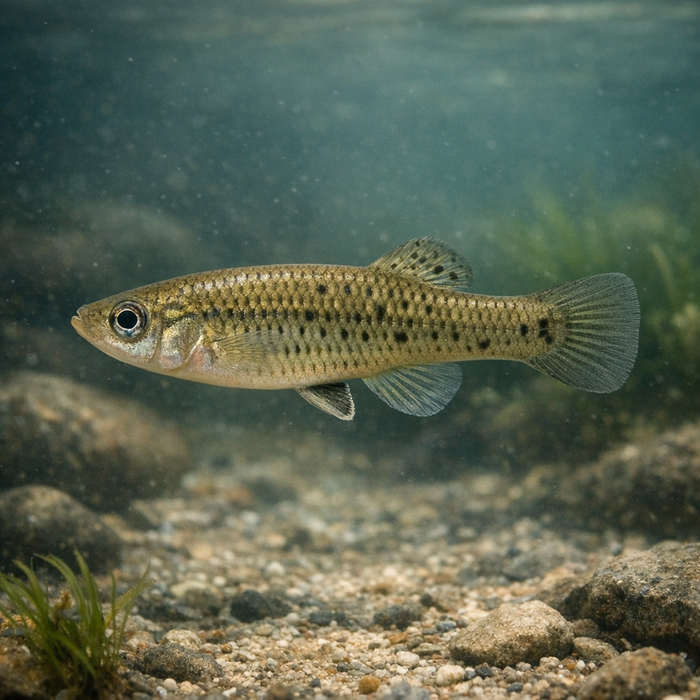
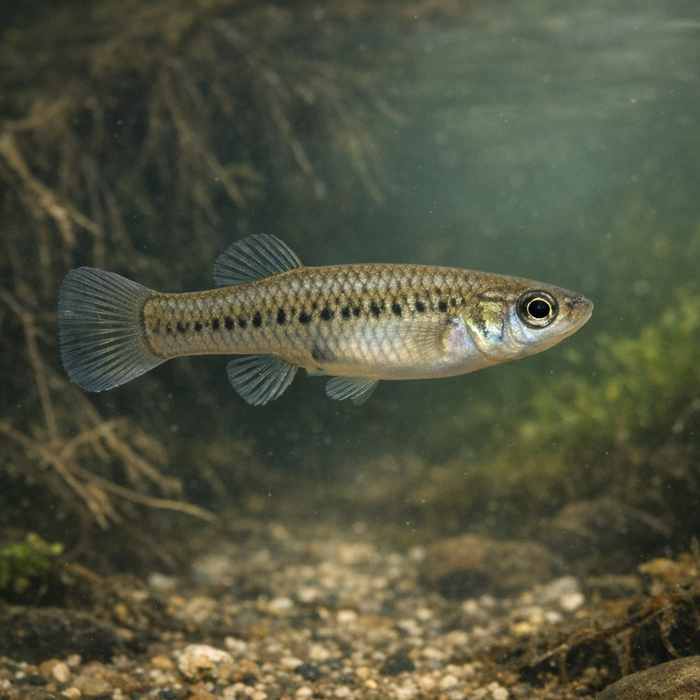
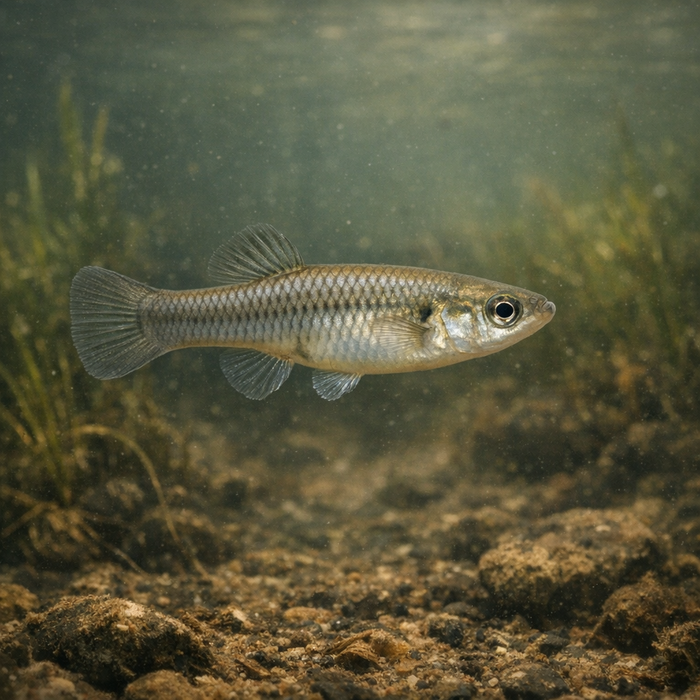
Blotched Gambusia (Gambusia senilis): A Bold, Memorable Hook LineIntroductionThe blotched gambusia is proof that tiny doesn't mean boring. This pocket-sized livebearer packs attitude, swagger, and some eye-grabbing ink-blot patterning that looks hand-painted. If you're into microfishing or just appreciate desert-spring survivors, this little predator punches way above its weight.What Makes the Blotched gambusia Unique?Two things: the blotches and the birthing. Those bold, irregular patches aren't just decoration; they pop even more during courtship or when fish are stressed, making the species instantly recognizable to anyone scanning the shallows. And unlike most fish, the blotched gambusia is a livebearer. Females carry developing young and drop fully formed fry that start hunting within hours. It's like a factory reset button for population booms when conditions line up.Habitat & Global RangeIf you're chasing Blotched gambusia habitat intel, think warm, clear, spring-fed creeks and quiet margins of slow rivers. Vegetation is the stage: filamentous algae, pondweed, and reed edges where these fish thread the needles between shadows and sun. They're linked to the Rio Grande basin and neighboring drainages in northern Mexico and the Texas borderlands. These are places where water quality and flow can swing wildly, so the fish's tolerance for mild salinity, fluctuating oxygen, and temperature jumps is a winning trait. In short, classic blotched gambusia habitat isn't wide-open water; it's ankle-deep real estate teeming with tiny prey and protective cover.Behavior & TemperamentFor such a small fish, the blotched gambusia has serious hustle. Schools move like spilled pepper, flicking through grass with quick starts and stops. Males joust with fin-flicks and darting feints, then dash in with a specialized fin to seal the deal. Surface feeding is common, especially during calm, warm periods when mosquito larvae and other morsels concentrate up top. They're opportunistic, they're quick, and they won't hesitate to mug anything bite-sized that blunders into the strike zone. Don't expect long runs or brawls if you're microfishing them; the game is precision, stealth, and a steady hand.Ecological ImportanceThe blotched gambusia is a small fish with an outsized job. By hoovering up insect larvae, it throttles mosquito populations and funnels energy from the surface film down the food chain. Those swarms of fry are both hunters and hunted, powering up wading birds, bigger fish, and dragonflies. Because it's a livebearer with multiple broods possible, the species can rebound quickly after small setbacks, stabilizing shallow-vegetation communities when conditions cooperate. That resilience makes it a bellwether for spring-run health and a quiet MVP in desert-edge ecosystems.Conservation & Environmental PressuresDesert-spring fish live at the mercy of water. Pump too hard, dam thoughtlessly, or trash riparian cover and you'll see declines. Add nonnative predators or competitor poeciliids and the squeeze tightens. While conservation status can vary by authority and location, the pressures are familiar: groundwater depletion, channelization, invasive species, and pollution. Good news: small-scale habitat fixes pay big dividends. Preserve spring flow, protect vegetated margins, and keep cattle off fragile banks, and blotched gambusia respond quickly. They're scrappy, not invincible.The FishyAF TakeThe blotched gambusia is microfishing catnip. It's got style, it's got speed, and it loves the kind of shallow, glassy water where you can actually sight-fish with a thimble of tackle. If you want a fish that teaches stealth, precision, and respect for tiny ecosystems, this is it. Learn the current seams in a trickle, lay a pinhead bait under a pea-sized float, and watch the school argue over it. For anglers who geek out on details, these fish deliver a masterclass. Call it tiny but mighty, with plenty of personality to spare. If you're collecting Blotched gambusia facts or scouting a new blotched gambusia habitat, you're in for a surprisingly addictive hunt.