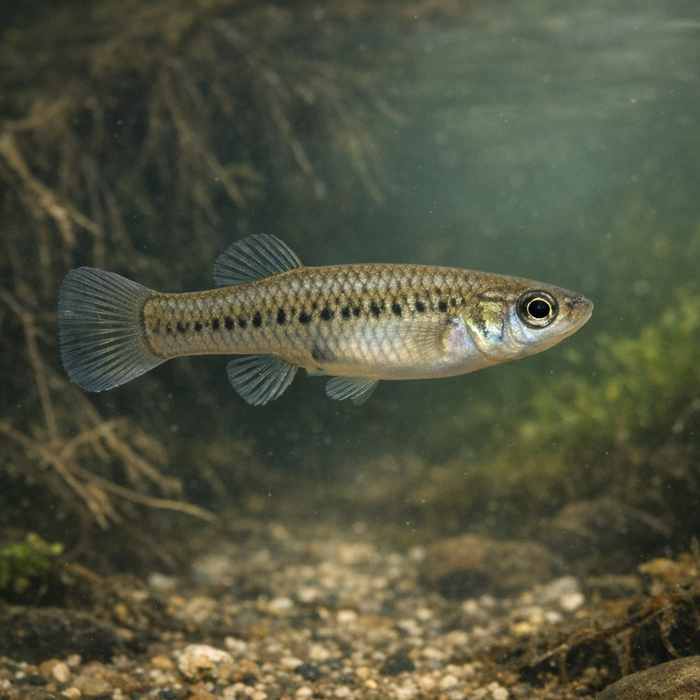
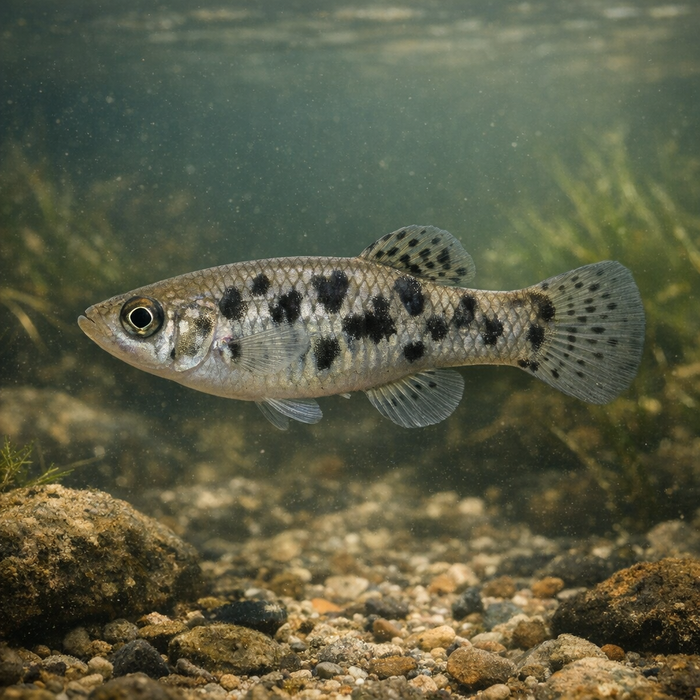
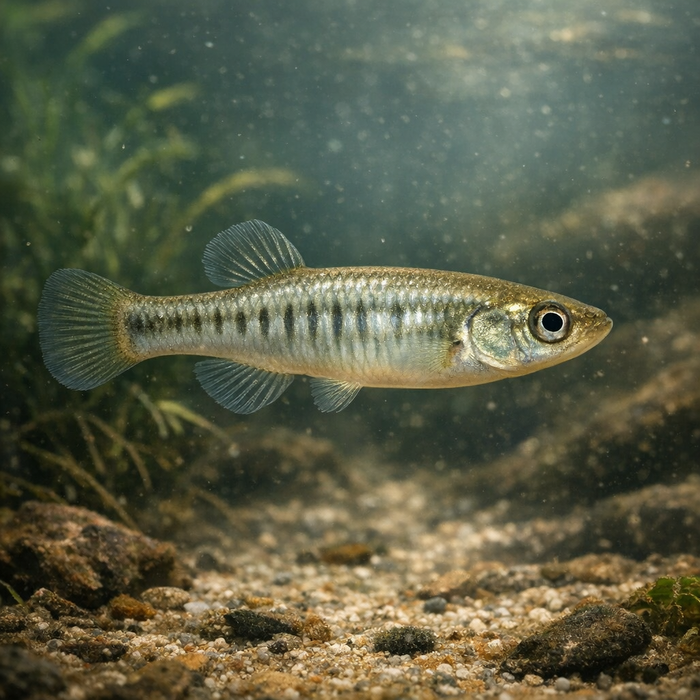
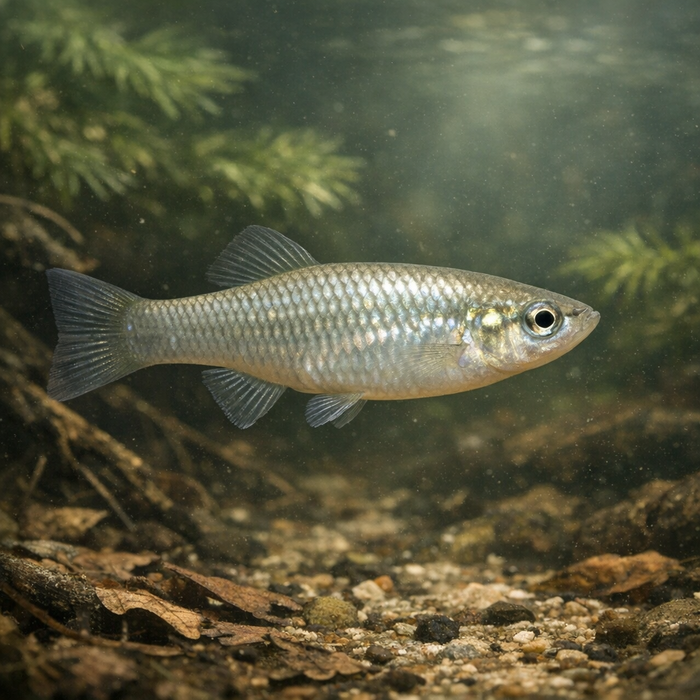
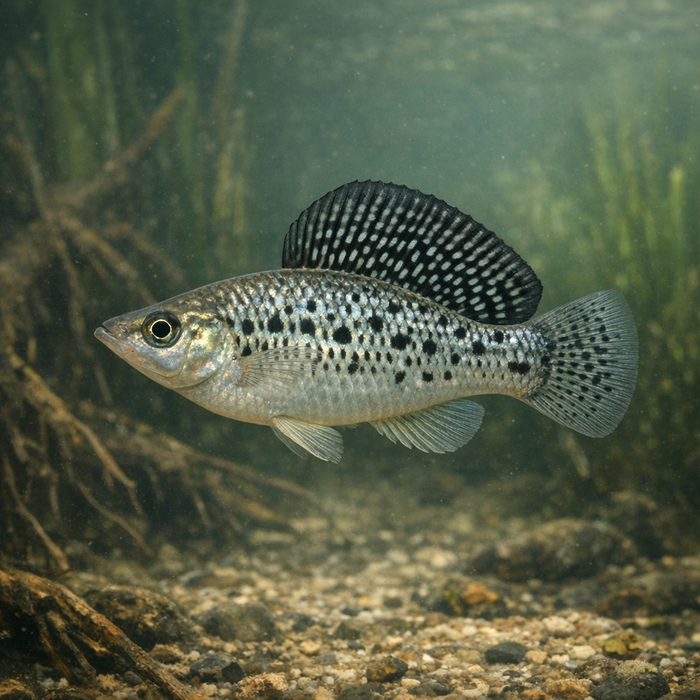
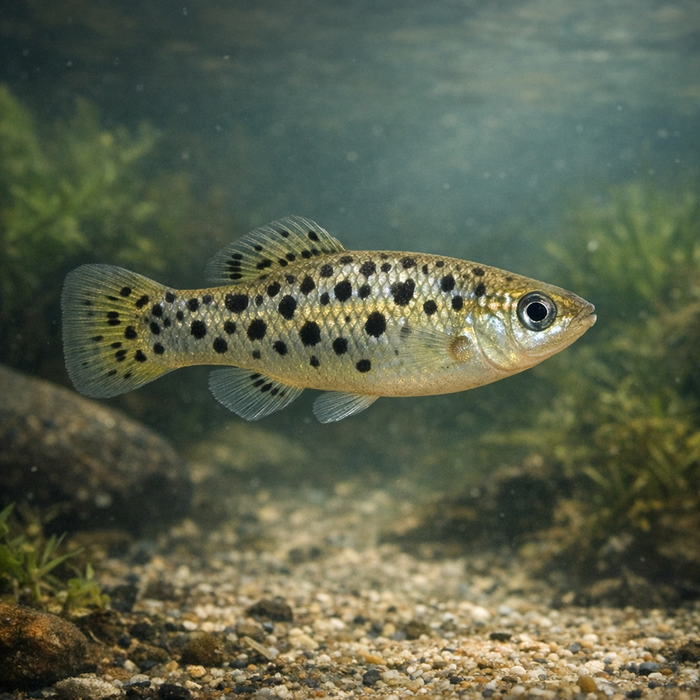
Mosquitofish (Gambusia affinis): The backyard assassin that turned mosquito larvae into a full-time job.IntroductionThe mosquitofish is the tiny, scrappy livebearer that patrols ditches, farm ponds, and culverts like it owns them. It's not a poster child for record books, but it might be the most widely encountered fish you've never actually tried to catch. Anglers bump into mosquitofish while chasing bass or bluegill, then watch these micro rockets zip along the surface, vacuuming bugs and larvae. If you're into microfishing or just love weird fisheries trivia, this bite-sized predator offers an outsized dose of Mosquitofish facts.What Makes the Mosquitofish Unique?Two things: livebearing and extreme hardiness. Unlike egg-scattering minnows, Gambusia affinis gives birth to free-swimming young, and females can store sperm to produce multiple broods over months. That's population insurance. Then there's toughness. Mosquitofish shrug off heat, cold snaps, and murky, low-oxygen water that would sideline pickier species. They're also boldly surface-oriented and aggressive fin-nippers, often harassing fish far larger than themselves. The combination of livebearing, rapid maturity, and feisty temperament makes this little fish a freshwater cockroach in the best possible sense for survival.Habitat & Global RangeAsk about Mosquitofish habitat and you'll hear the same theme: shallow, warm, quiet water with lush edges. Think road ditches, cattle tanks, golf course ponds, lagoon shallows, and slow backwaters of rivers. They're native to parts of the central and southern United States but were shipped all over the world in misguided mosquito-control programs. Today, you'll encounter them globally in freshwater and brackish spots, sometimes even flirting with near-seawater salinity. Structure-wise, they hug vegetation mats, cattails, and culvert mouths, where current is weak and food stacks up at the surface.Behavior & TemperamentFor something so small, mosquitofish bring attitude. They cruise in loose groups, darting up to snatch anything edible. Surface feeding is their game, and warmth flips the feeding switch from idle to nonstop. Males are smaller and hyper, armed with a gonopodium for reproduction, while larger females carry the real biomass and drive much of the visible action. They spook from fast shadows but generally return within seconds, especially around cover. If you need a first fish for a kid or a microfishing trophy for yourself, their willingness to bite tiny baits is legendary.Ecological ImportanceThe name says it all: mosquitofish eat mosquito larvae. That diet has value, particularly in small, stagnant waters where larvae bloom. But stocking gambusia turned messy in many places. They outcompete native minnows and hammer tadpoles via fin-nipping and relentless harassment. As a result, they're considered an invasive or nuisance species in parts of the world. Like most ecological stories, it's complicated. They're effective bug-munchers in some confined settings, yet ecological bullies where delicate native communities live on thin margins.Conservation & Environmental PressuresAs a species, Gambusia affinis sits comfortably at Least Concern. The threats run the other direction: mosquitofish are the threat in some ecosystems. Still, local water quality issues matter. Polluted ditches can load them with contaminants, and severe drought can shrink habitat to puddles. Fortunately for them, they're built for hard times. As long as there are weedy margins, a bit of warmth, and a trickle of food, they persist.The FishyAF TakeThe mosquitofish is the micro apex of your backyard puddle. It's not glamorous, it won't smoke your drag, and nobody's framing a hero shot with one fish in two hands. But as a teaching tool for presentation and finesse, it's gold. Tiny hooks, tiny baits, exacting drifts in six inches of water: that's a high-wire act on pocket tackle. If you want to understand fish behavior up close, few species make the lessons more visible than mosquitofish. Call it humble, call it invasive in places, but don't call it boring. This little livebearer is pure, unfiltered fish behavior you can watch from your sneakers.