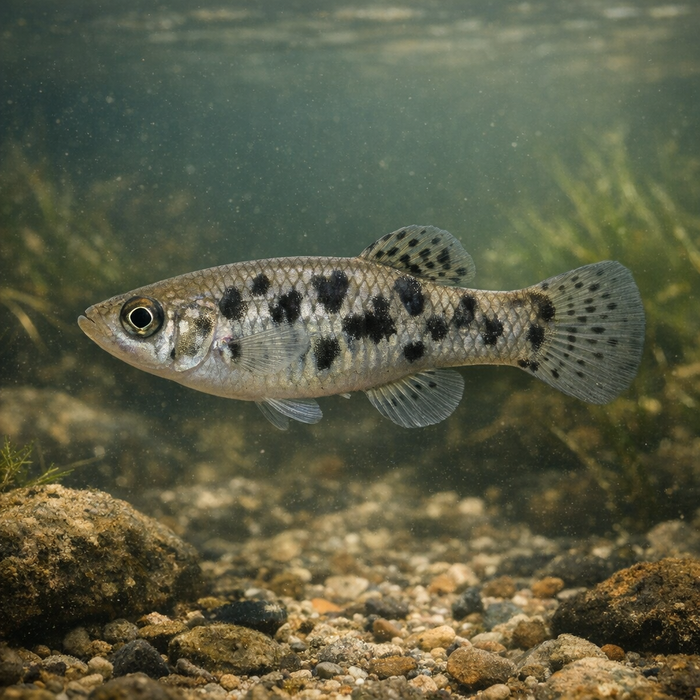
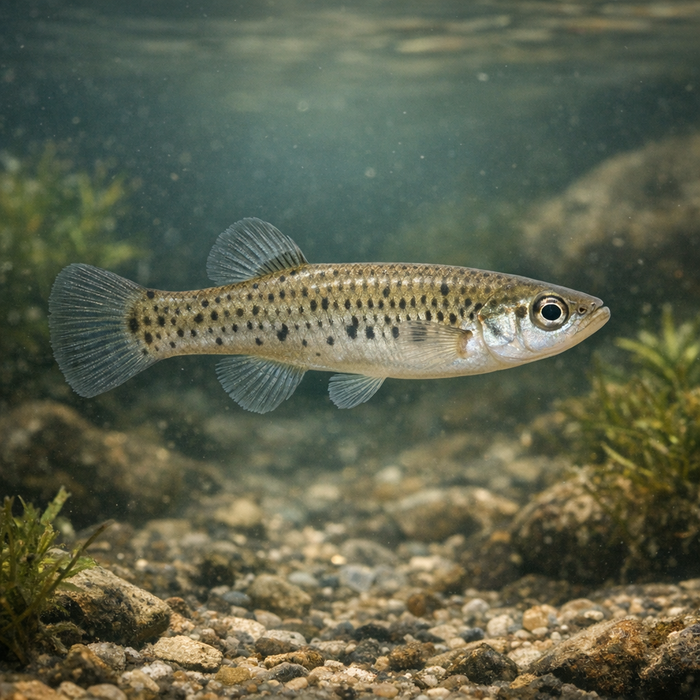
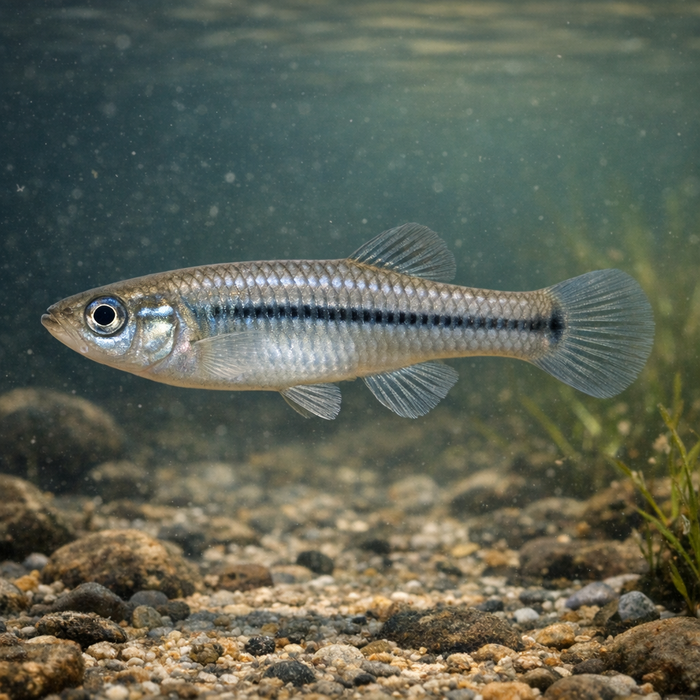
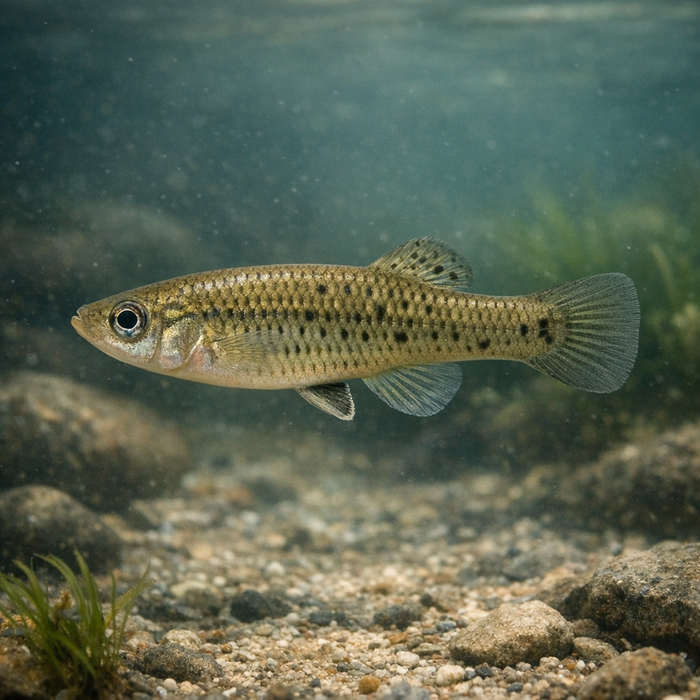
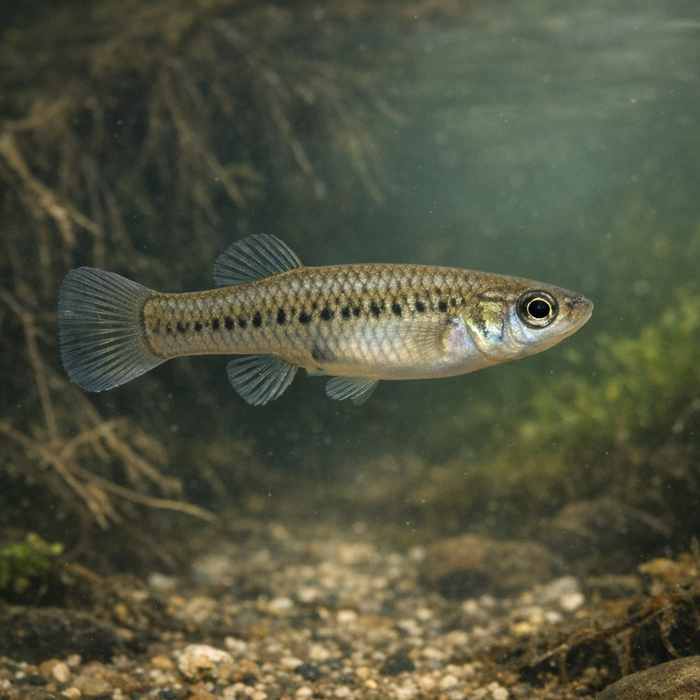
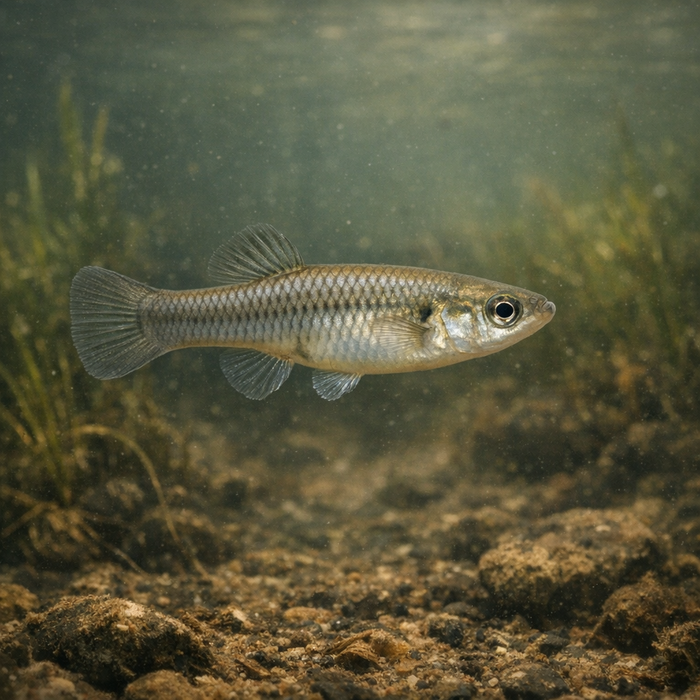
Gila topminnow (Poeciliopsis occidentalis): Desert Livebearer With Serious Survivor CredIntroductionMeet the Gila topminnow, a pocket-sized desert specialist that thrives where most fish cry uncle. This livebearing guppy cousin hangs right at the surface, sipping oxygen from warm, slow water and smashing tiny bugs with lightning snaps. It's tough, scrappy, and incredibly important to the Southwest's aquatic story. If you're here for Gila topminnow facts or trying to understand Gila topminnow habitat, you're in the right place.What Makes the Gila topminnow Unique?Two things: livebearing grit and thermal tolerance. Like guppies, females birth fully formed fry rather than laying eggs. That jump-starts survival in unstable desert waters. They also handle temperatures that would roast most fish, shrugging off water in the high 90s Fahrenheit. Add in the male's gonopodium, a specialized fin for mating, and you've got a fish built for fast life cycles and faster recoveries after drought. The Gila topminnow's entire game is speed: mature quickly, reproduce often, and use the surface film to breathe where oxygen runs thin.Habitat & Global RangeThe Gila topminnow is a Southwest original, historically widespread across the Gila River basin and nearby desert drainages from Arizona into northern Sonora. Today, it survives in a patchwork of springs, cienegas, backwaters, and restored creek reaches with gentle flow and thick edge vegetation. Think shallow, sun-warmed margins just inches deep, with mats of algae, grasses, and root tangles. Seasonal flashiness is common: water expands and contracts dramatically, so the fish ride out booms and busts by tucking into refuges and rebounding when conditions improve. Translocated populations now anchor recovery in protected sites where habitat still behaves like it used to.Behavior & TemperamentGila topminnows cruise the top few inches like little patrol boats. They snack on surface insects, skim oxygen, and dart for cover at any shadow spook. Courtship is quick and close-quarters, with males shimmying and sprinting short distances. Schooling is loose; fish cluster where food and warmth concentrate. Don't expect knuckle-busting fights here. If an angler accidentally hooks one while microfishing, the "battle" is a brief quiver on 2-pound line. What's interesting is their rhythm: steady daylight feeders with heightened activity when the surface slick is calm and warm.Ecological ImportanceThis species punches way above its weight. It recycles nutrients, controls insect populations, and serves as prey for native predators in healthy systems. In a desert, every link counts. The Gila topminnow also acts as a bioindicator for rare habitats like cienegas and stable springs. If topminnows are thriving, odds are the water table, riparian plants, and invertebrate communities are doing OK too. Lose the fish, and you're probably losing a whole desert wetland story.Conservation & Environmental PressuresThe big villain isn't just drought; it's competition and harassment from introduced mosquitofish. Mosquitofish out-breed, fin-clip, and bully topminnows, especially in tight quarters. Habitat loss and groundwater declines hit hard as well. That's why the Gila topminnow is listed as endangered in much of its U.S. range and managed through reintroductions, refuge populations, and careful water management. Recovery is real in some reaches, but it's fragile. One bad water year or an invasive surge can flip a win into a wipeout.The FishyAF TakeThe Gila topminnow is a desert original worth more than its grams of mass. It's a masterclass in survival biology: reproduce fast, hug the warm lane, and make a living from the thinnest sliver of habitat. As an angler, treat it like a tiny national treasure. If you're microfishing nearby and see them, admire, learn, and move along. The trophy here isn't length or weight; it's watching a native fish hold ground against a stacked deck. The Gila topminnow proves small doesn't mean fragile, and a few inches can still carry a whole ecosystem on their fins.