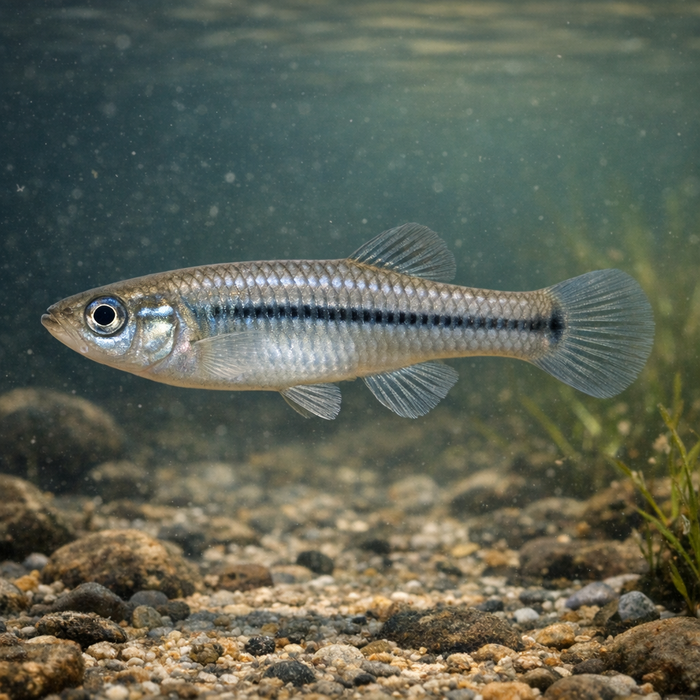
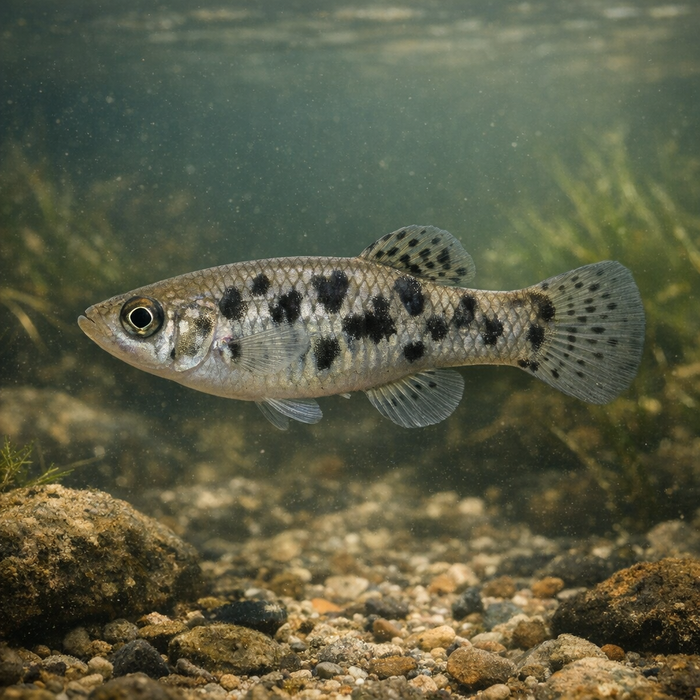
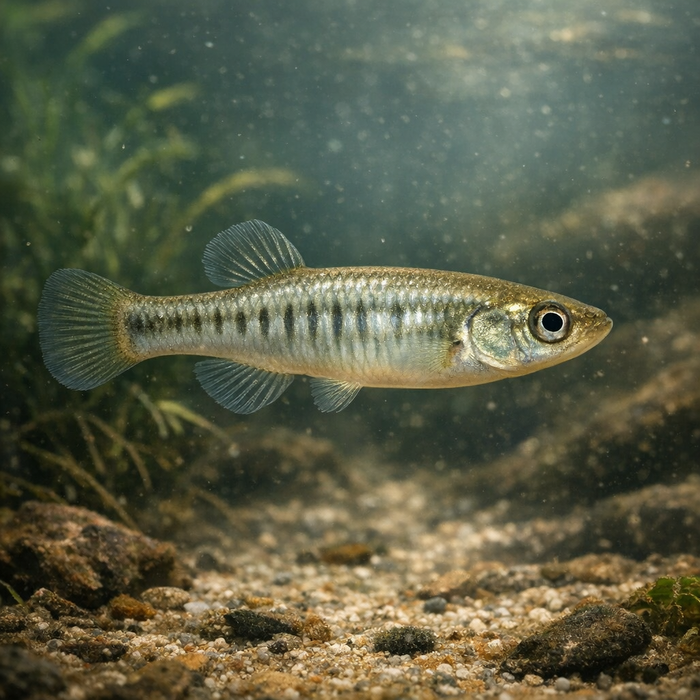
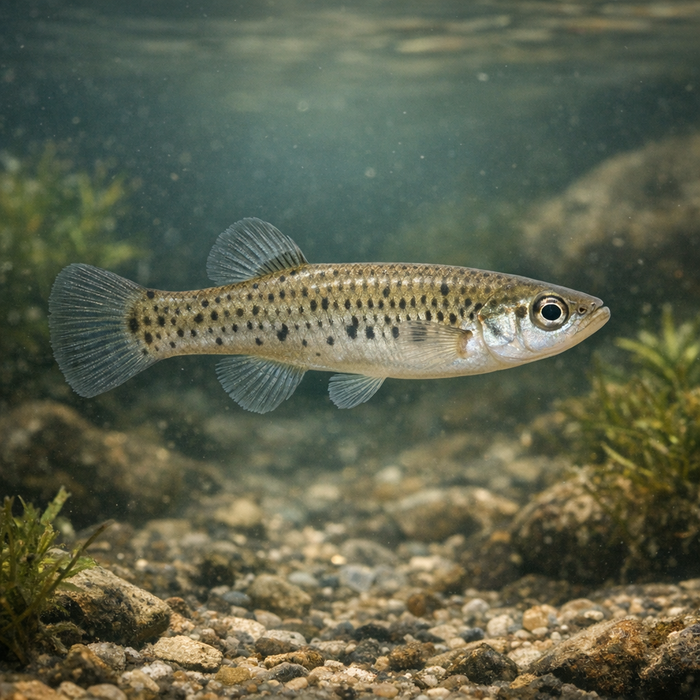
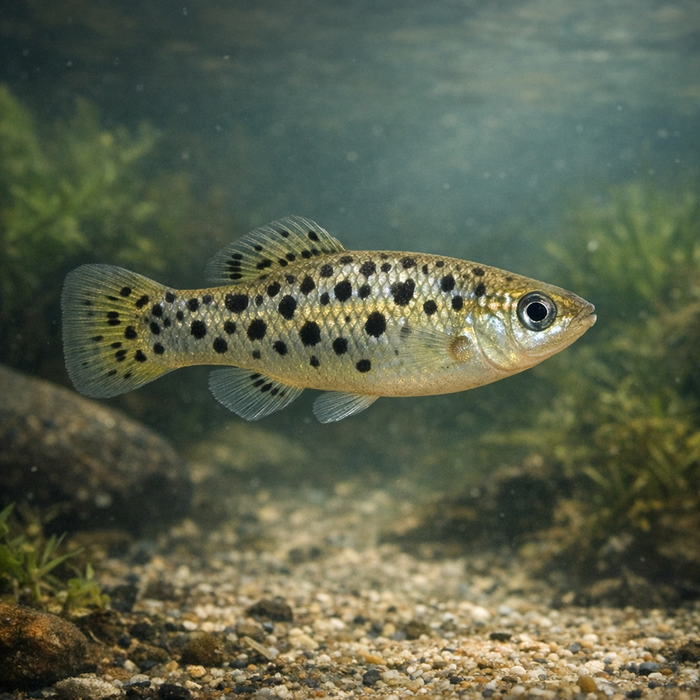
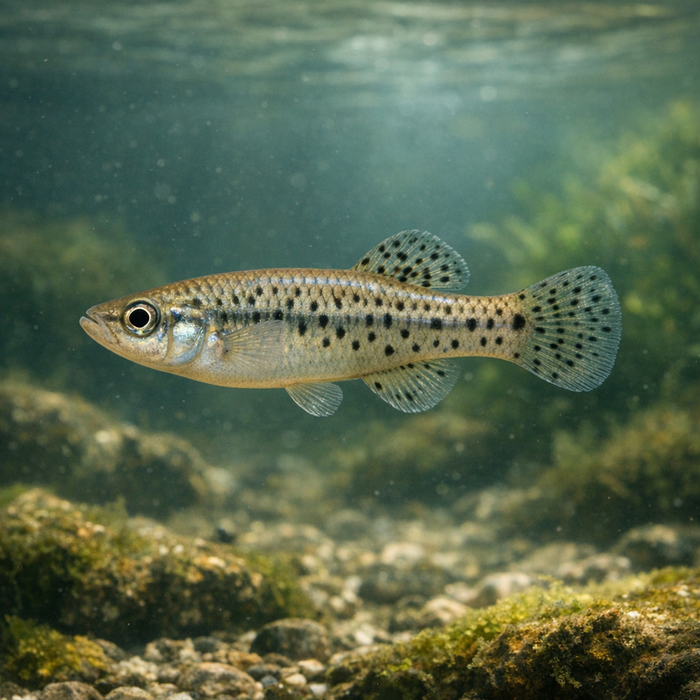
Pecos Gambusia (Gambusia nobilis): A desert livebearer with more grit than a West Texas windstormIntroductionThe Pecos gambusia is a palm-sized rebel built for hot, mineral-rich springs in the Chihuahuan Desert. It doesn't jump, it won't spool you, and it's never going to headline a tournament. But if you're into rare fish with ridiculous survival stories, this one delivers. Tiny, tough, and teetering on the conservation edge, the Pecos gambusia is the warm-spring specialist you didn't know you needed to respect.What Makes the Pecos gambusia Unique?Start with livebearing. Females carry developing embryos and can even hold multiple broods at different stages, a party trick called superfetation. Males wield a modified anal fin, the gonopodium, to deliver the goods with surgical precision. Then there's the habitat quirk: constant-temperature artesian springs that run warm year-round. In those conditions, Pecos gambusia often breed across much of the calendar. Finally, this fish has a conservation plot twist. Its biggest threat isn't some toothy predator; it's hybridization with the common western mosquitofish. Keeping Gambusia nobilis genetically pure is a full-time job.Habitat & Global RangeThis is a desert spring diehard. Think clear, shallow, plant-choked channels, outflows, and small pools where flow is steady and temperatures hover around the seventies. The species is native to springs and spring runs tied to the Pecos River basin, with famous strongholds at Balmorhea's San Solomon Springs and a web of nearby sources. That's the entire vibe of Pecos gambusia habitat: stable flows, warm water, and dense cover. If you're here for Pecos gambusia facts, anchor on this one: their world is tiny. Lose a spring, lose a population.Behavior & TemperamentPecos gambusia aren't roamers. They hold tight to vegetation, pick at tiny invertebrates, and dart like static on a screen. In glass-clear water, they're wary but not spooky in the bonefish sense; they're just small, so everything can eat them. Shoaling is common, and feeding is opportunistic with long windows because conditions barely budge. Don't expect fireworks if one nips a micro fly. The entire fight is three inches of attitude and a half-second of splash.Ecological ImportanceFor something so small, they move the needle. They pressure insect larvae, recycle nutrients, and feed up the chain. In warm spring complexes, Pecos gambusia can be the primary planktivore-invertivore link, stabilizing energy transfer in systems that don't get much outside input. Their persistence signals intact flow, right salinity, and balanced vegetation, which is why biologists obsess over them. Lose the fish and you're probably losing the spring.Conservation & Environmental PressuresEndangered status isn't window dressing here. Depleted aquifers, spring dewatering, and channel alterations are existential threats. Add nonnative gambusia and you've got hybrid swarms that erase the species on a genetic level. Agencies and partners run refuge canals, propagate backup stocks, and sometimes literally hand-carry fish when a spring burps and dies. Stable flows, biosecurity, and habitat buffers are the lifelines. If you've wondered about Pecos gambusia habitat, it's not just water and plants; it's flow continuity and isolation from invaders.The FishyAF TakeYou don't chase Pecos gambusia for hero shots. You respect them for surviving in a postage-stamp world where one broken well or one stray bucket of mosquitofish can nuke a lineage. From an angling lens, they're microfishing curios at best, and usually off-limits. From a fish-nerd lens, they're a masterclass in adaptation: livebearing in warm, steady water with year-round hustle. If you ever peer into a desert spring and see tiny tan rockets flicking through eelgrass, tip your hat and keep your hooks pocketed. Some fish are meant to be counted, not caught.