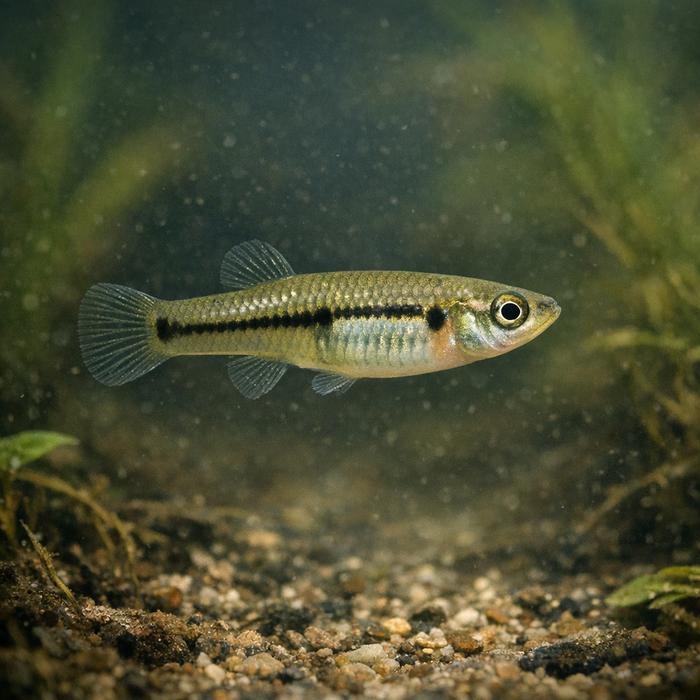
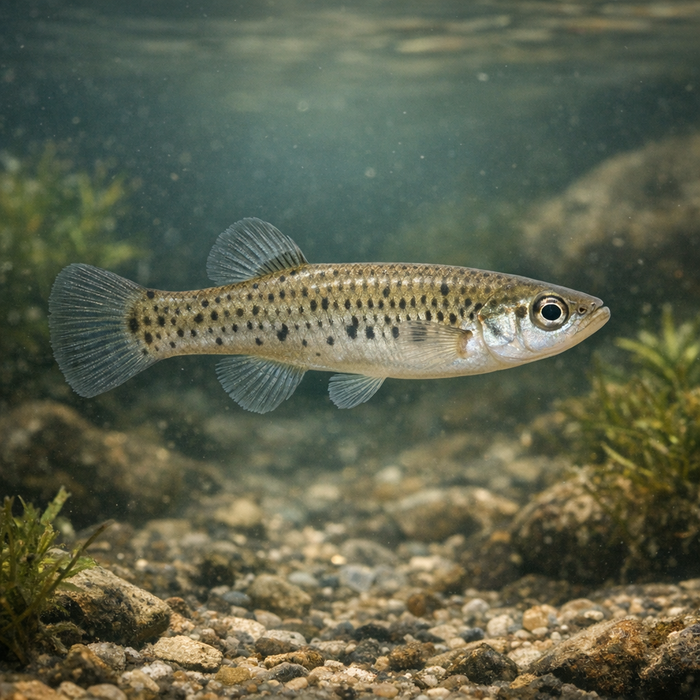
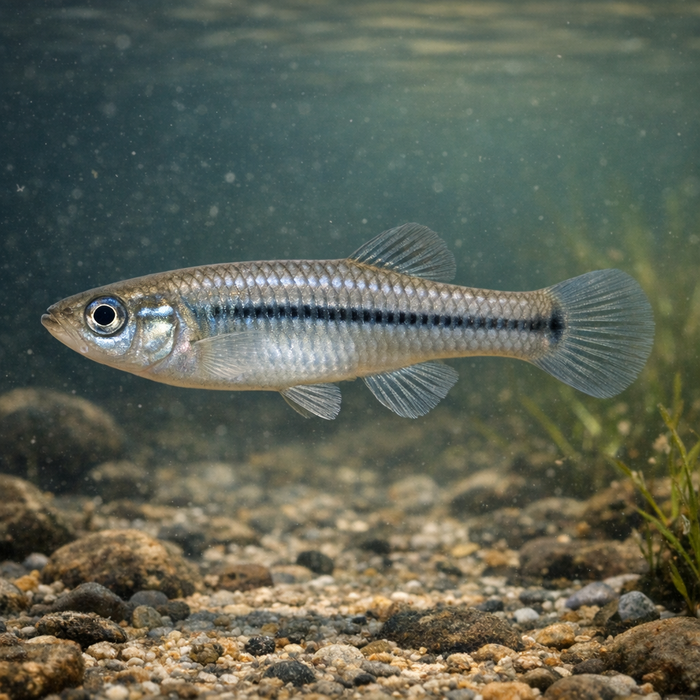
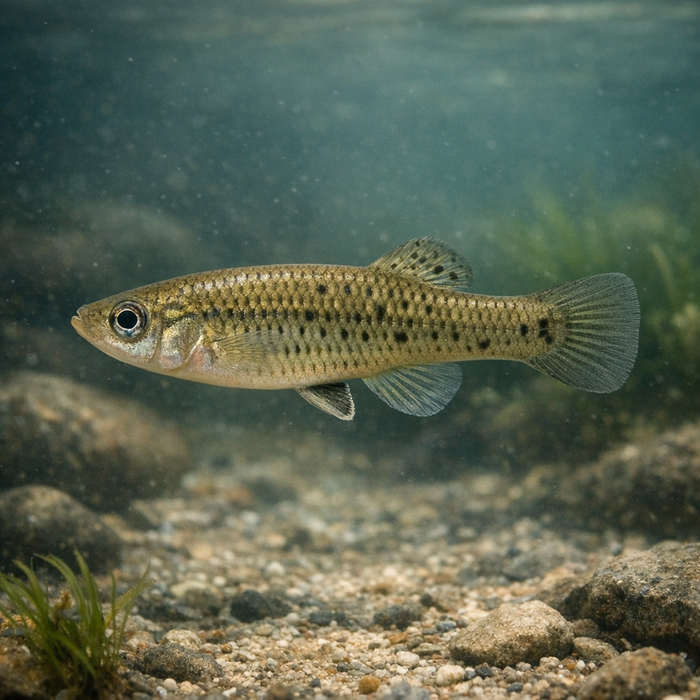
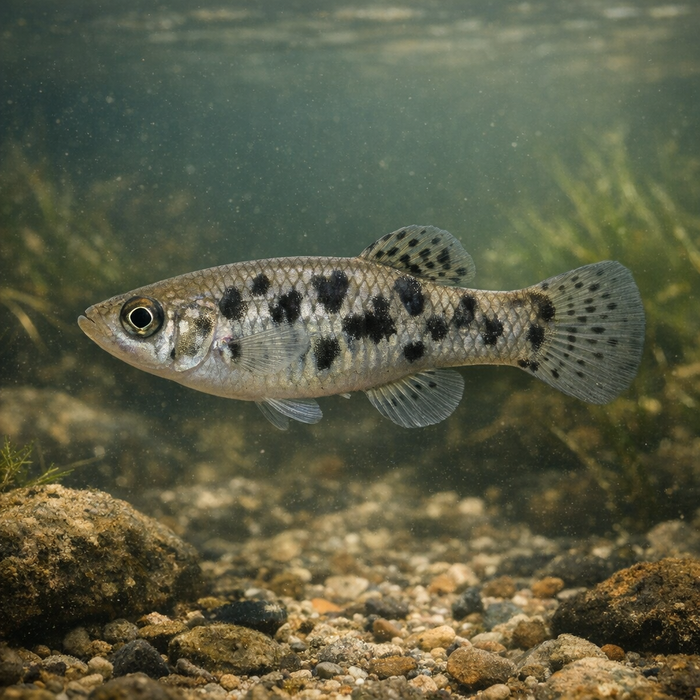
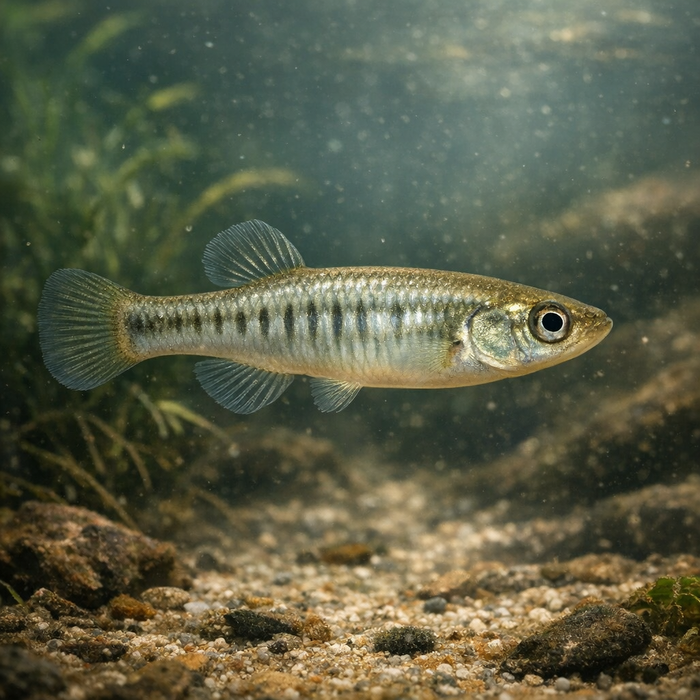
Largespring gambusia (Gambusia geiseri): Tiny Spring-Run Livebearer With Outsized AttitudeIntroductionThe largespring gambusia is the pocket-rocket of Texas spring creeks. You won't spool your drag or pose for a hero shot, but this fish delivers a masterclass in stealth, precision, and micro-wildlife drama. In glass-clear flows where every move matters, a single grain of bait and a size-24 hook can turn into a surprisingly satisfying win. If you're hunting cool Largespring gambusia facts or looking to understand Largespring gambusia habitat, you're in the right water.What Makes the Largespring gambusia Unique?Three traits set this species apart. First, it's a livebearer, so the action never stops in warm months; females drop broods like clockwork while schooling continues around them. Second, they thrive in constant-temperature spring water that runs clear enough to read a newspaper through, which magnifies every angler mistake. Third, sexual dimorphism is dramatic: females get chunky and visibly gravid while the tiny males brandish a spike-like gonopodium. The result is a fish that rewards finesse and observation far more than muscle.Habitat & Global RangeThe largespring gambusia is a Texas specialist, sticking to the Edwards Plateau's famous springs and their outflows. Think San Marcos, Comal, and other clear, limestone-filtered creeks where vegetation, current seams, and undercut grass edges provide protection and food. These waters hold a narrow temperature window year-round, so fish activity is steady even when nearby rivers yo-yo with weather. You'll spot them in ankle-deep to a couple of feet of water, especially over clean gravel, beside submerged grass, or tucked into current breaks behind rocks. This very specific footprint keeps the largespring gambusia close to home but makes it laser-reliable where it occurs. For traveling anglers, that means plan your trip to the right zip code rather than the right tide.Behavior & TemperamentThe largespring gambusia is small, but it runs the flats of its micro-world like a tiny patrol boat. Expect high surface interest, quick nips at drifting morsels, and nervous schooling that detonates at shadows then re-forms instantly. Males chase with comical determination; females play traffic cop, diving into cover when things get suspicious. In slow pools, gambusia hover under the surface film, sipping insect larvae. In faster runs, they draft behind pebbles and grass blades to conserve energy. For anglers, this means a patient, low-profile approach, micro hooks, and short drifts in the top 12 inches of water.Ecological ImportanceLargespring gambusia are snack-sized predators that hit well above their weight. They convert surface and midwater bugs into fuel for everything else up the chain: sunfish, bass fry, herons, and turtles. In many spring systems, they are also part of informal mosquito control, hoovering larvae near the surface. Because they're livebearers, they can rebound quickly when flows stay stable, seeding pools with fresh recruits after floods. In other words, the largespring gambusia is the nervous system of a healthy spring run, transmitting energy in quick, bright pulses.Conservation & Environmental PressuresWhile the species is not immediately in crisis, it wears the same bullseye as every Texas spring native: groundwater depletion, habitat fragmentation, invasive species, and sudden flood-scour events. Pump the aquifer too hard and flows drop, temperatures swing, and algae blooms creep in. Introduce the wrong nonnative and you get competition, predation, or hybridization. Recreation pressure in urban springs can also trample vegetation that acts as a nursery. The largespring gambusia doesn't have a continental safety net. Its stronghold is right there in those green-blue runs, so protection of spring flow and clean substrate is everything.The FishyAF TakeThe largespring gambusia won't make your arm sore. It will sharpen your game. If you can feed this fish a single speck of bait, invisibly, in water so clear it might as well be air, you're building dangerous skills for everything else. The largespring gambusia is also a gateway into Texas spring culture: limestone edges, eelgrass lanes, and that eerie constant temperature under blazing sun. Catch a few, admire the tiny stripes and silver eyes, then let them slip back into the current. The real prize is the place, and this species is the best little ticket in. Say "largespring gambusia" a few times out loud and you'll remember it, because the fish lives up to the name. For anglers with patience and curiosity, the Largespring gambusia punches way above its scale weight.