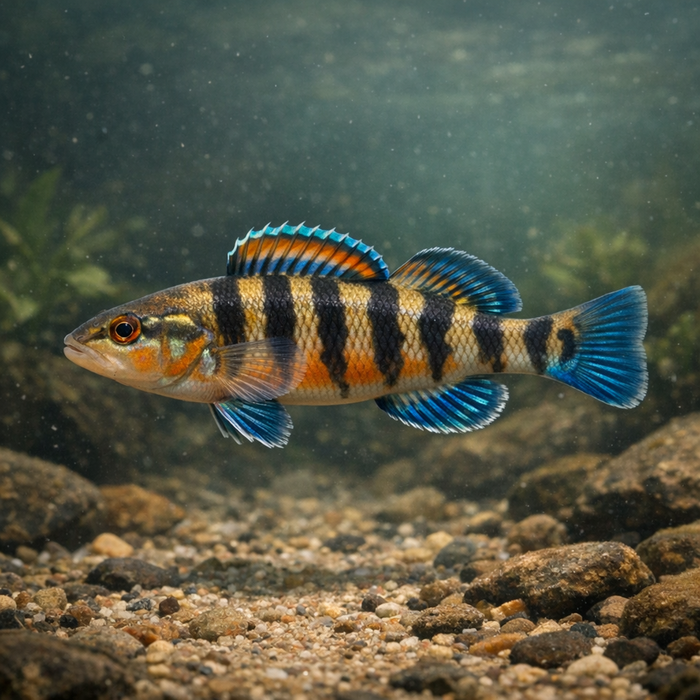
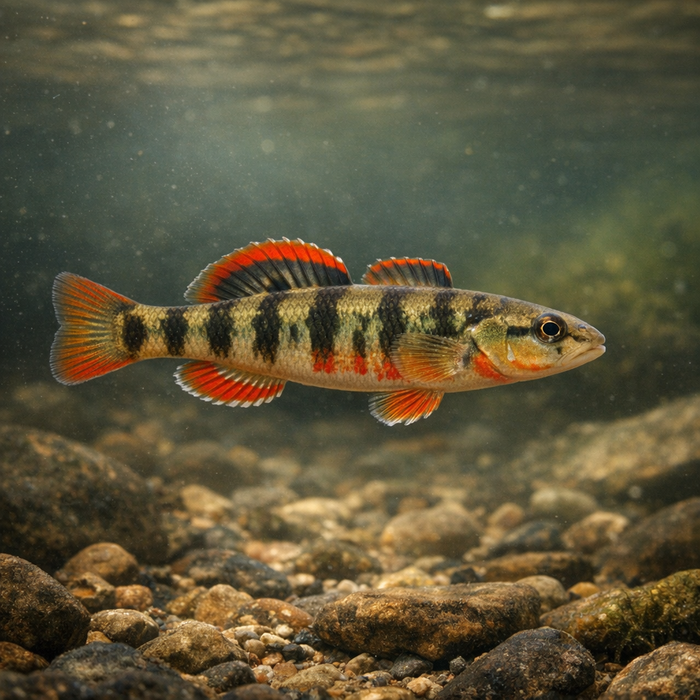
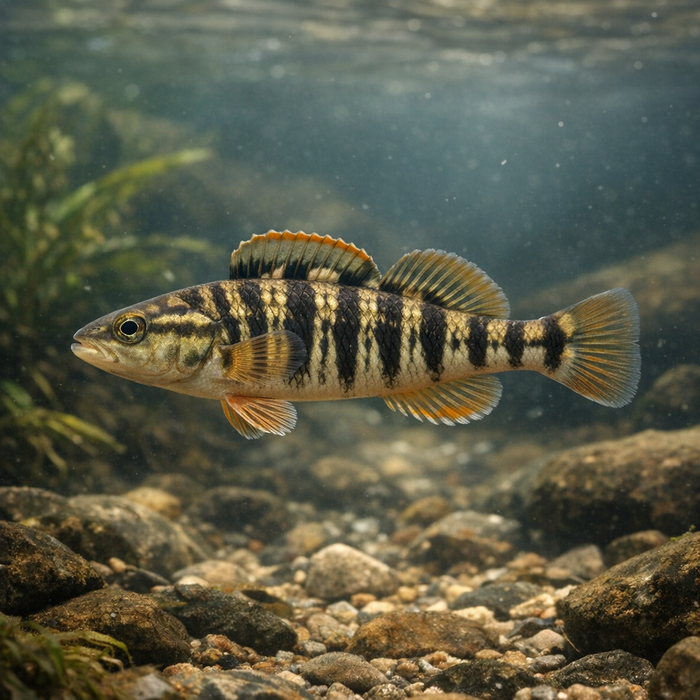
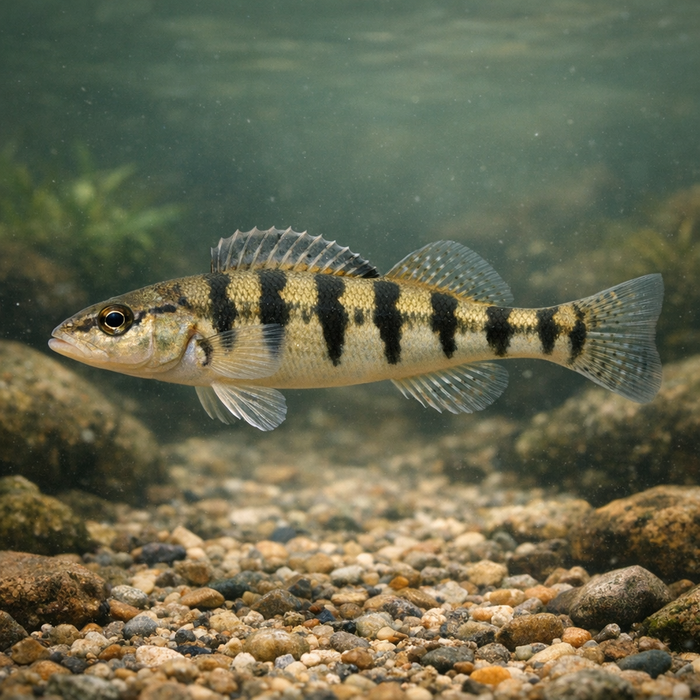
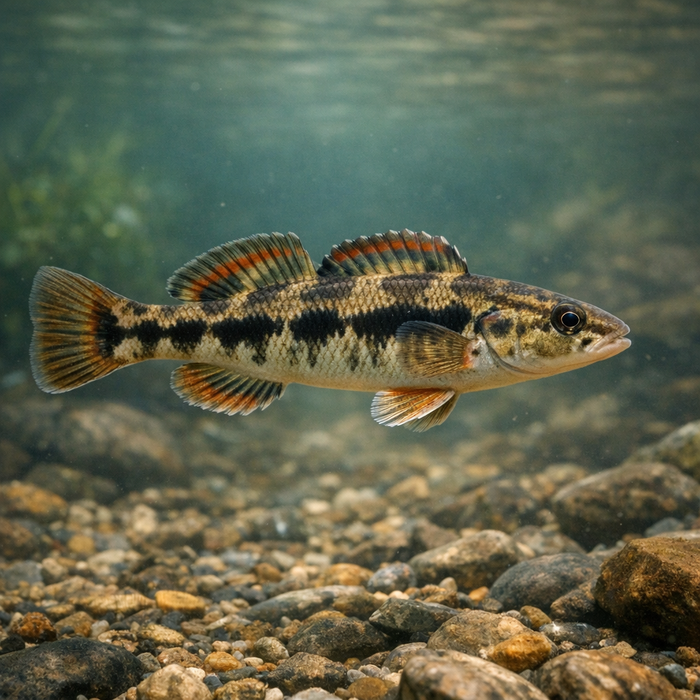
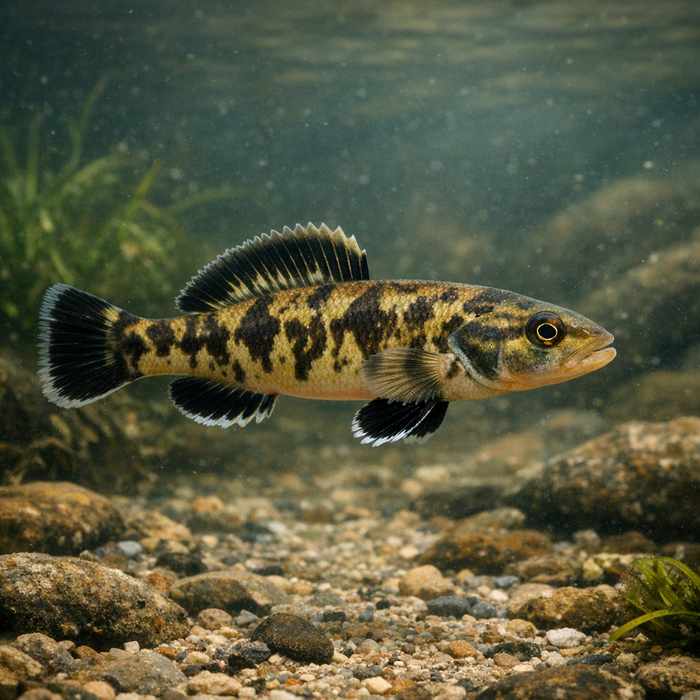
Bridled Darter (Percina kusha): A masked riffle sprinter with style and zero patience for sloppy presentationsIntroductionThe bridled darter is a micro-sized rocket with a face mask that looks straight out of a bandit sketch. You won't boat-flip this fish, but you will remember it. Tiny, precise, and wired for current, it's catnip for micro anglers prowling fast water. If you want bridled darter facts that actually help you spot one, keep reading. This little riffle specialist is all about clean gravel, crisp flows, and lightning bursts from rock to rock.What Makes the Bridled darter Unique?First, that "bridle." A dark stripe runs from snout through the eye to the gill cover, framing the head like tack on a horse. Second, Percina kusha runs a reduced swim bladder, so it stays pinned to the bottom, scooting with oversized pectorals instead of hovering midwater. Third, breeding season adds flair: males punch up orange on the first dorsal and sharpen those zebra bars. The result is a fish that looks custom-built for turbulence and camouflage at the same time.Habitat & Global RangeWhen someone asks about Bridled darter habitat, the real answer is "moving water with attitude." Think small to medium Southeastern rivers with clear flow, shallow riffles, and rock gardens of gravel, cobble, and scattered boulders. The species is narrowly endemic to the upper Coosa River system, so it's a local legend rather than a road-trip headliner. Depth is usually ankle to knee, with the fish hugging the bottom in seams where velocity breaks just enough to feed without getting blasted downstream.Behavior & TemperamentThe bridled darter is a sit-and-burst predator. It stalks inches, not yards, making micro-adjustments behind cobble before striking. With that reduced swim bladder, it wastes zero energy floating and instead perches, darts, and vanishes again. It rarely schools tight; you'll see loose pockets where substrate and current line up. Spawning hits in spring when clean gravel and oxygen-rich flow prime the system. They're skittish in glassy shallows, so shadow and footfall matter more than most anglers expect.Ecological ImportanceThis fish is a riffle report card. Where bridled darter thrive, silt is minimal, oxygen is high, and the invertebrate buffet is diverse. Lose the gravel to sediment, and you lose the eggs. Choke the riffles with low flow, and you fragment micro-habitats. Their presence signals a well-oxygenated, structurally complex stream where benthic life hums. In short, the bridled darter is a tiny canary with fins.Conservation & Environmental PressuresNarrow range plus specialized habitat equals vulnerability. Dams and impoundments flatten riffles. Poor land practices load silt into spawning substrate. Drought and sudden flow changes strand fish and suffocate eggs. Because the bridled darter doesn't wander far, local problems become population-level crises fast. The species has been flagged as conservation-sensitive in parts of its range, and keeping riffles clean and flowing is the whole game.The FishyAF TakeMost anglers will never target a bridled darter. Their loss. This fish demands patience, stealth, and the kind of presentation discipline that makes you better at everything else. Treat it like a living current test: if your drift is sloppy, it refuses; if your approach is loud, it ghosts. Nail both, and that mask-faced blur becomes a photo on a wet ruler, plus a story that actually means something. Bridled darter facts are cool, but earning a look from one in knee-deep riffle water is cooler. Respect the riffles, mind the gravel, keep the hands wet, and let this little bandit teach you how to fish precisely.