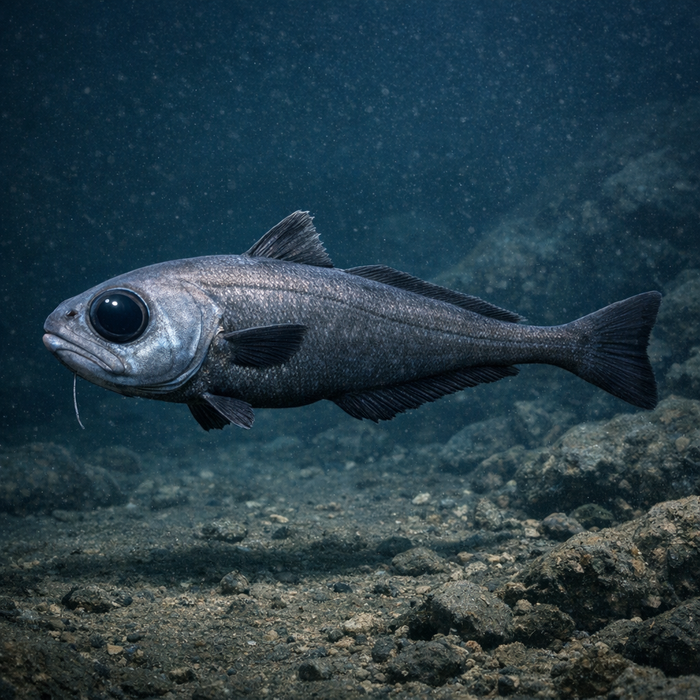
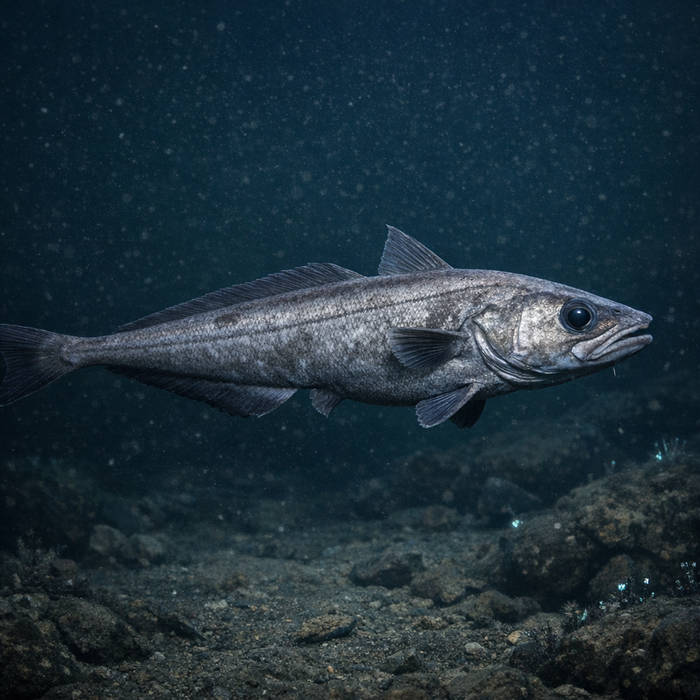
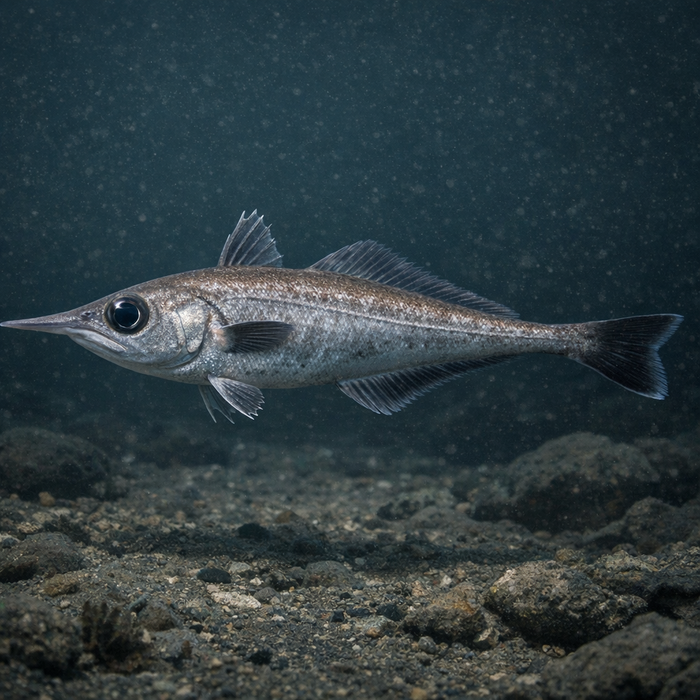
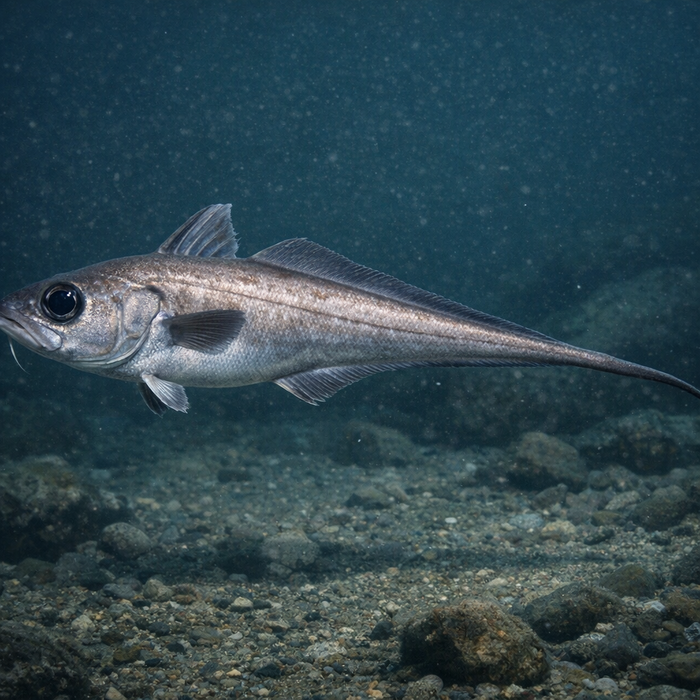
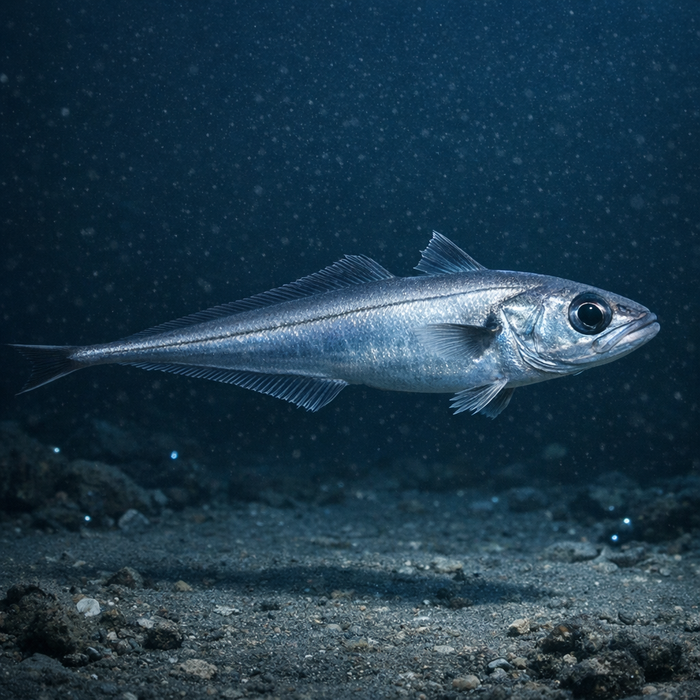
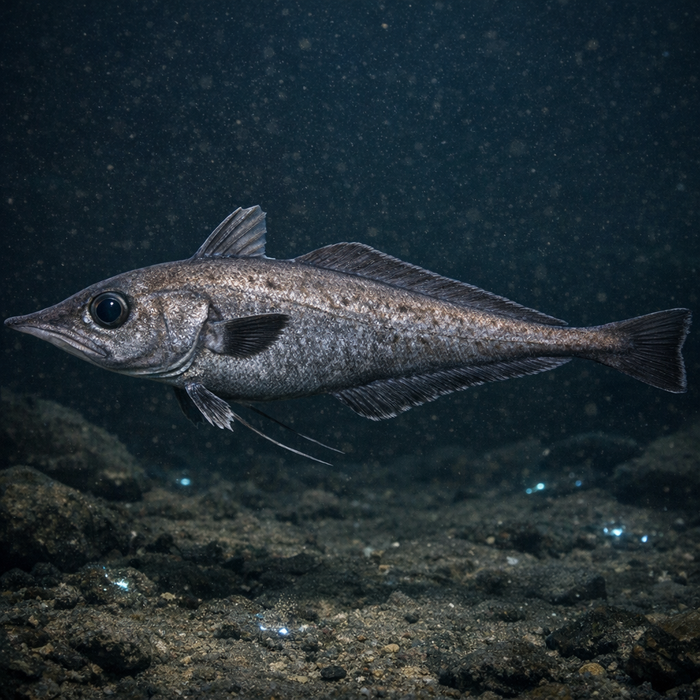
Bristly Grenadier (Trachonurus sulcatus): A Bold, Memorable Hook LineIntroductionThe bristly grenadier is the deep sea's prickly underboss, a long-tailed rattail with sandpaper skin and midnight eyes. It doesn't flash neon or jump like a tuna. It lurks where sunlight quits, then cruises the slope mopping up snacks other fish miss. For deep-drop anglers, the bristly grenadier is a gritty badge of range and technique. If you're chasing real-deal abyss vibes and want hard-earned photos, here's your fish.What Makes the Bristly grenadier Unique?Two things jump out. First, texture. This fish wears a coat of bristly, hooked scales that feel like a file, which is exactly why it's called bristly. Second, proportions. The tail is so long and tapered it's practically a whip, classic rattail geometry that plays havoc with length-girth weight guesses. Add in oversized, blue-spectrum eyes tuned for twilight, and you've got a specialist built for the slow, cold deep. Those are the headline bristly grenadier facts that stick with you after handling one on deck.Habitat & Global RangeThink deep: continental slopes, canyon walls, and seamount shoulders where mud and silt give way to scattered rock. The bristly grenadier patrols well offshore down in the real basement, typically hundreds to more than a thousand meters below. This is classic bristly grenadier habitat. It's a slow-motion, low-light zone where currents funnel food across the bottom like a never-ending buffet line. Regional names and bycatch logs lean heavily toward the Indo-Pacific, especially Australia and New Zealand waters, plus pockets of the broader Indian Ocean and Pacific islands. If you can run a boat to the slope edge and hold bottom in big water, you're in the neighborhood.Behavior & TemperamentThe bristly grenadier is an opportunistic bottom predator that treats the deep as a roaming snack aisle. It won't race 50 feet to crush a jig like a tuna, but it will confidently home in on scent and subtle movement. Expect singles or loose scatterings, not tight schools. The fight is mostly weight-and-drag with the occasional head shake; pressure changes and a long ride up do most of the tiring. Circle hooks help with clean corner-jaw hookups on that downturned mouth. If you're patient with the tap-tap-tap and avoid horsing it early, you'll stick more fish.Ecological ImportanceDeep slopes are powered by a rain of organic bits from the surface. The bristly grenadier helps convert that drift of crustaceans, cephalopods, and fish scraps into calories for the deep community. Call it a cleanup crew lead. It's mid-level in the abyss food chain: predator to smaller invertebrates and fishes, prey to bigger slope bruisers and toothed whales. That sandpapery skin and slow metabolism are energy-saving hacks in a world where meals arrive irregularly.Conservation & Environmental PressuresLike many deepwater fishes, the bristly grenadier rides the blurry line between Data Deficient and quietly vulnerable. It rarely headlines a quota, yet shows up in commercial deep-trawl bycatch and the occasional longline set. Life histories down deep trend slow: later maturity, fewer but larger eggs, and conservative growth. Translate that to management and you get a species that can be impacted before we fully notice. Habitat disturbance from heavy gear, expanding deepwater effort, and warming currents nudging oxygen layers all matter. It's not panic time, but it's worth paying attention.The FishyAF TakeThe bristly grenadier is not a glamour fish. It will not light up your sonar like a pack of mahi or dump a hundred yards of line. What it will do is test your range, your rig, and your patience in big water far from the dock. If your angling identity includes the word "depth," you owe it a drop. Touch that rough hide, clock the ancient eyes, and respect the quiet weirdness of the slope. For anglers who collect experiences, not just fillets, the bristly grenadier punches above its weight. And if you came here for straight info, bookmark this page for bristly grenadier facts and a clean snapshot of bristly grenadier habitat. Now spool fresh braid, pack squid, and go make the abyss blink first.