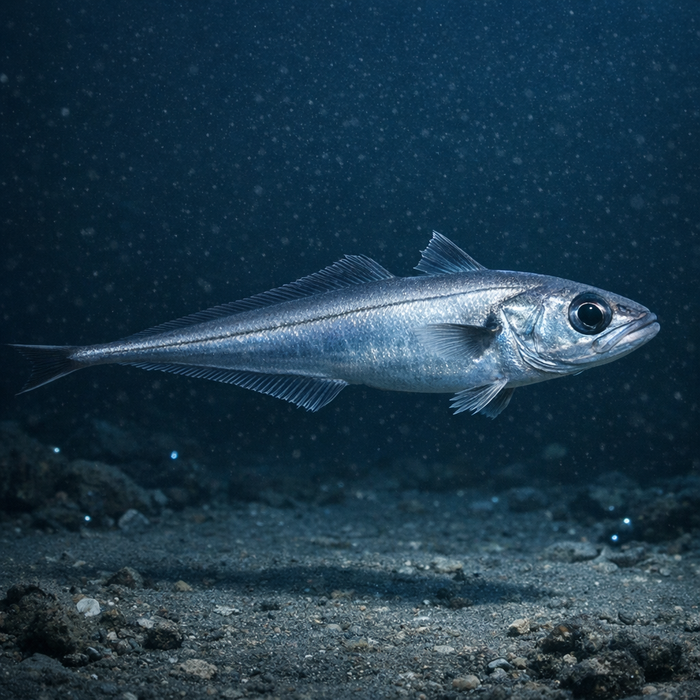
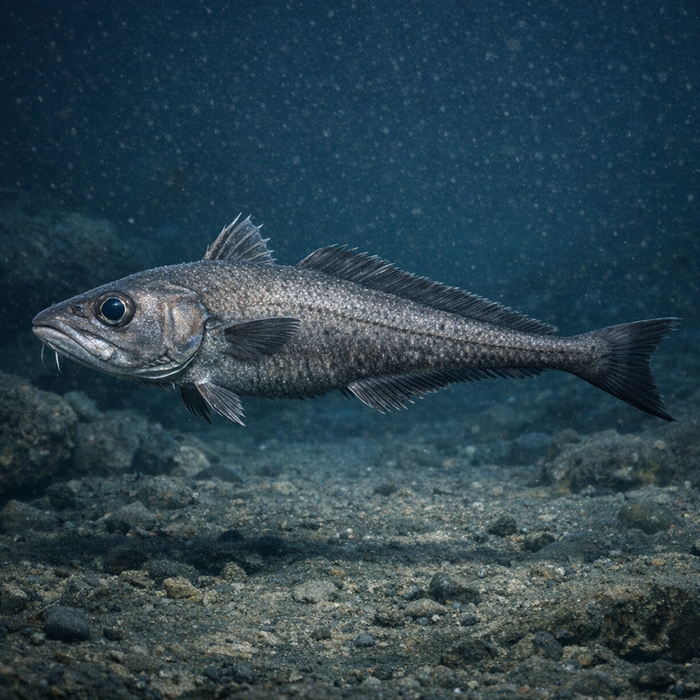
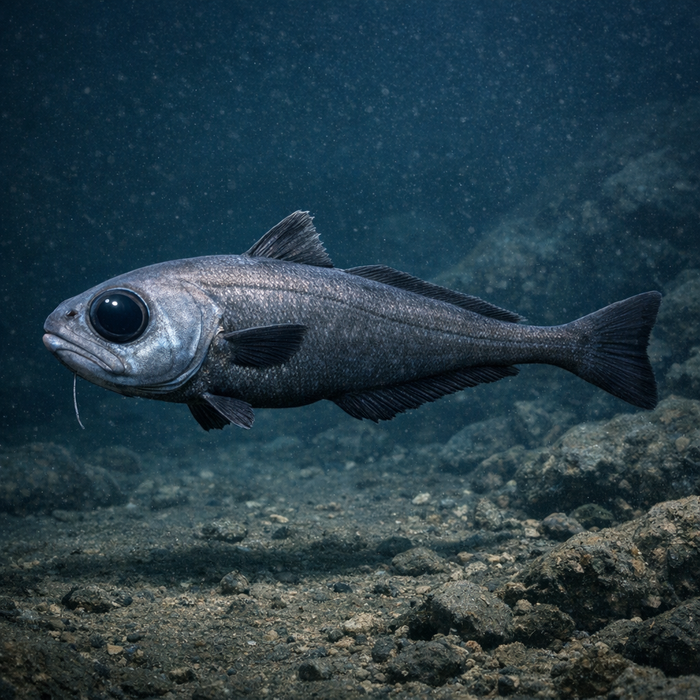
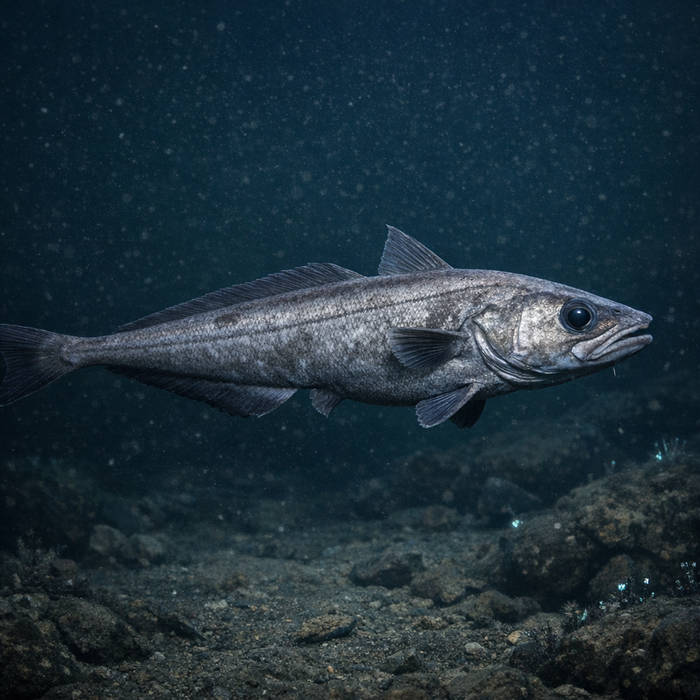
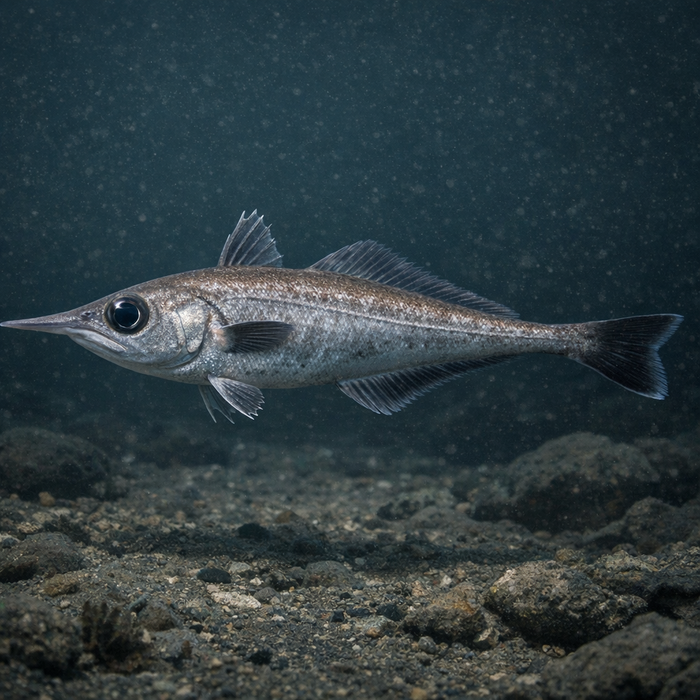
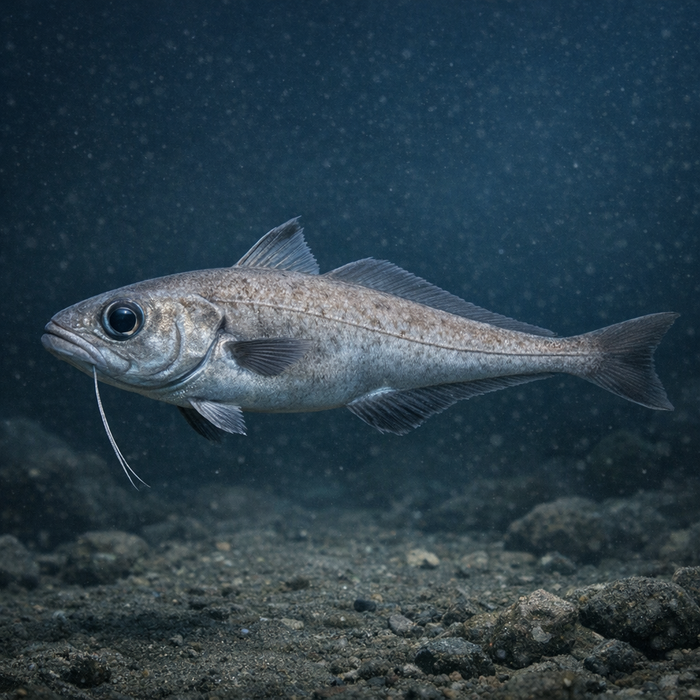
Common Atlantic grenadier (Nezumia aequalis): The slope-dwelling weirdo with more tail than fish.IntroductionMeet the Common Atlantic grenadier, a deep-sea rattail that looks like it was dreamed up after midnight. Big head, pop-can eyes, and a tail that just keeps going. It's not a glamour species, but if you're deep-dropping along the edge, this skinny customer shows up like a polite ghost. The Common Atlantic grenadier is a small player in a very big arena, and that makes it exactly the kind of under-the-radar fish we love to talk about.What Makes the Common Atlantic grenadier Unique?Two things jump out: the absurd tail and the sensory toolkit. That exaggerated, tapering tail can be more than half the total length, a hydrodynamic whip that keeps the fish poised just inches above the seafloor. Up front, Nezumia aequalis rocks oversized eyes and a tiny chin barbel, turning pitch black water into a readable map of scent trails and micro-movements. It's a specialist built for the deep slope, where subtlety equals survival.Habitat & Global RangeThe Common Atlantic grenadier hugs mud and sand on the continental slope, well past the weekend-boat crowd. Think deep continental margins, submarine canyons, and soft sediment plains where currents drift food like a conveyor. It's most familiar to North American deep-droppers working the Northeast canyons, the Southeast edge, and the Gulf of Mexico's outer shelf and slope. You won't see it on reefs or buzzing the surface. This fish is the definition of down low and out of sight, a great target for anyone curious about true deepwater life and the broader Common Atlantic grenadier habitat.Behavior & TemperamentGrenadiers aren't bullies. They are patient pickers, easing along bottom contours, keying on worms, tiny crustaceans, and any soft-bodied invertebrate that can be vacuumed into a small mouth. They'll rise just off bottom to intercept scent lines or drifting morsels, then settle back. They're not wired for sprinting or slugging it out; fighting a grenadier is more like reeling in a reluctant scarf than brawling a grouper. Their activity windows follow current and food drift more than daylight, though low-light upslope nudges aren't unusual.Ecological ImportanceSmall, common, and deep doesn't equal unimportant. The Common Atlantic grenadier stitches together energy from the benthos to mid-level predators, recycling detritus, worms, and microcrustaceans into fish flesh that hakes, deep cods, and larger slope hunters cash in on. Eggs and larvae drift in midwater, connecting very different habitats during early life stages. And because grenadiers are widely distributed on the slope, their presence is a handy barometer for bottom conditions, oxygen levels, and food availability in places we rarely sample.Conservation & Environmental PressuresIt's not a headline species, but it still lives in a risky neighborhood. Deepwater trawling can scar soft bottoms and scoop up grenadiers as bycatch. Oil and gas infrastructure corridors overlap parts of its range in the Gulf, and climate-driven changes in oxygen and temperature at depth can shuffle the deck on the slope. Formal assessments for Nezumia aequalis are thin, so "not evaluated" doesn't mean immune. If you fish where coral gardens, sponges, or protected benthic zones show up on charts, treat those lines like hard stops.The FishyAF TakeThe Common Atlantic grenadier is the ultimate deep-drop curveball: humble, weird, and weirdly satisfying. You won't brag about its size, but boating one means you pushed past the usual suspects and sampled the real slope. It's a living reminder that the ocean doesn't care about our top-10 lists. Bring squid, bring patience, and bring curiosity. If your deep-drop spread coughs up a grenadier, you're officially exploring. That's the win. Want more Common Atlantic grenadier facts? Keep digging. The more you learn about this understated tail-with-a-fish, the better your deep game gets.