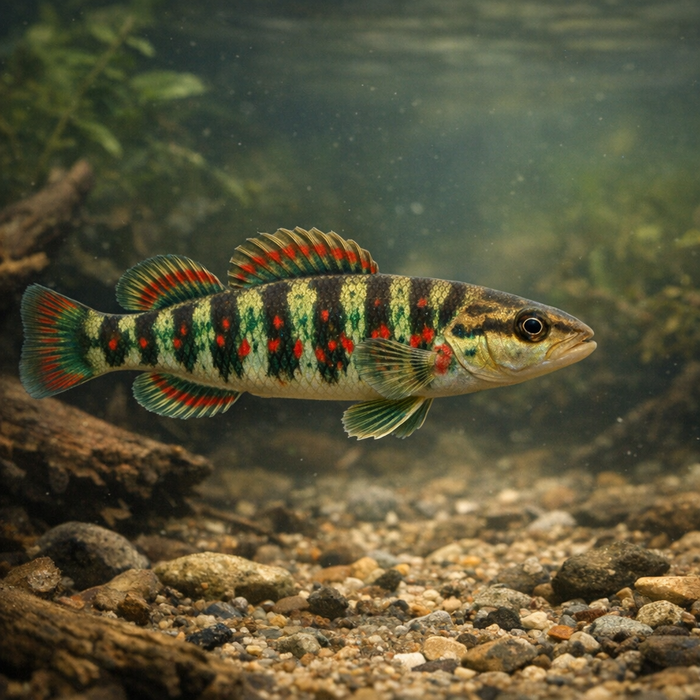
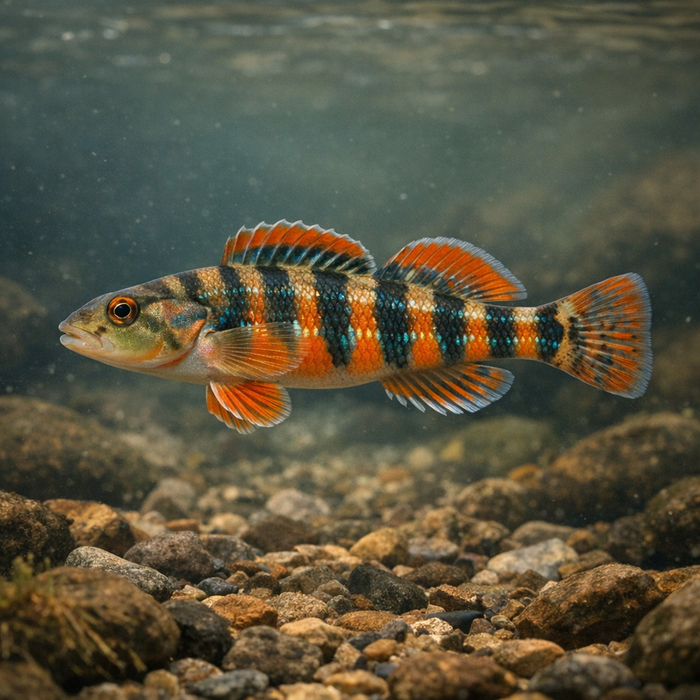
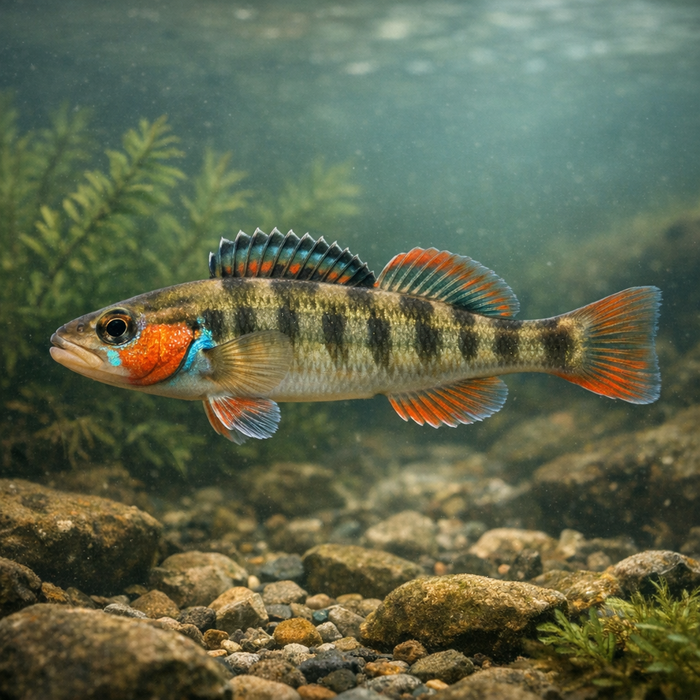
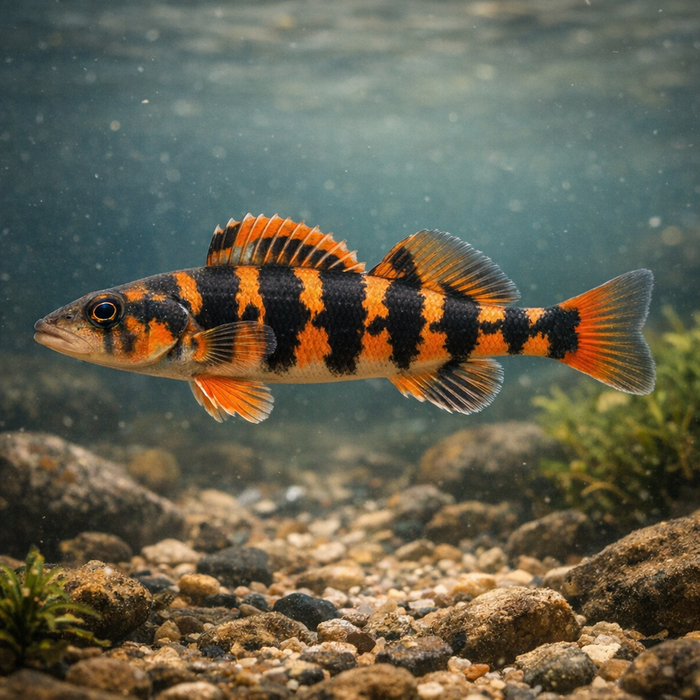
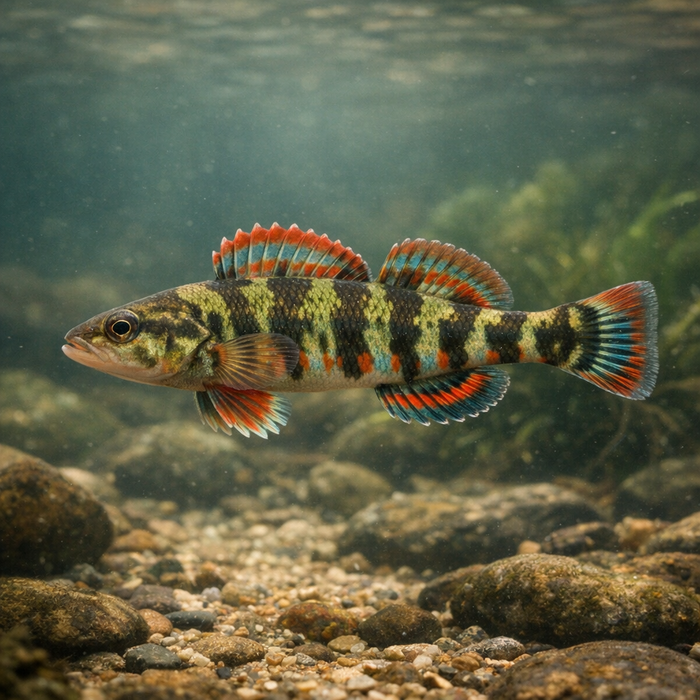
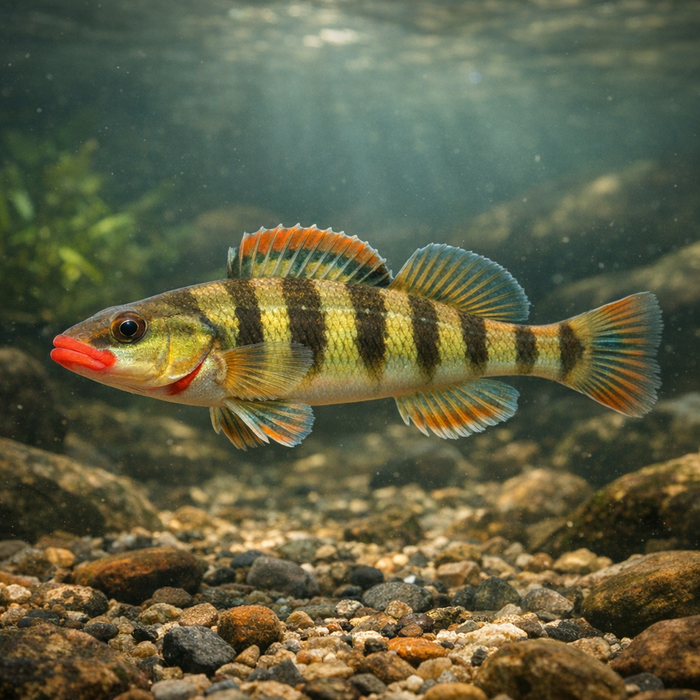
Bronze Darter (Percina palmaris): A tiny riffle specialist with big attitude and serious current chopsIntroductionThe bronze darter isn't here to sing opera or tug drags. It's a three-inch rocket glued to fast water, flashing copper tones and daring you to thread a size-26 hook into a mouth barely bigger than a grain of rice. For anglers obsessed with microfishing, the bronze darter is equal parts patience test and natural history flex. If you're chasing Bronze darter facts or curious about Bronze darter habitat, you're in the right riffle.What Makes the Bronze darter Unique?Two things: current mastery and shine. This fish is engineered for speed bumps in whitewater. A reduced swim bladder and broad, low-slung pectorals let it hunker onto rock like a tiny paperweight while still firing quick bursts to grab drifting morsels. In spring, males flash a coppery-bronze sheen striped with darker bars, giving the fish a flashy, almost metallic look when sunlight knifes through the riffle. And unlike many small stream minnows, the bronze darter is a true bottom hunter, scooting in hops instead of cruising.Habitat & Global RangeThis darter is a riffle junkie. Think clear, cool to moderate streams with firm gravel and cobble, not silt. It stacks up in knee-deep or shallower runs where oxygen is pumping and the substrate is clean. Undercut banks, boulder edges, and pocket-water seams matter because they break current just enough for an ambush. The bronze darter's distribution is tight within Southeastern drainages, which makes local flow conditions and watershed health especially important. If you want reliable Bronze darter habitat, start with transparent water over gravel, steady current, and minimal silt.Behavior & TemperamentBronze darters are sit-and-pounce operators. They orient into the flow, hold precise positions, and dart forward in short, electric hops to nail insect nymphs sweeping past. They don't roam far, and they're not schooling fish in the classic sense, but you'll often see multiple fish using the same riffle lanes. Surface action is basically off the table; these are bottom tacticians. Spawning fires up in spring as flows stabilize, with eggs tucked among clean gravel. The bite pattern is daylight-centric when water is clear, though mild cloud cover or lower light can make them a touch bolder near the edges of faster lanes.Ecological ImportanceTake away bronze darters and you lose some of the insect-control muscle that keeps riffle systems balanced. They turn mayfly, caddis, and midge production into fish biomass that, in turn, feeds larger stream predators. Because they demand clean, well-oxygenated water over stable substrate, bronze darters function like a riffle report card. When they're plentiful, the stream bottom is usually doing fine. When they vanish, you're often looking at siltation, nutrient spikes, or flashy stormwater that bulldozes spawning gravel.Conservation & Environmental PressuresThe bronze darter's biggest enemy is not a predator; it's dirty water and altered flows. Silt smothers eggs and buries the insect smorgasbord. Poor riparian buffers and flashy runoff swap stable riffles for chocolate milk. Dams and low-head barriers carve up habitat mosaics into disconnected fragments. The species isn't top-of-the-news endangered, but its tight range means local problems hit harder. Watch for gravel mining, culvert issues, and withdrawals that drop summer baseflows to a trickle. Protecting this fish means protecting cold, clean tributaries and the cobble beds that build future year-classes.The FishyAF TakeIf you think fishing is only about big, loud hero shots, the bronze darter will change your religion. This is stealth, precision, and naturalist curiosity distilled into a three-inch challenge. Put your ego away and bring your smallest gear. Notice the metallic flash against the gravel, the razor-thin feeding lanes, the way a riffle soundtrack drowns out everything except the next perfect drift. The bronze darter won't blister your drag, but it will sharpen your water-reading instincts better than a thousand casts in a featureless pond. Respect the riffle, keep the handling gentle, and you'll walk away with a deeper appreciation for how a healthy stream actually works. That's the kind of win we'll take any day.