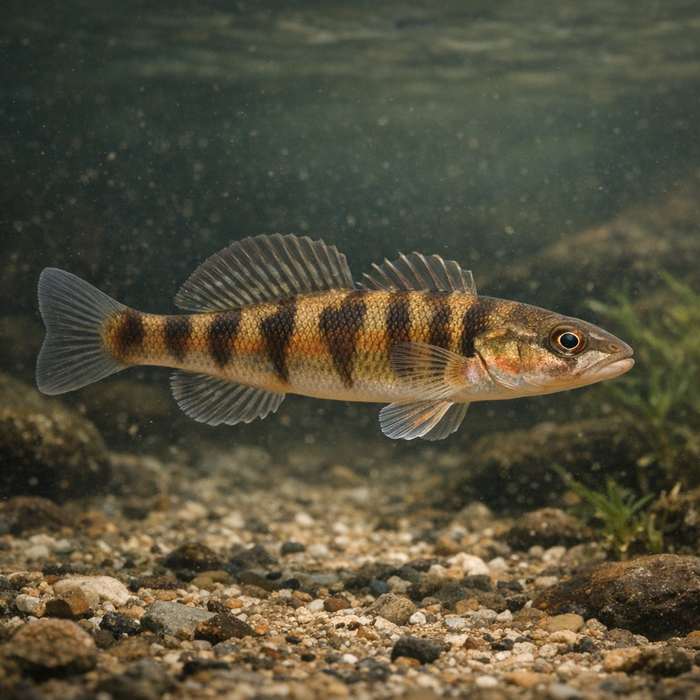
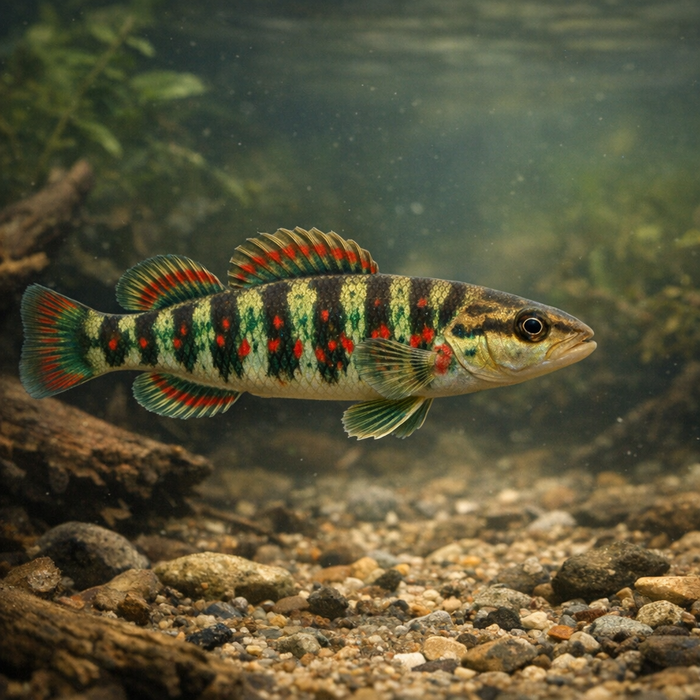
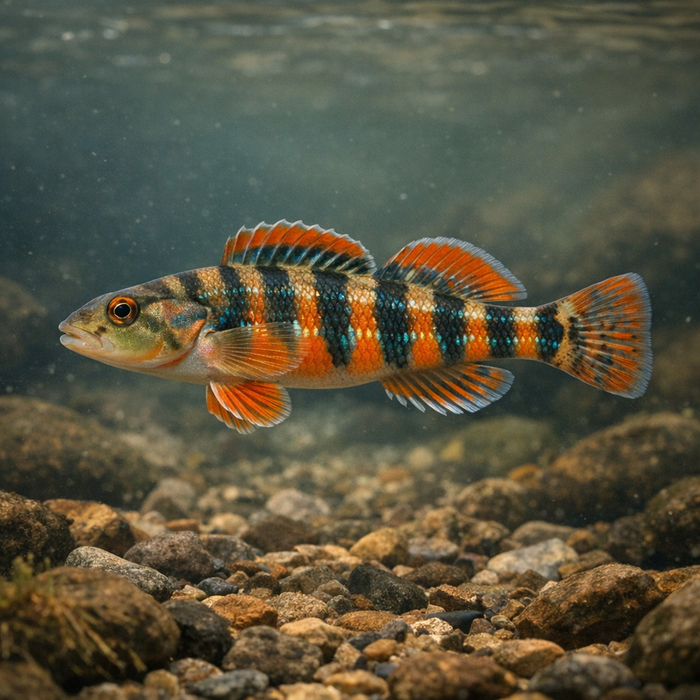
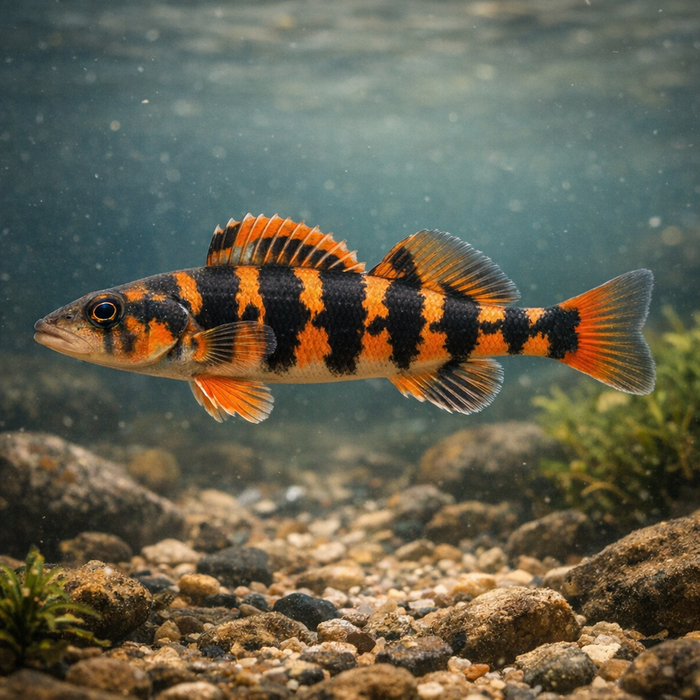
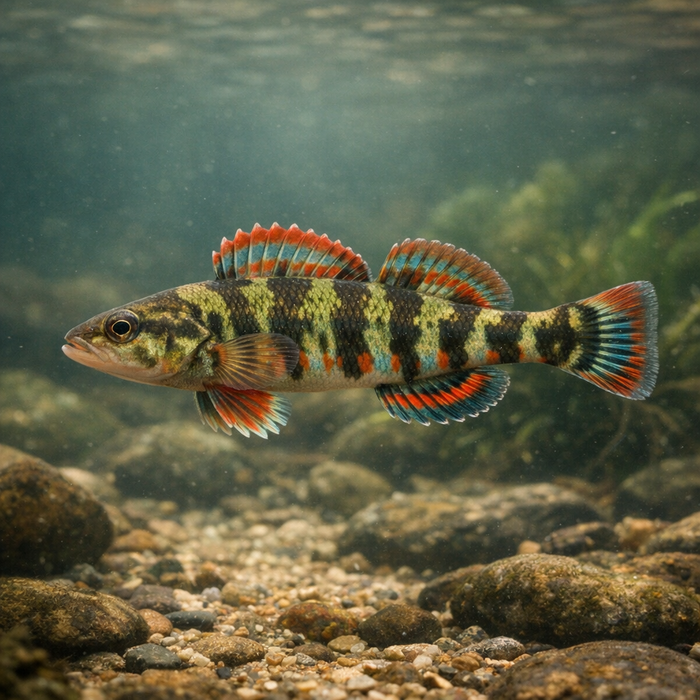
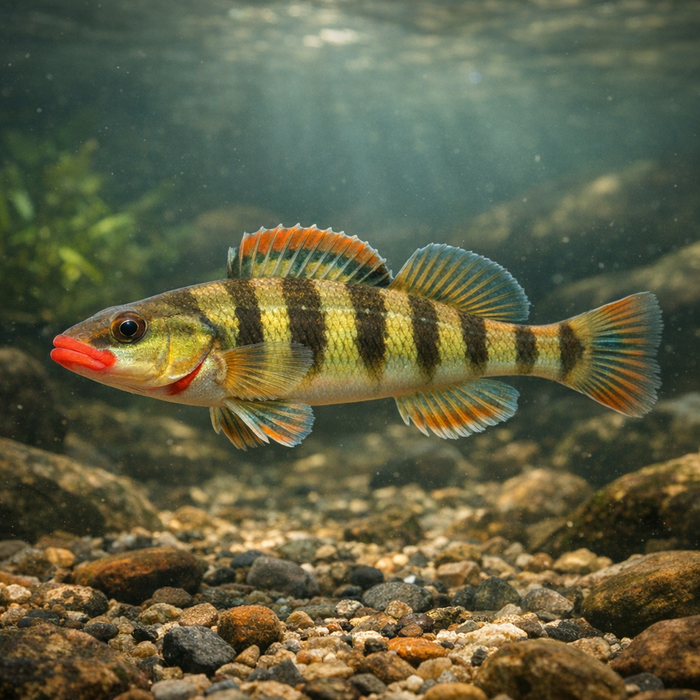
Coppercheek Darter (Nothonotus aquali): A pocket-rocket riffle junkie with a face that flashes molten copper when it matters.IntroductionThe Coppercheek darter is the fish you only notice after you slow down and actually look. It's small, fast, and glued to the bottom like it signed a lease. But for anglers who love tiny targets with big personality, this riffle specialist delivers. Think stealth presentations, surgical drifts, and a spring color show that belongs on a tropical reef. If you're after real Coppercheek darter facts and a feel for true Coppercheek darter habitat, you're in the right current.What Makes the Coppercheek darter Unique?First, that signature copper cheek. Breeding males light up with a metallic patch that looks painted on, advertising their nest-guard status. Second, their bottom-hugging build is purpose-built for flow: reduced swim bladder, spread-out pectorals, and a splayed stance that anchors them in fast water. Third, nesting drama. Males buff the underside of flat rocks, coax females in, and then guard the ceiling-glued eggs like they own the riffle. It's a full-contact lifestyle played out inches from your boots.Habitat & Global RangeThe Coppercheek darter is a clear-water purist. Picture shallow, fast riffles and knee-deep runs paved with clean gravel and cobble. A little current seam, a flat rock or two, and they're home. They fade out where silt collects or where algae carpets the stones. While distribution is regional and fairly tight, it's the microhabitat that makes or breaks your hunt. A stream might look perfect from the road, but one muddy tributary can flip the switch to "nope." Find cold, well-oxygenated flow with polished rock and minimal sand, and your odds climb.Behavior & TemperamentCoppercheek darters don't cruise. They hold. They pulse in place, snap at drifting invertebrates, then slam back to their anchor point. Aggression spikes in spring when males claim real estate and show off the namesake copper cheek. They rarely leave bottom except to reposition, and most moves are short darts between small patches of broken rock. That means you're not hunting an area as much as a postage stamp of structure. Precision counts.Ecological ImportanceThese little bottom athletes are flow translators. When they thrive, your stream is clean, cold, and breathing right. Their eggs need oxygen-rich, silt-free water, and their larvae require stable flows. That sensitivity turns the Coppercheek darter into a neon sign for watershed health. Lose the riffles to sediment, low flow, or pollution, and they're the first to ghost you.Conservation & Environmental PressuresThe bad news starts with dirt. Sedimentation from poorly managed construction, unstable banks, or sloppy road crossings blankets spawning rocks and suffocates eggs. Add nutrient spikes, low summer flows, or channelization, and a stronghold can unravel fast. The good news is small streams respond quickly to good stewardship. Riparian buffers, smart culverts, and stable banks keep the gravel clean and the water cold, which is basically the Coppercheek darter starter pack.The FishyAF TakeIf you're chasing a bass boat bite, keep driving. But if you love granular puzzles, this fish is your jam. The Coppercheek darter distills angling down to inches, grams, and timing: micro hooks, pinhead baits, and silent feet. Spot the right riffle, drift a sliver of worm through a hand-sized seam, and you'll meet a fish most folks never see. It's not about the bend in the rod; it's about unlocking a stream at 1:1 scale. The Coppercheek rewards patience with copper fire and a tiny victory that feels huge.