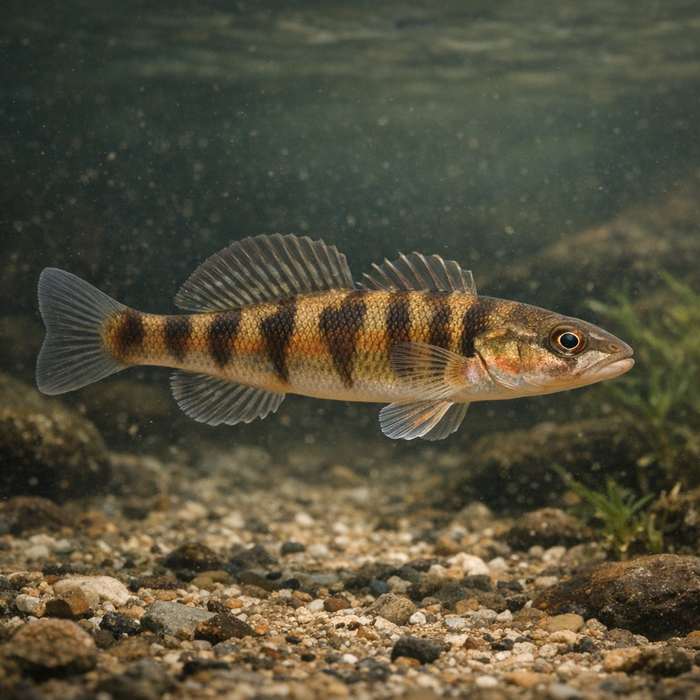
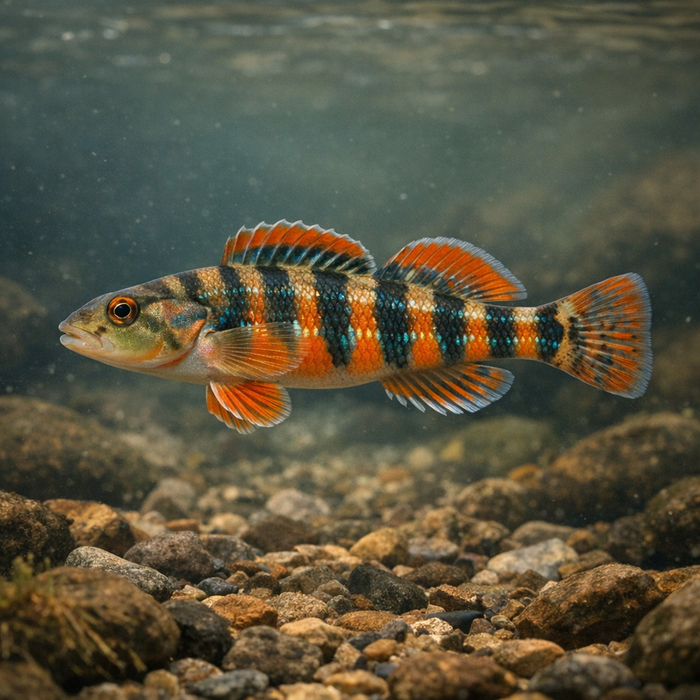
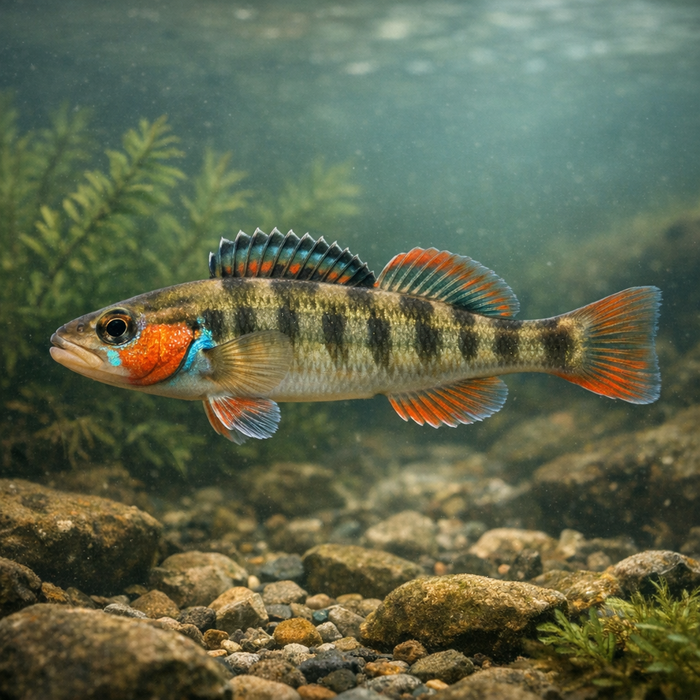
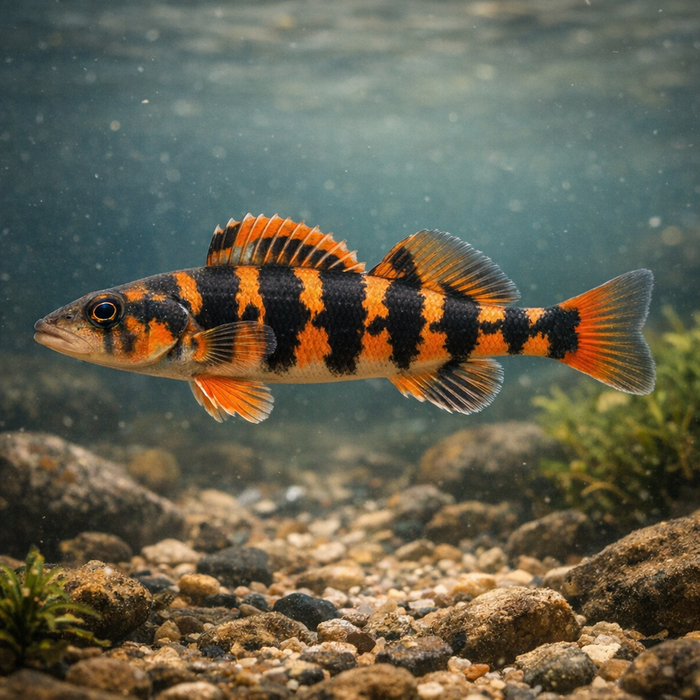
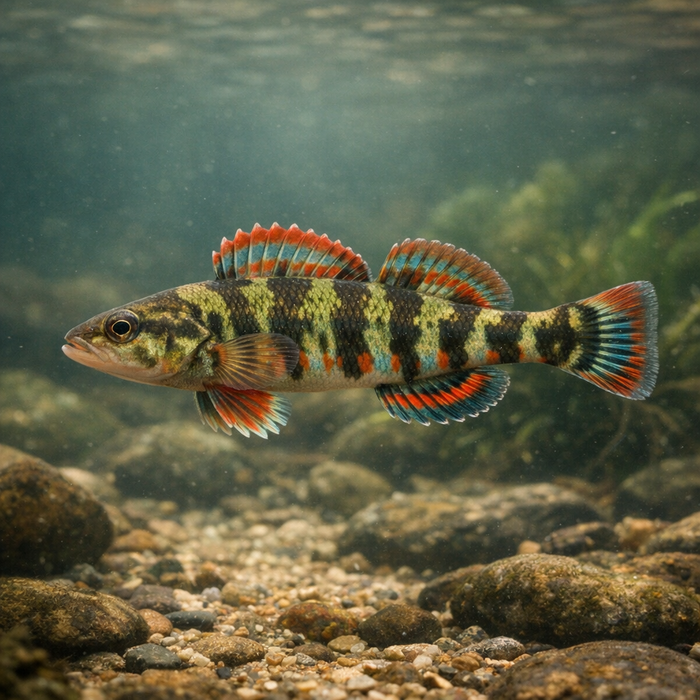
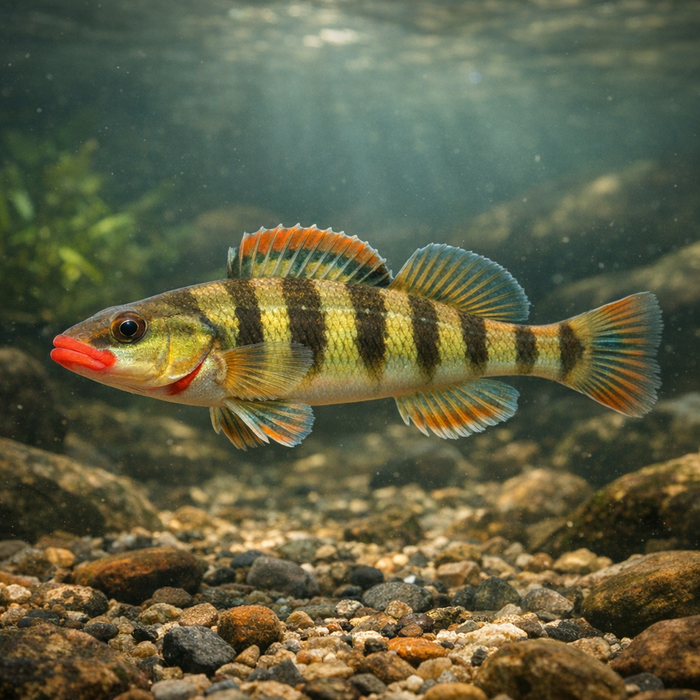
Christmas darter (Etheostoma hopkinsi): A Bold, Memorable Hook LineIntroductionThe Christmas darter is a pocket-rocket with holiday flair, a tiny stream fish that swaps camouflage for neon when it's time to impress. Blink and you'll miss it. Look closely, and you'll swear someone sprinkled tinsel in the riffles. This is the fish that proves small water can deliver big character.What Makes the Christmas darter Unique?Two things: color and attitude. Breeding males glow with red and green bars so bright they earned the Christmas name, a look that pops against pale sand and leaf packs. And while they max out around three inches, they defend bite-sized territories like it actually matters, shoving rivals and jitter-dancing for females. The Christmas darter sports a reduced swim bladder, so it sticks to the bottom like Velcro, zipping in short bursts instead of floating around like other fish.Habitat & Global RangeThis species is a specialist of clear, sand-bottom creeks with steady flow, scattered gravel, and brushy cover. Think shallow runs and knee-deep riffles with clean water that doesn't smother the substrate. The Christmas darter lives a hyper-local life, hugging the Southeast's small streams and springy tributaries. If you geek out on Christmas darter habitat, you'll start noticing the same recipe: moving water, clean sand, and micro-structure like rootwads and woody debris. Travel far and you won't find them; dial into the right creek and they can be surprisingly common.Behavior & TemperamentThe Christmas darter is a bottom hugger, built for sudden darts, not marathon swims. It feeds by ambush and short sprints, using oversized pectoral fins to brake and pivot. During the spawn, males stake out tiny claims and flash hard, colors supercharged by warming water and lengthening days. Don't expect surface action; these fish operate where substrate meets flow, peeking up with high-set eyes for drifting morsels. They loosely congregate in good patches but won't form big schools. The fight, if you're microfishing, is basically a spirited wiggle with attitude.Ecological ImportanceSmall doesn't mean insignificant. The Christmas darter slots neatly into the riffle food web by turning aquatic insects into fish calories. In clean, connected creeks, they're a sign that sediment and pollution haven't choked the life out of the system. Predators like bigger sunfish and bass treat them as crunchy stream tapas, passing energy up the chain. Healthy darter populations usually equal healthy stream processes, which makes them quiet ambassadors for intact watersheds.Conservation & Environmental PressuresThe threats are straightforward: silt, stormwater flash, and habitat simplification. Clogged sand and smothered gravel erase egg sites and foraging lanes. Channelized or ditched streams lose the braided seams and woody edges this fish loves. The Christmas darter doesn't migrate far, so local damage is a big deal. While many lists consider it stable, status can change creek by creek depending on land use and water quality. If you want better Christmas darter facts than a shrug, watch what's happening upstream: forestry practices, culverts, withdrawals, and urban runoff.The FishyAF TakeThe Christmas darter is a masterclass in small-water obsession. It's not a grip-and-grin hero, and that's the point. Anglers who target them are precision weirdos in the best way, reading riffles for an inch of depth difference and dropping microscopic offerings onto a saucer-sized zone. If that sounds fussy, it is, but when a male lights up in full reds and greens, you'll get it. This fish proves attention beats horsepower. Find the right trickle, kneel, slow down, and let the creek show off. That's where the Christmas darter shines.