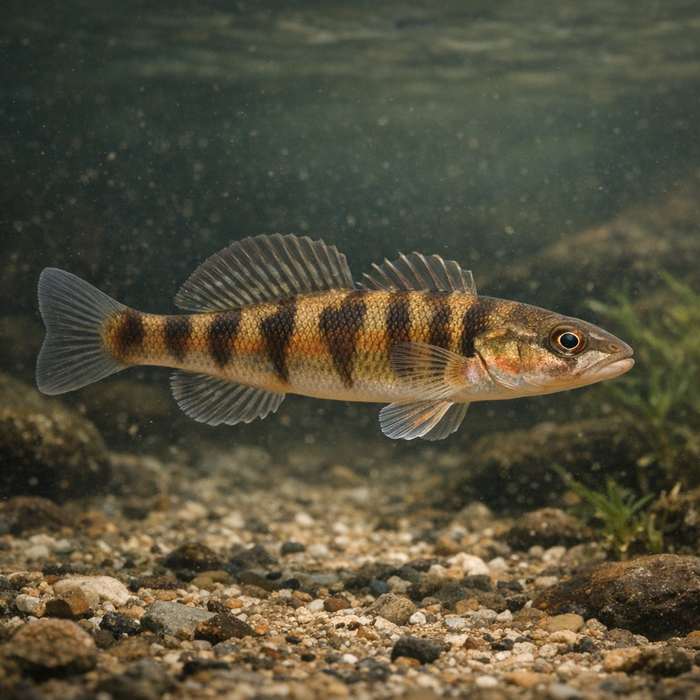
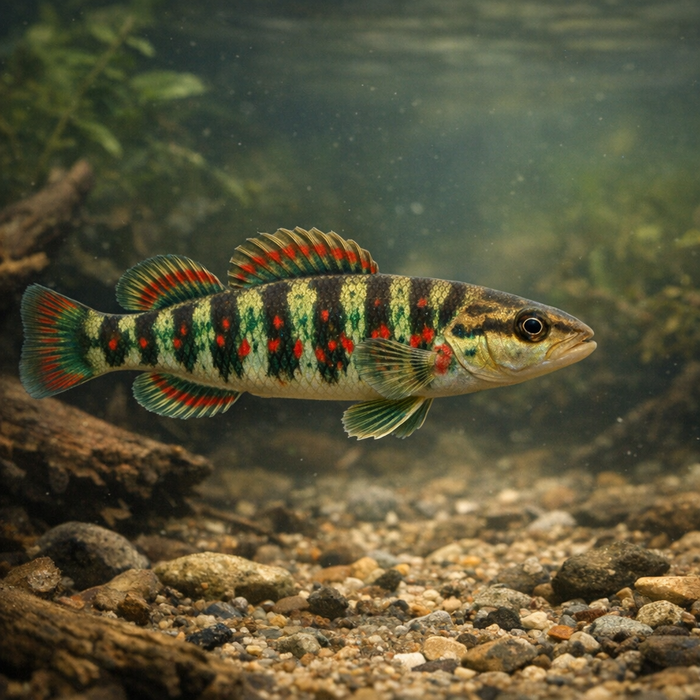
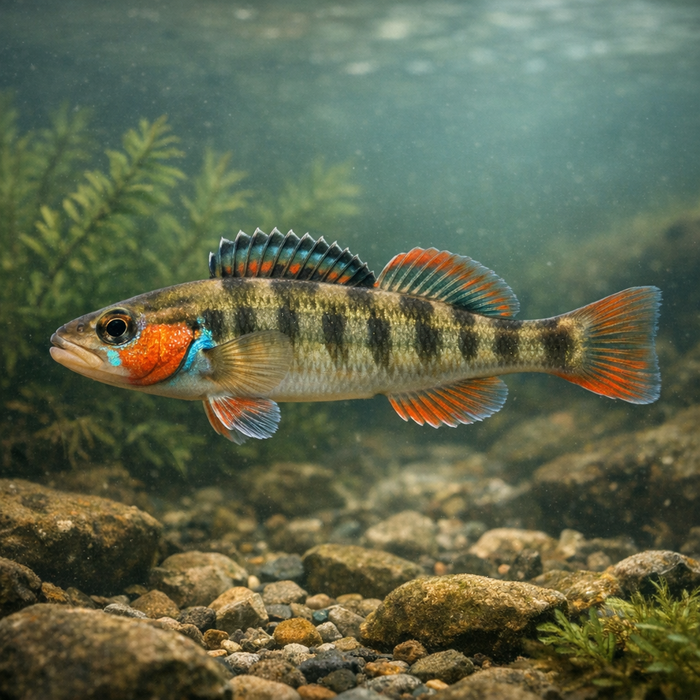
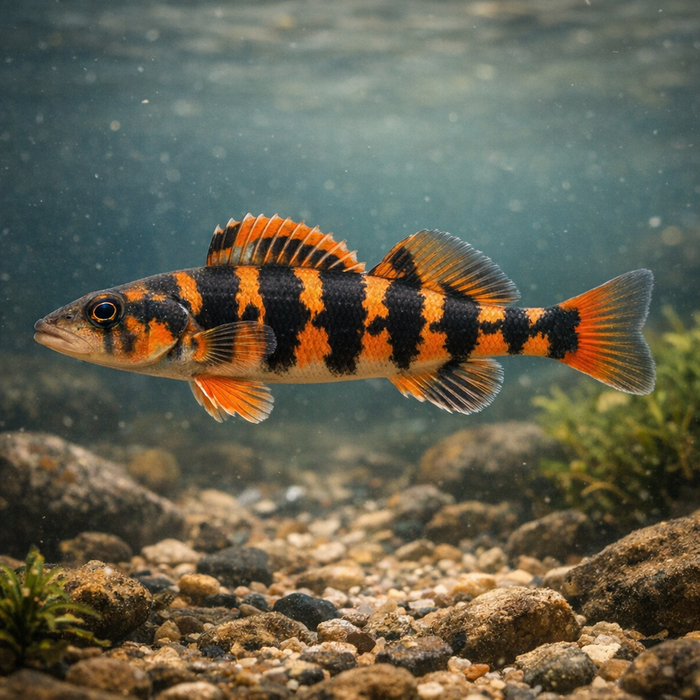
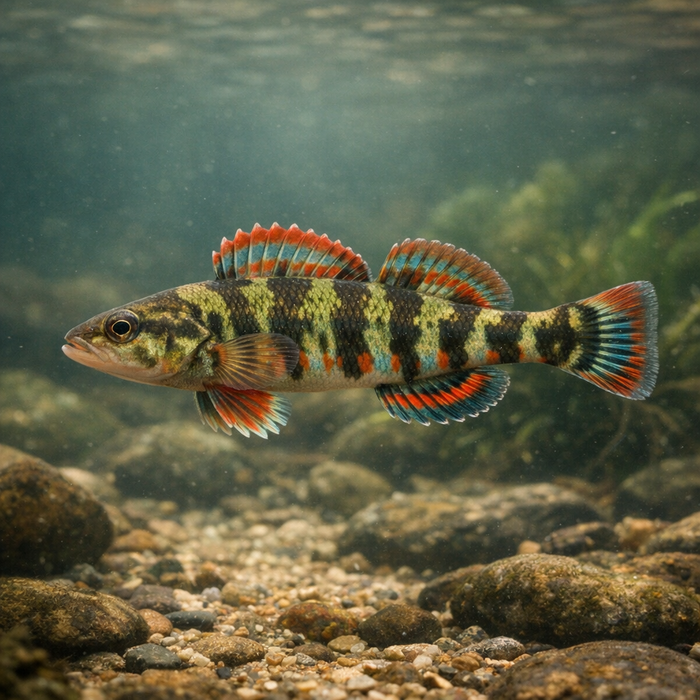
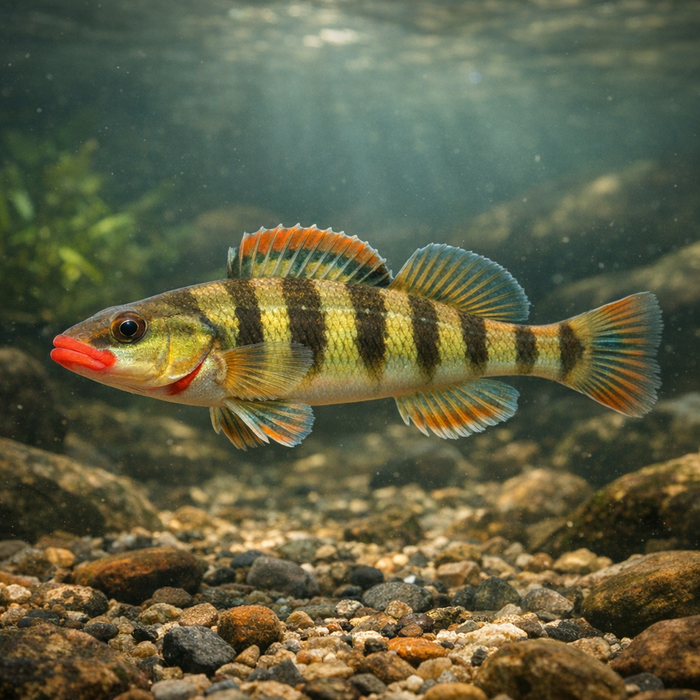
Coosa darter (etheostoma coosae): Small Fish, Big Attitude In RifflesIntroductionThe Coosa darter is the pint-sized street racer of Southeastern riffles. It's small, twitchy, and rides current like a pro skater hugging a rail. Anglers who dive into microfishing quickly learn this species is all about precision: put a tiny offering in the right seam, hold your breath, and watch it blink into existence then vanish again. If you're here for real Coosa darter facts or looking to understand Coosa darter habitat, you're in the right eddy.What Makes the Coosa darter Unique?Start with style. Breeding males of the Coosa darter light up with a neon-orange band edged in blue along the first dorsal fin, with crisp body bars that flicker between bold and subtle depending on mood and light. Function backs up the fashion. Like many darters, this species effectively ditched the full swim bladder, letting it stick to the streambed and dodge currents that would toss floatier fish like leaves. Add oversized pectoral fins that act like spoilers, and you get a bottom-gripping machine that can launch in inch-long bursts and stop on a dime.Habitat & Global RangeThe Coosa darter is a riffle specialist of the Coosa River system, favoring clear, cool to moderate-temperature streams with cobble, gravel, and clean sand. Think knee-deep runs, knee-busting slick rocks, and a steady, oxygen-rich push of water. It works the edges of fast lanes, the tops and tails of riffles, and micro breaks behind pebbles. Silt is its enemy. When water muddies or rocks get packed with fines, this fish retreats to what little clean gravel remains. If you're scouting Coosa darter habitat, look for that sparkling clarity and crunchy substrate underfoot.Behavior & TemperamentThe Coosa darter is a bottom snacker and ambush sprinter. It hugs the substrate, then hops forward to pin drifting morsels with barely a flick. Schooling isn't really its thing; loose clusters might share a riffle, but each fish runs a tiny zone and defends it during the spring mood swing. Spawning behavior ramps up early in the year, and males claim hand-sized territories worth more than their lives for a couple fiery weeks. Strike windows are short and visual. They react to bite-sized offerings that settle naturally, and the second something feels off, they ghost away.Ecological ImportanceSmall doesn't mean small-time. The Coosa darter links fast-water insect production to everything higher up the food chain. It recycles energy from caddis, mayflies, and midges into a streamlined package that feeds bigger fish and birds. Because it needs clean, well-oxygenated substrate, stable flows, and minimal silt, the species is a living readout of stream health. Healthy Coosa darter numbers usually mean the riffles are cranking as they should.Conservation & Environmental PressuresListed as Least Concern, the Coosa darter still faces the standard Southeastern gauntlet: sedimentation from development, poorly managed road crossings, stormwater surges, and low flows that bake streams in summer. Add in riparian clearing and you get hotter water and fewer insects. Hydrologic whiplash from sudden releases can scour nests or strand fish. The good news: protect the banks, keep gravel clean, and flows predictable, and the Coosa darter bounces back fast.The FishyAF TakeIf you want a fish that tests your stealth and knot game, the Coosa darter is it. There's no drag-screaming run coming, just that sweet, surgical moment when a two-inch fish inhales a speck of worm and your line twitches like a lie detector. You'll kneel, you'll crawl, you'll question your eyesight. But when a male lights up with that orange-and-blue dorsal and you slide the hook free in the current, you realize this isn't miniature fishing. It's precision fishing, scaled to the size of the stream's heartbeat. The Coosa darter makes you better at everything else.