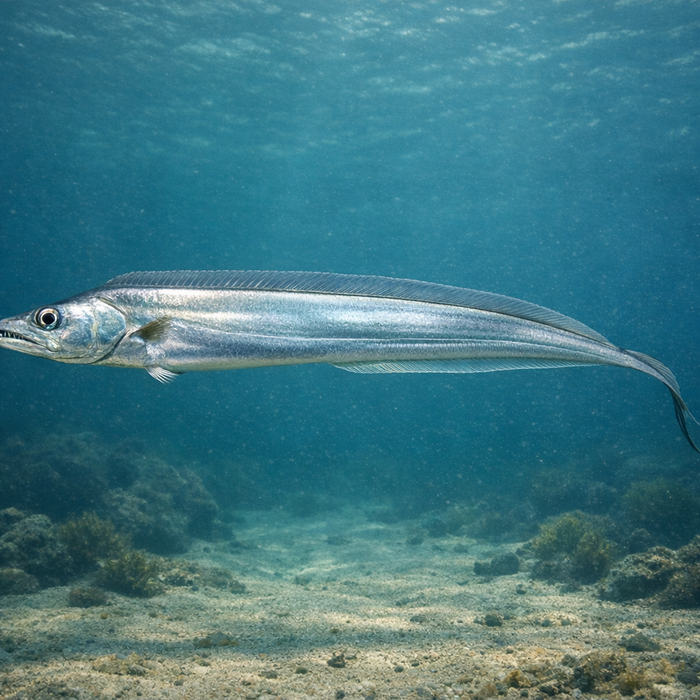
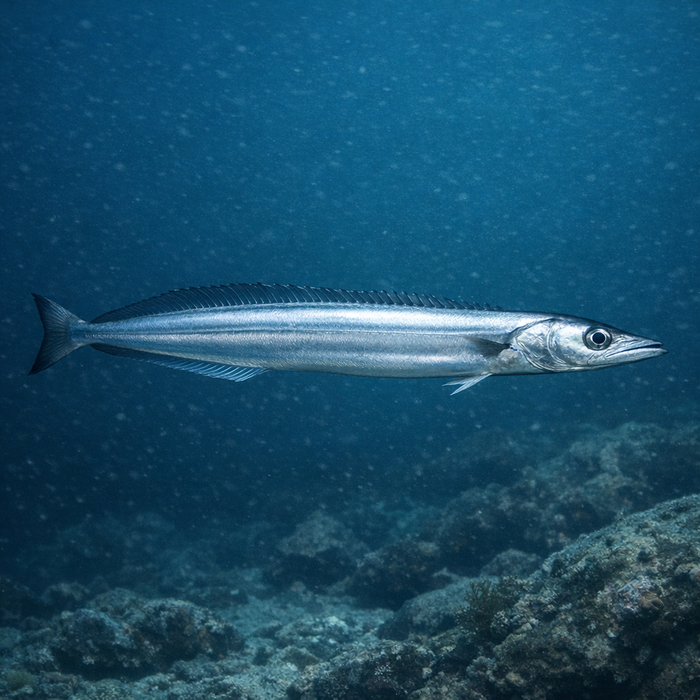
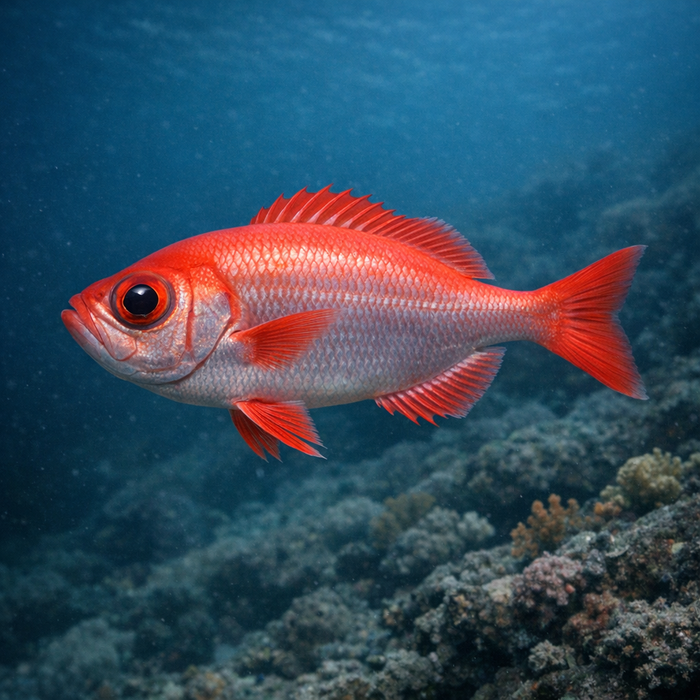
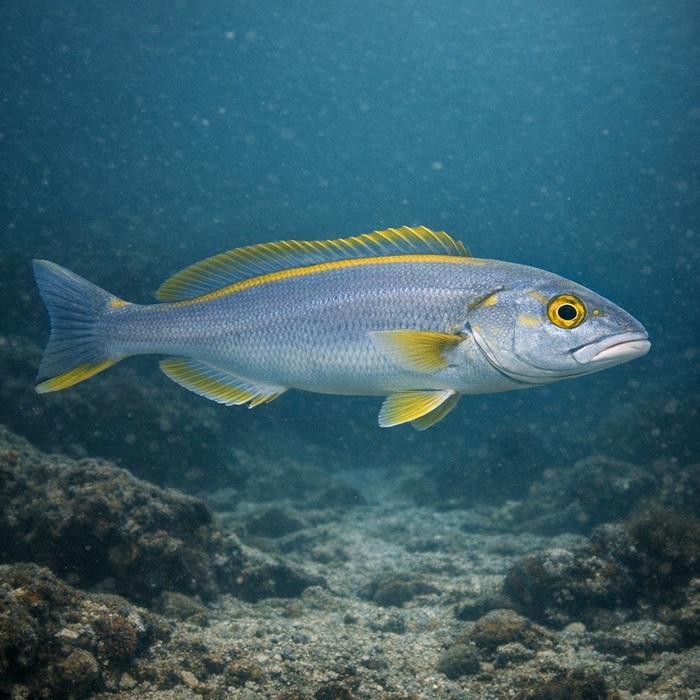
Channel Scabbardfish (Evoxymetopon taeniatum): A Bold, Memorable Hook LineIntroductionThe channel scabbardfish is what happens when a sword and a barracuda decide to cosplay a ribbon. Long, razor-sleek, and armed with hinged fangs, this deepwater predator lurks along continental slopes where light fades and pressure climbs. It's not a classic inshore hero, but if you fish heavy lead and big water, the channel scabbardfish will eventually crash your program with chrome-silver weirdness.What Makes the Channel scabbardfish Unique?Two standout traits define this fish. First, that lateral line sits in an open groove, a literal "channel" that inspired its name and helps it read faint vibrations in the deep. Second, its body design is unapologetically specialized for the dark: huge eyes for dim blue wavelengths and a dorsal fin that runs nearly the entire length like a stabilizing sail. Add hinged, folding fangs and you've got a surgical predator in a place where mistakes are expensive.Habitat & Global RangeThe channel scabbardfish hunts over outer shelves and upper slopes, typically well offshore in several hundred meters of water. Think canyon rims, escarpments, and deep ledges rather than beach breaks. Anglers most often cross paths while deep dropping around the Gulf of Mexico, the Southeast U.S., the Caribbean, and oceanic banks like Bermuda's Challenger. While patchy, its distribution seems widespread across warm-temperate and tropical Atlantic depths. If you're looking for Channel scabbardfish habitat, target sharp structure sitting in the path of steady current.Behavior & TemperamentLife out here favors economy. The channel scabbardfish roams near-bottom and midwater layers depending on current, bait, and time of day. It's not a schooling fish in the sardine sense, but loose groups happen when food stacks. The strike is decisive and often vertical, and it can move up off the bottom when darkness stretches the buffet upward. Despite looking like a sword that forgot the hilt, it fights with stubborn, head-shaking torque rather than blistering runs. Long bodies tear easily, which is useful intel for landing but a headache for brag photos.Ecological ImportanceDeep slopes are nutrient crossroads, and the channel scabbardfish slots in as a mid-to-upper predator that recycles energy from mesopelagic baitfish and squids into bigger food webs. Its large eyes and streamlined body make it an effective hunter in low light and stiff current. That predatory role helps regulate bait layers and links twilight-zone life to apex predators cruising above. If you're collecting Channel scabbardfish facts, start with this: it's a pressure-proof specialist that turns small, vertical windows into full-course meals.Conservation & Environmental PressuresData on this species is thin. Deepwater ecosystems typically suffer from slow growth and low reproductive turnover, so caution is smart even when landings look modest. The channel scabbardfish shows up as bycatch in deep-drop and some longline sets targeting snappers, groupers, and swordfish. Seafloor disturbance, lost gear, and concentrated effort on fragile slope habitats can have outsized impacts. Add warming currents and shifting oxygen layers, and life for a depth specialist doesn't get easier.The FishyAF TakeThe channel scabbardfish is a curveball: not famous, not photogenic in a cuddly way, but absolutely unforgettable. For anglers, it's the chrome surprise that shows when you commit to heavy leads, deep structure, and moody current. The fish's design is pure function: see better, sense better, stab better. If your offshore program includes a deep-drop rig, consider the channel scabbardfish a bonus trophy from the abyss. It's one of those species that reminds you how weird and efficient the deep really is, and why a little mystery still lives just beyond your sounder's last confident pixel.