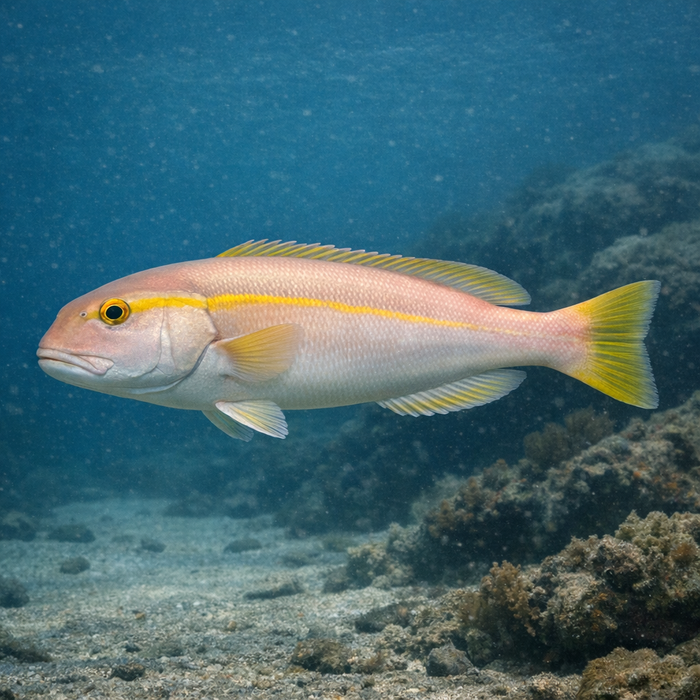
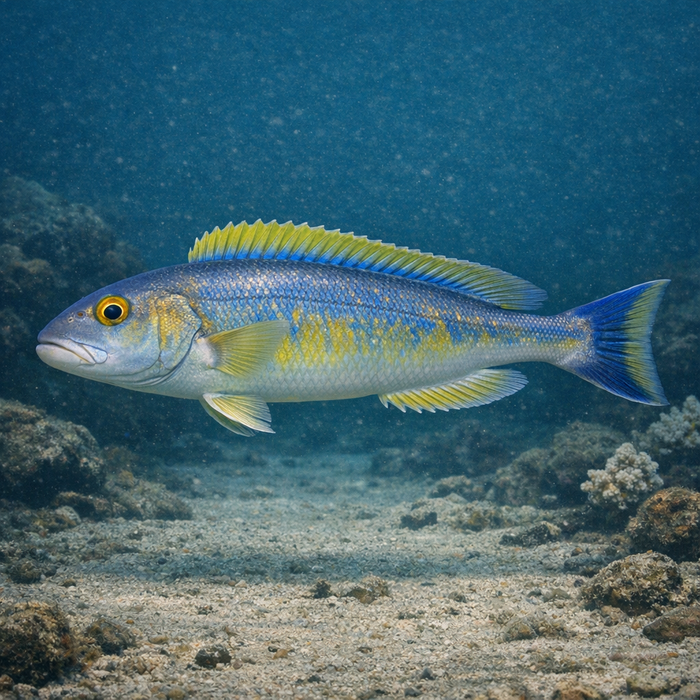
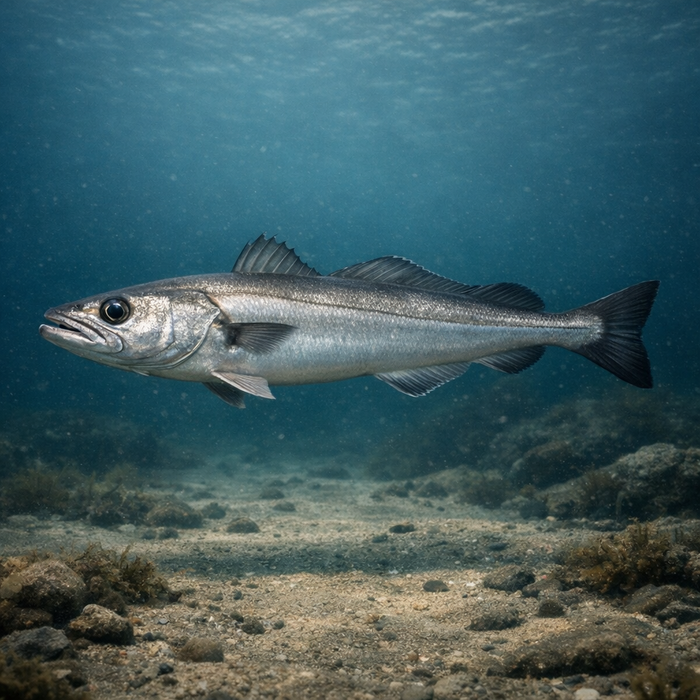
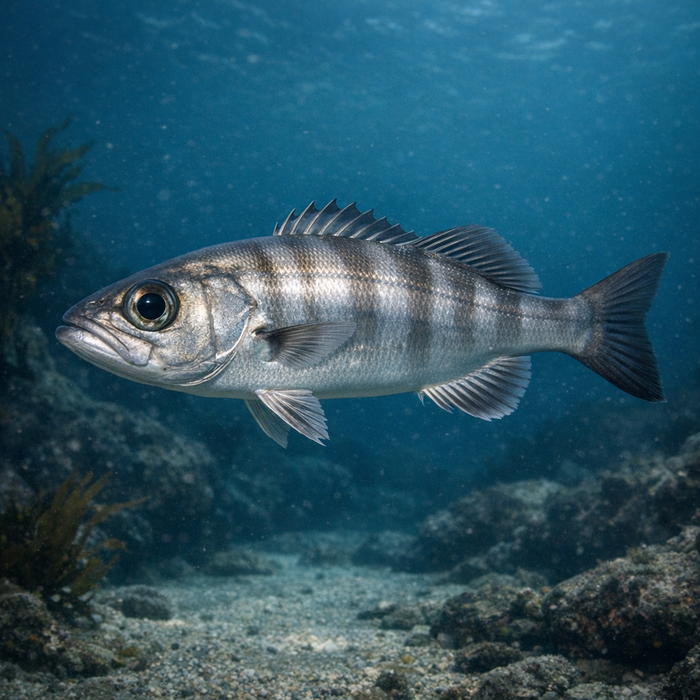
Atlantic goldeneye tilefish (Caulolatilus chrysops): A flashy-eyed deep-drop prize with sweet fillets and sneaky attitude.IntroductionMeet the reef-shelf wallflower that eats like a linebacker. The Atlantic goldeneye tilefish is a deep-shelf specialist that loves rubble patches, ledges, and wreck edges where currents deliver snacks. It's not the bruiser golden tilefish you see in hero shots, but it will absolutely make a day for anyone who can find clean hard bottom in the 200 to 600 foot zone. If you want Atlantic goldeneye tilefish facts in plain English, think: great table fare, modest size, and a laser-focused love of shell-hash and structure.What Makes the Atlantic goldeneye tilefish Unique?Start with the face. The eye is ringed in luminous gold, and the cheeks wear electric-blue streaks like war paint. That look isn't just pretty in photos; it's a dead giveaway when you're sorting tilefish species on the deck. Unlike their heavyweight cousins that burrow deeply, Atlantic goldeneye tilefish are more hover-and-pounce hunters, often lifting a few feet off bottom to intercept crabs, shrimp, and small fish pushed by the current. They fight with persistent head shakes and stubborn circles, not blistering runs, which is perfect for anglers dialing in deep-dropping technique without needing a power winch and a week of ice packs.Habitat & Global RangeIf you're curious about Atlantic goldeneye tilefish habitat, picture the outer continental shelf from North Carolina through Florida, the Gulf of Mexico, and across the Caribbean to northern South America. They're a bottom-focused species that gravitates to shell beds, scattered coral heads, rocky humps, and wrecks. The magic mix is hard substrate plus current. Depths vary by region and water clarity, but the 250 to 500 foot swath is prime. They don't roam far like pelagics; instead, they key on micro-structure and food lanes. Think wide, flat country punctuated by little neighborhoods of life. Find those neighborhoods and you'll likely find goldeneyes.Behavior & TemperamentAtlantic goldeneye tilefish aren't bullies, but they're not shy either. They'll smack scent-heavy baits and mid-weight jigs that bounce cleanly just off bottom. They often hold tight to the base of a ledge or the upcurrent side of a rubble pile, picking off morsels pushed low by flow. On the rod they feel like determined, thudding weight with occasional surges. Hooked fish rarely rocket for the surface; they try to dog down and use the structure. Because they hover above bottom, precise depth control and bottom contact matter as much as bait choice. Strong currents push them tight to relief; slack lets them spread out.Ecological ImportanceGoldeneye tilefish are middleweight predators on the shelf edge food web. They convert crustaceans and small benthic fishes into calories for bigger predators like grouper and sharks. Their preference for patchy habitats makes them part of a broader mosaic of reef, rubble, and soft-bottom communities that collectively host astonishing biodiversity. Healthy goldeneye numbers generally signal healthy hard-bottom zones that haven't been chewed up by destructive gear or smothered by silt.Conservation & Environmental PressuresWhile not at the center of the management universe, Atlantic goldeneye tilefish ride along with regional "tilefish complex" rules. Deep habitats offer a buffer from casual pressure, but localized hotspots can get leaned on. Habitat degradation, lost gear, and hypoxia events can all pinch. Depth-related barotrauma is real; released fish need help if you're trying to send them back healthy. As with many deep-dwelling fishes, slow, steady growth and site fidelity mean overworking a small area can show up fast in your cooler counts.The FishyAF TakeThe Atlantic goldeneye tilefish is the perfect deep-drop gateway drug. It's distinctive, delicious, and honest about its habits. Learn to read your sounder for rubble lines, keep a chicken rig tidy, and find that gentle bounce where your sinker taps but doesn't plow. Do that, and goldeneyes will reward you with steady bites and pristine fillets that punch above their weight. Looking for more Atlantic goldeneye tilefish facts? Here's the kicker: mastering this species makes you better at everything else on the shelf edge, from bluelines to mystery grouper. Fish smarter, not deeper, and the golden eyes will follow.