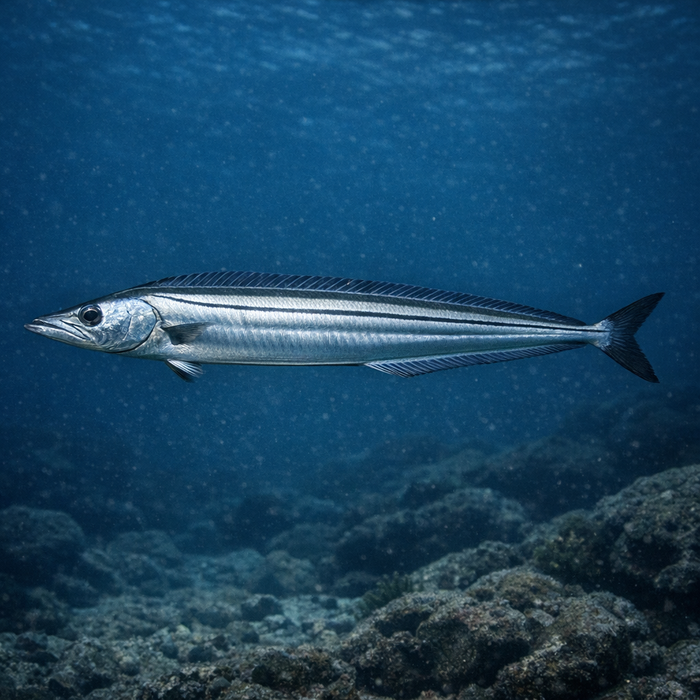
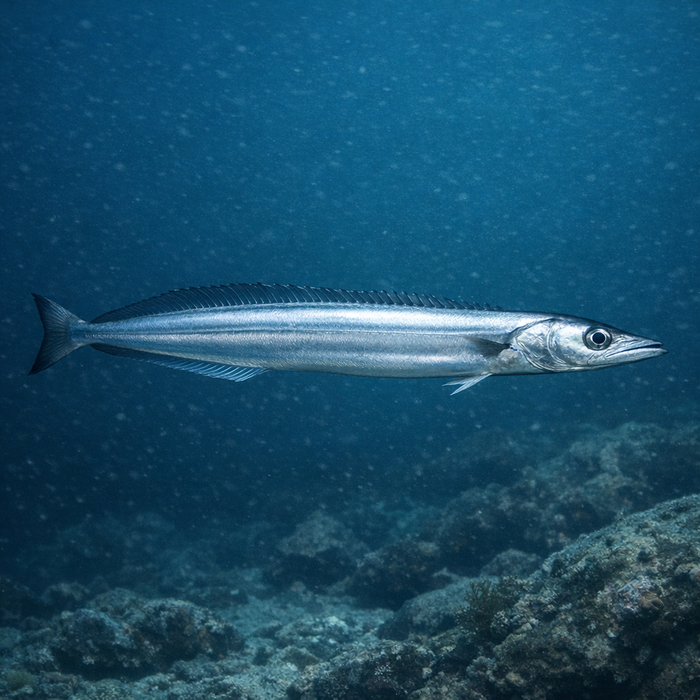
Largehead Hairtail (Trichiurus lepturus): A Belt-Thin Predator With Sword-Grade AttitudeIntroductionThe largehead hairtail looks like someone sharpened a fish into a silver blade and forgot to stop. It's long, shiny, and mean-mouthed, a night-stalking cutlass that slashes through bait schools under pier lights and coastal currents. If you like weird, fast, and flashy, this is your fish. These are the Largehead hairtail facts anglers actually care about: where it hunts, why it crushes bait at night, and how to get in on the action without donating every rig to those fangs.What Makes the Largehead hairtail Unique?Two big things: the body and the bite. The largehead hairtail is a ribbon-thin, scaleless, chrome bar with a tiny tail and a dorsal fin that runs almost the entire length. It swims by rippling, eel-style, and can look almost fake when it turns under dock lights. Then there's the business end. The jaws are loaded with saber teeth that punch holes in bait and your leader. It grows very long but not very heavy, which constantly surprises newcomers who expect a 6-foot snake to weigh like a tuna.Habitat & Global RangeThis species owns the edges of the ocean: continental shelves, coastal slopes, bays, and nearshore open water. The largehead hairtail roams midwater by day, then surges higher in the water column after dark. You'll see hot bites near current seams, channel edges, and anywhere bright lights gather bait. It's truly global, present in tropical to warm-temperate seas, and heavily targeted in Asia from Tokyo Bay to the Zhoushan grounds. That worldwide spread explains why "Largehead hairtail habitat" answers usually start with: nearshore, midwater, and nocturnal.Behavior & TemperamentThink fast and opportunistic. The largehead hairtail is an ambush sprinter that keys on flicker and flash. It schools up tight when bait is thick, then detonates in short feeding windows, especially dusk through midnight. Under lights it turns theatrical, streaking like a chrome switchblade and cutting lines if you're sloppy. It isn't a bulldog fighter, but it's a violent hitter with wild headshakes and plenty of corkscrew chaos at the net.Ecological ImportanceAs a mid-trophic predator, the largehead hairtail links small pelagics and invertebrates to larger gamefish and marine mammals. In many regions it's an economic workhorse, supporting big commercial landings and vibrant local food cultures. That schooling, nocturnal hunting style also shapes coastal forage behavior. Where hairtail prowl, bait moves differently, hugging structure shadows and falling into tight defensive balls.Conservation & Environmental PressuresOn global paper, the largehead hairtail sits comfortably. It's widely distributed, fast-growing, and highly productive. But local stories vary. Heavy netting near urban coasts, habitat degradation in estuaries, and warming-driven shifts can all tweak run timing and size structure. Responsible handling matters too; they're delicate despite the scary smile. Quick icing and minimal deck flopping preserve quality if you're keeping fish, and clean releases help night bites stay strong.The FishyAF TakeThe largehead hairtail is the show-off you actually invite to the party. It's accessible, dramatic, and refreshingly weird. You don't need fancy gear: a light spinner, some wire or tough fluoro, a few slim jigs or squid strips, and a plan to fish at night. Expect short windows, bright lights, and razor teeth. When the switch flips, it's cinematic: silver ribbons erupting under the glow, crunching bait and snapping at anything that shines. If your idea of fun is controlled chaos with chrome confetti, the largehead hairtail delivers in spades.