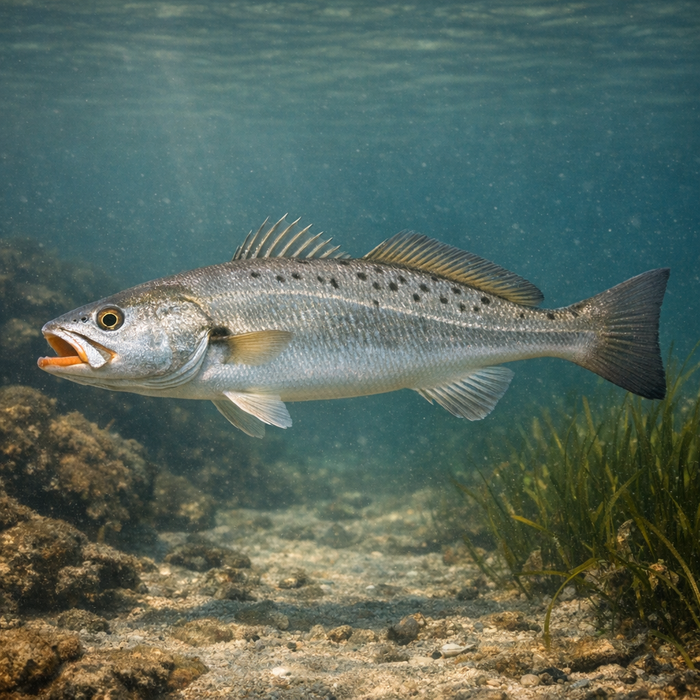
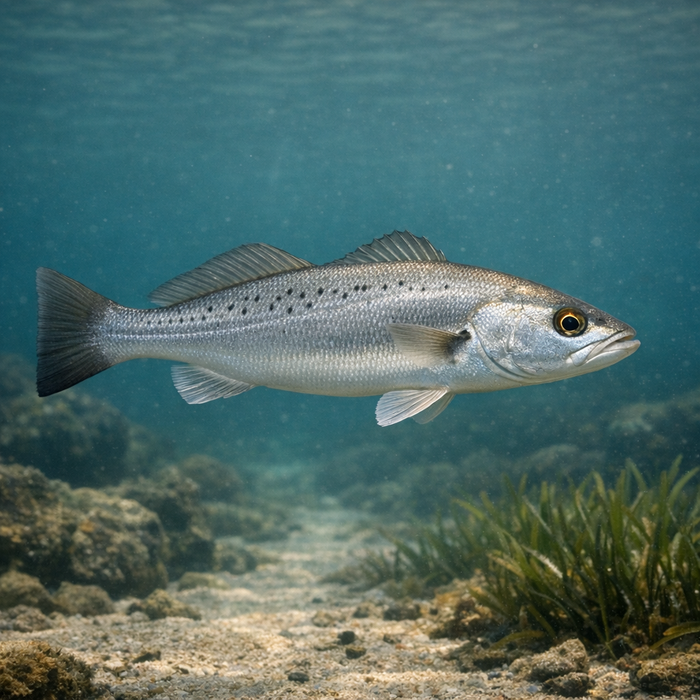
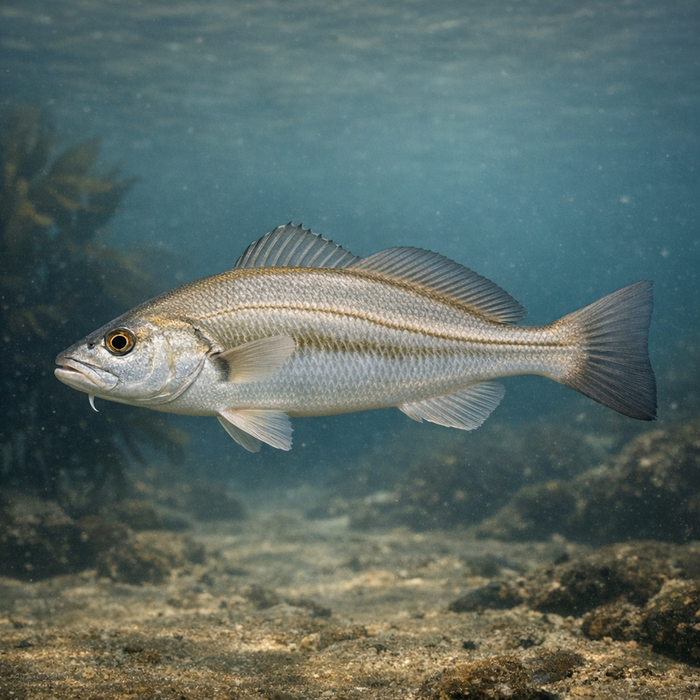
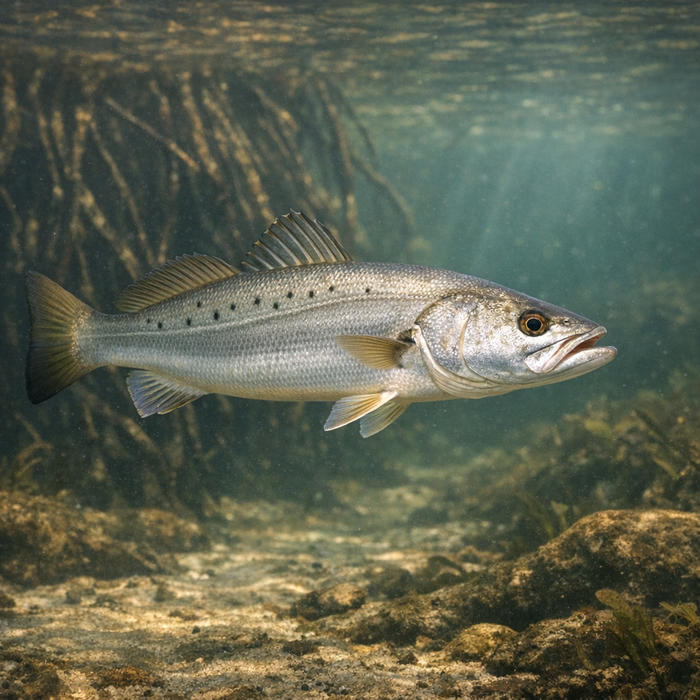
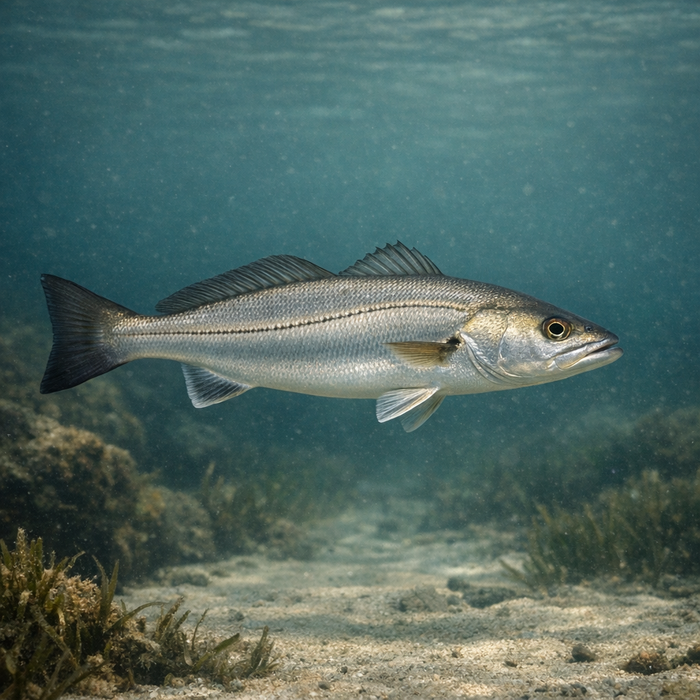
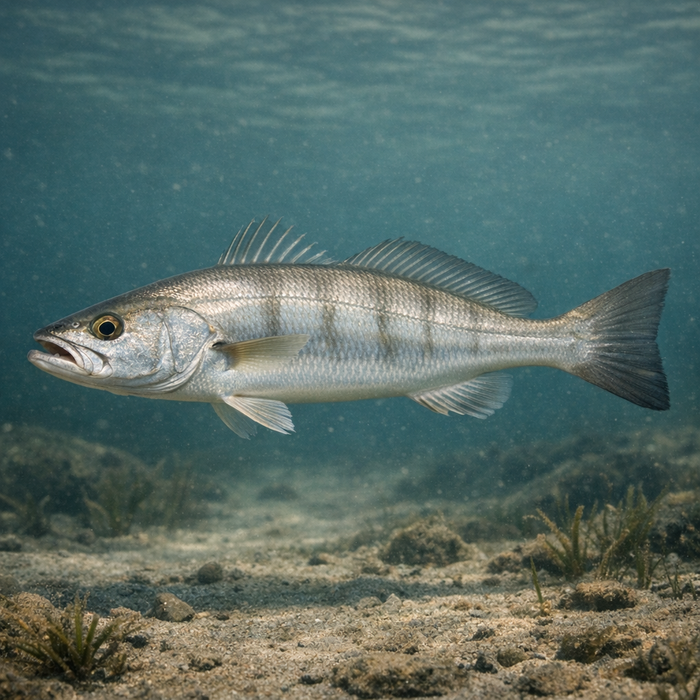
Green Weakfish (Cynoscion virescens): Surf-Savvy Croaker With Fangy AttitudeIntroductionThe green weakfish is the South American inshore bite that keeps surf casters honest. It flashes olive across the back, croaks like a drum set, and hammers baits when the tide sneaks over a bar. If you fish beaches, bays, or brown-green estuaries from southern Brazil to Argentina, this croaker with canines is probably on your hit list. Here are the essential Green weakfish facts, tactics, and a dose of FishyAF perspective to dial it in.What Makes the Green weakfish Unique?First, those teeth. Unlike many croakers, green weakfish carry sharp canines that park a fleeing anchovy in place. Second, the namesake "weak" mouth. The tissue around the hook hole can tear if you horse the fish, so pressure management matters. Finally, that shifting paint job: freshly hooked fish show metallic olive-green over silver flanks that quickly wash out to plain chrome once they hit the deck. Together, it's a mashup of finesse, flash, and surprising bite power.Habitat & Global RangeThe green weakfish lives in the shallow salt-and-brackish world where tides write the rules. Think estuary mouths, surf rips, feeder channels, and inside bars that break waves and collect foam. Most catches happen in 1 to 15 meters, but they roam slightly deeper coastal edges when bait drifts offshore. Its core range runs the Southwest Atlantic, notably southern and southeastern Brazil, Uruguay, and Argentina including the big producers like Patos Lagoon and the Río de la Plata. If you're searching "Green weakfish habitat," lock in on turbid water, sand structure, and moving current.Behavior & TemperamentGreen weakfish school by size and pin bait against sandbars, seams, and channel edges. They're not mindless smashers, but they'll pounce when visibility is low and tides deliver a buffet. Expect flurries around dawn and dusk, plus mid-tide windows when current wakes up. Fight-wise, they pull clean and head-shake with croaker attitude, then surrender if you keep a steady bend. Overdo the drag and that weak mouth will sign your release form for you.Ecological ImportanceAs mid-tier predators, green weakfish mop up anchovies, silversides, shrimp, and small crabs, translating bait biomass into croaker protein for bigger players. Their drumming-vibrating specialized muscles against the swim bladder-fuels spawning communication and probably helps school cohesion in murky water. Age can be read from otolith earstones, so scientists track year-classes and recruitment pulses, using the species as a barometer for estuary health. Healthy green weakfish populations usually mean the nursery grounds are doing their job.Conservation & Environmental PressuresThis is a popular food fish across its range, with commercial nets and heavy surf pressure in some regions. Localized overfishing, estuary degradation, and water-quality swings can thin schools. Formal global assessments for Cynoscion virescens are limited, and classifications may vary by country, but the usual rules apply: clean water, intact nursery habitat, and rational harvest keep the bite sustainable. Anglers play a role by handling fish gently, especially near the mouth, and respecting local closures or slot limits when they exist.The FishyAF TakeThe green weakfish isn't flashy like a tarpon or burly like a drum, but it's a stone-cold test of reading tide, structure, and bait movement. It rewards anglers who move their feet, hunt the seam, and mind their drag. Call it a finesse predator with street smarts. If you want a confidence fish that teaches you to work a shoreline with intent, the green weakfish is your professor. And if you just wanted a pile of quick bites, it's that too-assuming you did your homework on current, color, and cadence. That's the bite: simple on paper, sharp-toothed in practice.