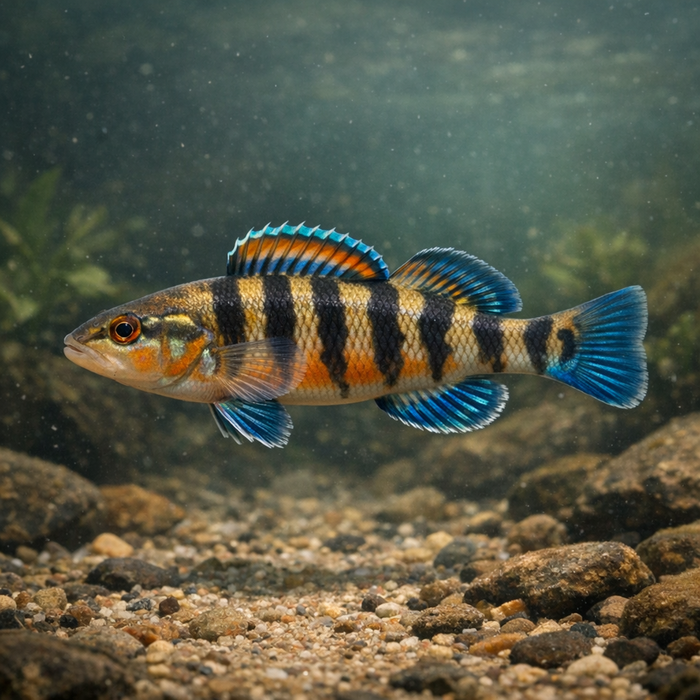
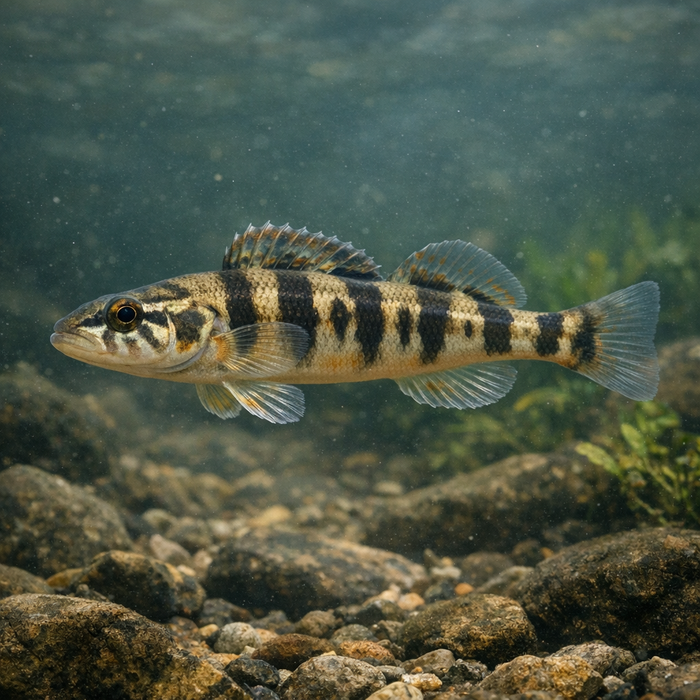
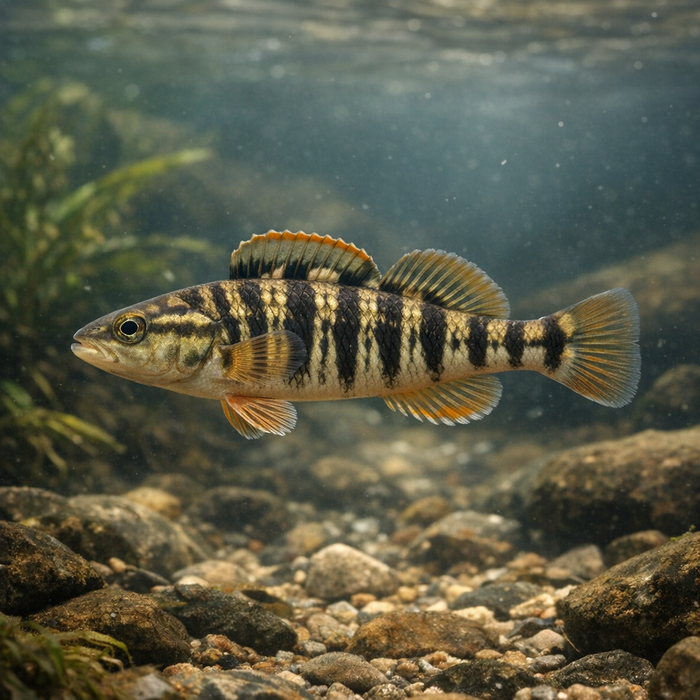
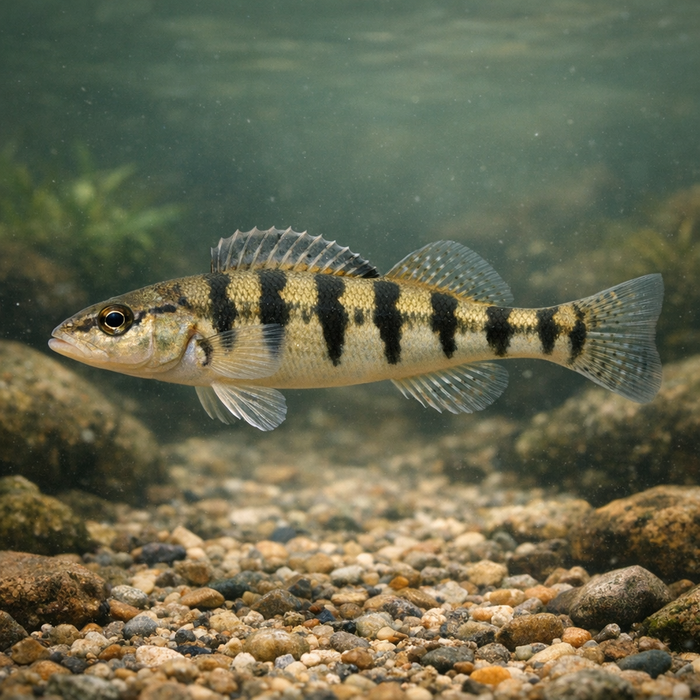
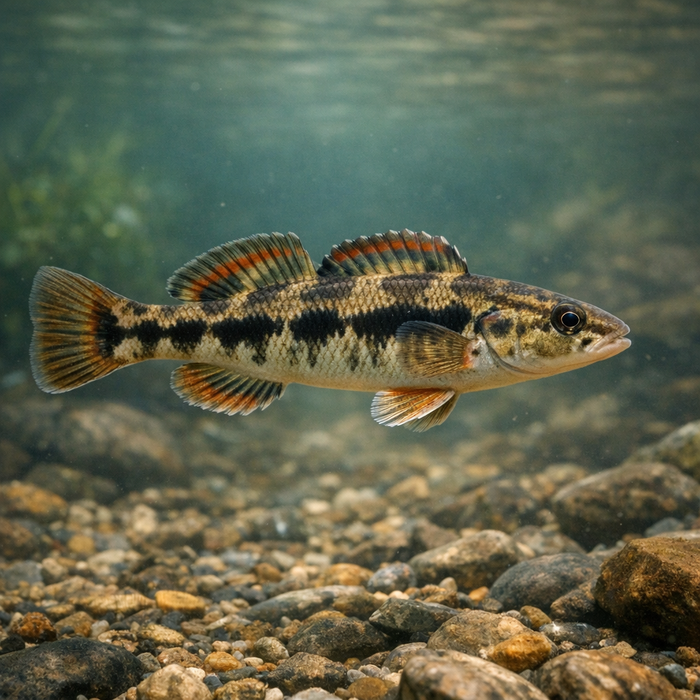
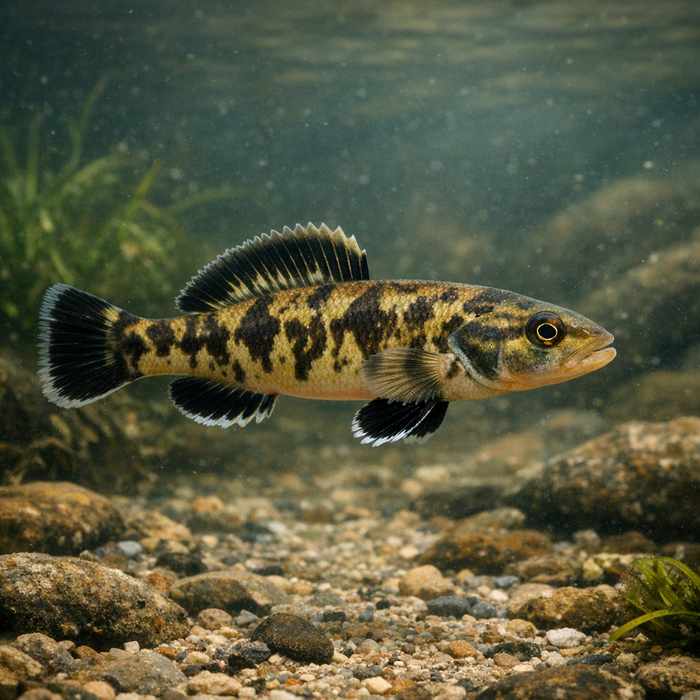
Cherokee Darter (Etheostoma scotti): A tiny riot of color guarding a thumbnail of current and rock.IntroductionThe Cherokee darter is the kind of fish that makes you slow down. Blink and you'll miss it, but pause over a chattering riffle and you might catch a flash of orange bars and blue specks skittering between stones. It's small, fast, and finicky, a micro jewel from Georgia's Etowah basin that inspires biologists, confounds developers, and makes microfishing geeks lose their minds. If you want Cherokee darter facts without the snooze, you're in the right riffle.What Makes the Cherokee darter Unique?Start with the look. Breeding males wear neon-orange fins and bars lit against powder-blue flecks-like they were designed by a lure painter on a caffeine bender. Then there's the life strategy: short-lived, early-maturing, and laser-locked on one habitat type. The Cherokee darter invests everything in clean, moving water with coarse gravel and chert rubble, tucking adhesive eggs into rock crevices where silt can't smother them. Many darters are picky, but this species takes picky and dials it to 11. It's also a conservation celebrity: described in the early 1990s and protected soon after, a poster child for what happens when sediment and dams muscle into headwater streams.Habitat & Global RangeForget globe-trotting. The Cherokee darter is a hometown specialist, restricted to parts of the Etowah River system in north Georgia. Think clear riffles and runs with firm gravel, pebbles, and chunked-up chert-no fluff, no muck. Water needs to move, but not tear-your-waders-off fast. The habitat tile reads like a minimalist recipe: clean flow, coarse rock, cover in the cracks. That's the entire universe for a fish that measures in inches, not pounds, and whose neighborhoods can shift a few feet depending on where clean micro-eddies open up after a storm. If you're mapping Cherokee darter habitat for real, you're basically drawing a dotted line over riffles that haven't been clogged by silt.Behavior & TemperamentThis fish is a bottom runner with bursts of speed worthy of a spooked sculpin. The Cherokee darter hugs substrate, darts between cobble gaps, and ambushes tiny invertebrates in the boundary layer where current softens. Males carve out snack-sized territories and flash color in the breeding season, then fade back to drabber tones when business is done. Spawning typically cues with warming spring temps; once the water hits that sweet spot, action picks up, eggs land in cracks, and life zips along. Most individuals don't see a third birthday, so there's no lounging. It's sprint, spawn, and survive.Ecological ImportanceThe Cherokee darter is a riffle quality-control inspector. Because it needs clean, oxygen-rich flow over coarse rock, its presence signals a healthy slice of stream. Shove in sediment and the species taps out quickly, which tells managers something's off upstream. Darters also plug a critical mid-food-web role: they convert invertebrate biomass into bite-sized protein for larger predators. When this fish thrives, it's a neon thumbs-up for benthic insects, flow regimes, and the heavy-lifting geology that makes riffles riffle.Conservation & Environmental PressuresHere's the gut punch. The Cherokee darter is Endangered. Dam construction carved up its range, and sediment from development and poor land practices fills the spaces it needs for eggs and oxygen. Low flows, warm pulses, and erratic stormwater don't help. Each riffle is real estate, and when you pave a watershed, the mortgage comes due in silt. Many populations are now isolated, which adds genetic and recolonization headaches. Protecting this fish means doing unsexy work: stabilizing banks, managing stormwater, maintaining buffers, and keeping riffles coarse and clean.The FishyAF TakeThe Cherokee darter is proof that not every worthy fish stretches tape or smashes drags. It's the opposite: a two-inch masterpiece that demands you fish with your eyes, mind your footprints, and appreciate precision habitat. If you're an angler, it's okay to want the photo-but with this species, the smartest flex is restraint. Learn the cues, read the rocks, and, where laws say hands-off, enjoy the show without making it a grip-and-grin. Call it micro zen. For anyone chasing Cherokee darter habitat or Cherokee darter facts, remember the headline: keep the riffles clean and the water moving, and this tiny riot of color will keep punching above its size.