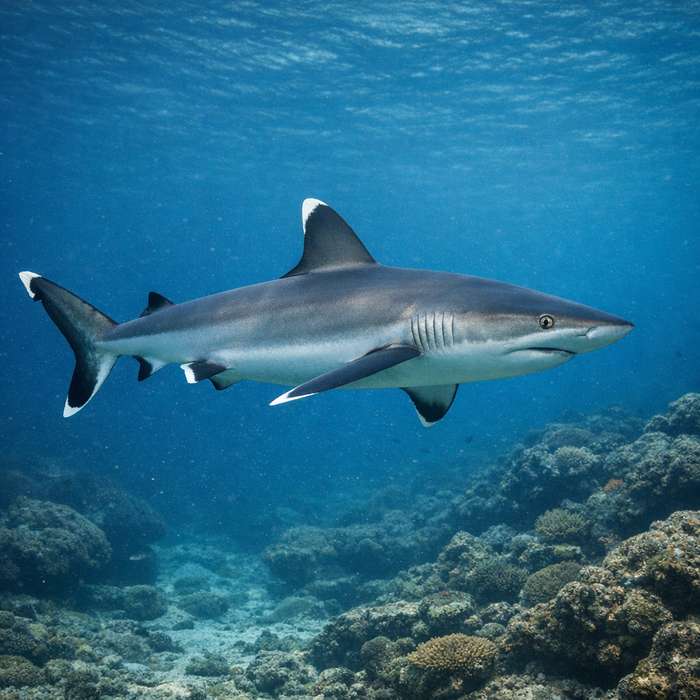
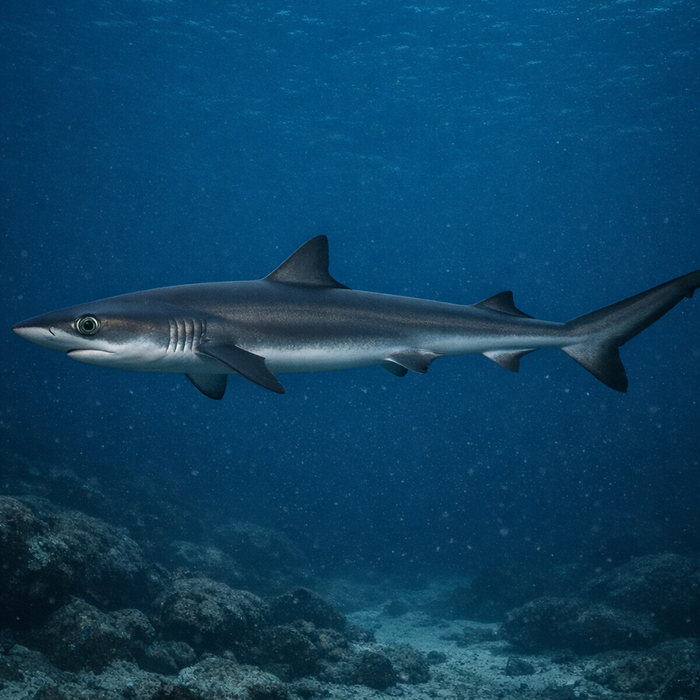
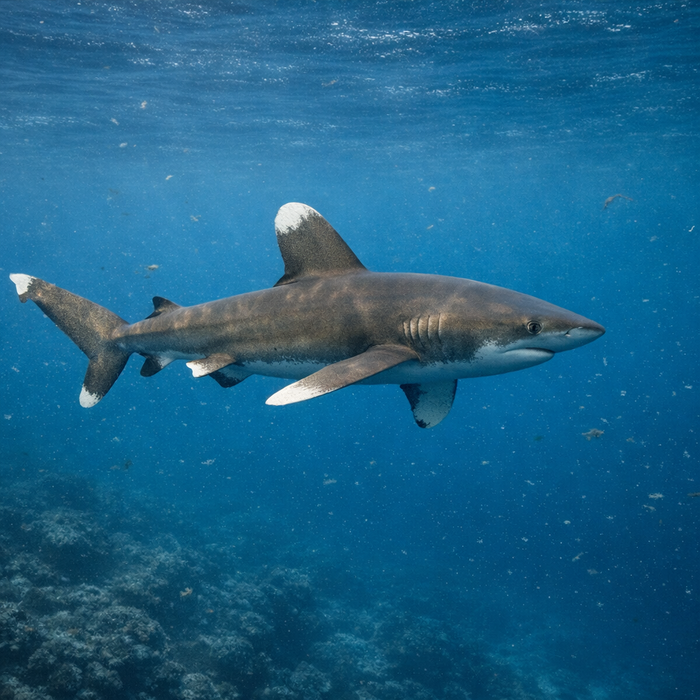
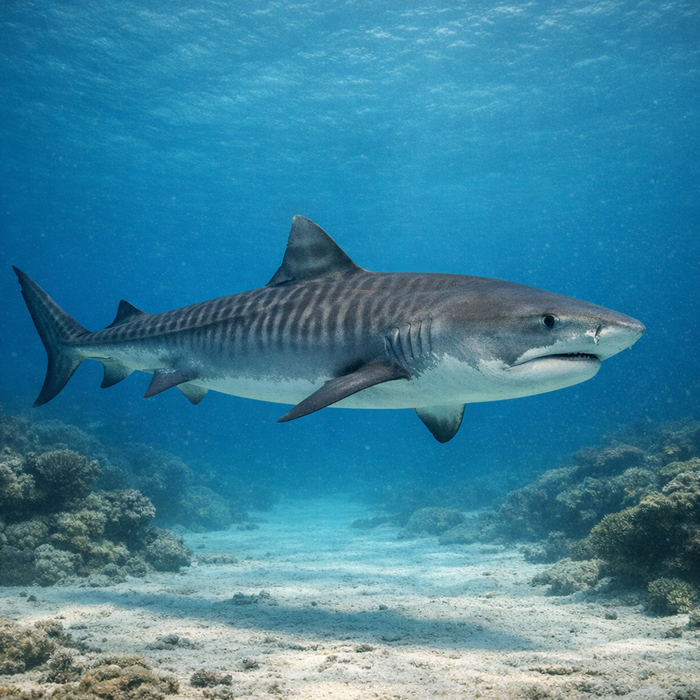
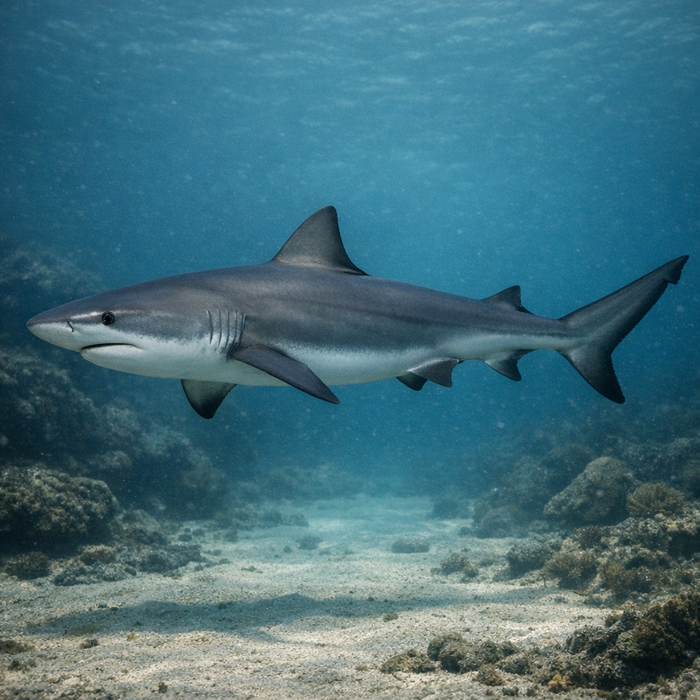
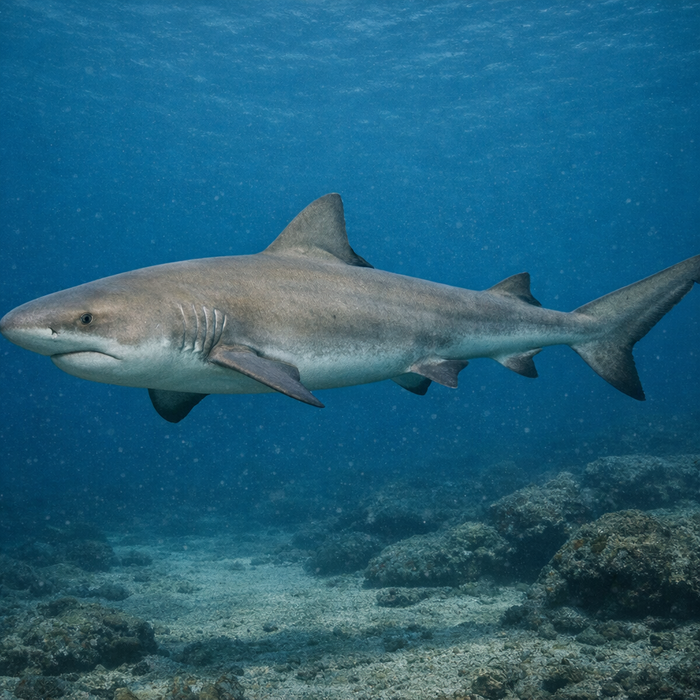
Galapagos shark (Carcharhinus galapagensis): The oceanic island bruiser that shows up like it owns the reef edge.IntroductionThe Galapagos shark is the heavy-set bouncer patrolling remote bluewater doorways. It's built for current, carved for power, and has the kind of swagger that makes divers hold eye contact a little too long. If you fish offshore islands and abrupt drop-offs, this shark is the grayscale silhouette sliding out of deep cobalt just when your bait disappears. Want serious ocean mojo in one package? You're looking at it.What Makes the Galapagos shark Unique?First, this shark specializes in oceanic real estate. We're talking isolated islands, seamounts, and edges where vast pelagic highways crash into reef ledges. The Galapagos shark doesn't dabble. It commits. Second, it's a bold, investigative predator. The species is known for close passes and classic threat displays, which is shark-speak for "I'm in charge here." Third, it scales big. Mature fish commonly run 6 to 9 feet, with legitimate bruisers over 10. For anglers hunting big-game experiences beyond billfish and tuna, the Galapagos shark checks the box.Habitat & Global RangeThe Galapagos shark habitat revolves around oceanic islands with clean, moving water and structure. Think Galápagos, Cocos, Revillagigedo, and the Hawaiian archipelago, along with similar outposts in the Atlantic and Indian oceans. You'll see them riding pressure edges where current smashes into volcanic walls, cruising pinnacles that rocket up from abyssal plains, and working bait stacks pinned against bluewater drop-offs. Depth-wise, they work the top 200 feet but roam deeper. If you're looking for Galapagos shark habitat in a phrase: clear, current-swept island edges with room to run.Behavior & TemperamentConfident and curious sums it up. The Galapagos shark is a strong midwater hunter that uses speed bursts and pack tactics when food piles up. They'll investigate anything new, from tuna heads to floating junk. When amped, they arch their backs and throw side-to-side sweeps that say back off. Despite the bravado, they're not reckless. They use current lines, patrol predictable travel routes, and conserve energy between blitzes. Hook one and you'll get bulldog runs, wide circles, and heavy leverage battles closer to the surface than you'd expect from a reef-adjacent fish.Ecological ImportanceThis species is an apex predator shaping who eats where along island edges. By culling weak or unlucky prey and forcing bait schools to move, Galapagos sharks help keep reef and pelagic systems dynamic. Their presence often tracks seasonal pulses of jacks, tunas, and even seabirds working surface bait. Take them out and you flatten the food-web choreography. It's not just about one shark. It's about how the entire ledge wakes up when the gray suits roll through.Conservation & Environmental PressuresHere's the rub: slow growth, late maturity, and loyalty to island neighborhoods make this shark easy to overdo. Longliners and illegal finning hammered many oceanic hotspots before large marine reserves and stricter protections took hold. Today, some of the finest Galapagos shark water is fully protected, which is great for the species but limits angling records. Outside reserves, bycatch remains a problem, and climate-driven shifts in currents can scramble bait patterns. Near Threatened isn't a trophy caption. It's a caution sign.The FishyAF TakeThe Galapagos shark is that rare mix of accessible-thrilling if you can reach the neighborhood. You don't need a thousand tactics. You need heavy tackle, clean rigs, and respect for a fish that can turn a casual drift into a core-memory fight. As apex predators go, they're honest: show up where the current hits the wall with something oily and fresh, and they'll show themselves. If you're compiling real Galapagos shark facts for the bucket list, pencil this in: remote island, screaming drag, silver-gray slab materializing out of blue. Then release it like a pro and let the ledge breathe. The ocean remembers anglers who get it.