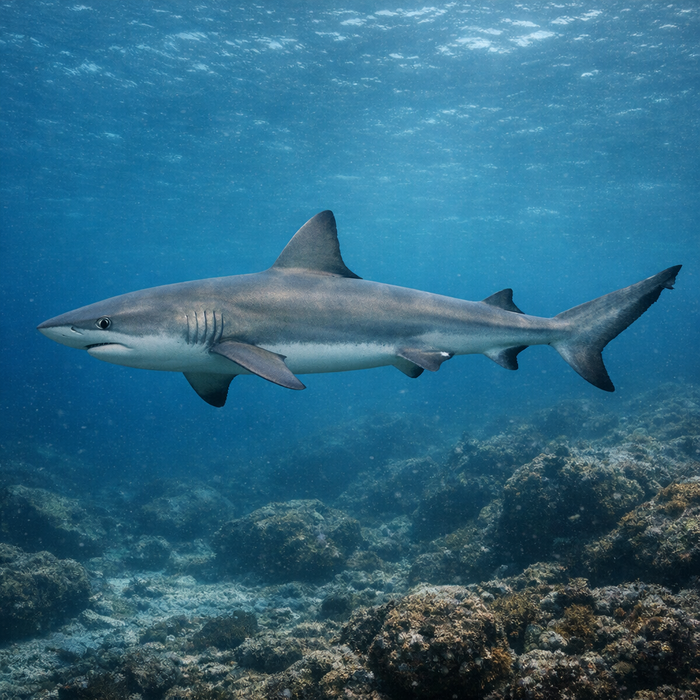
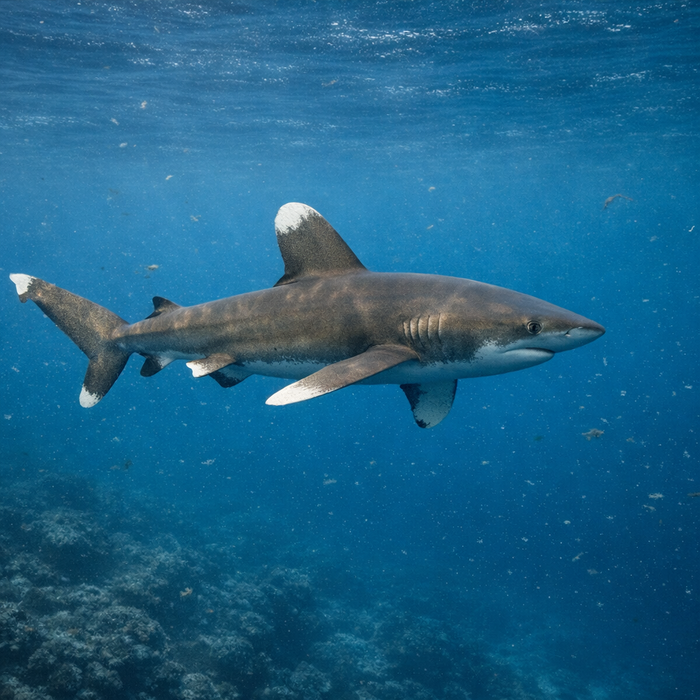
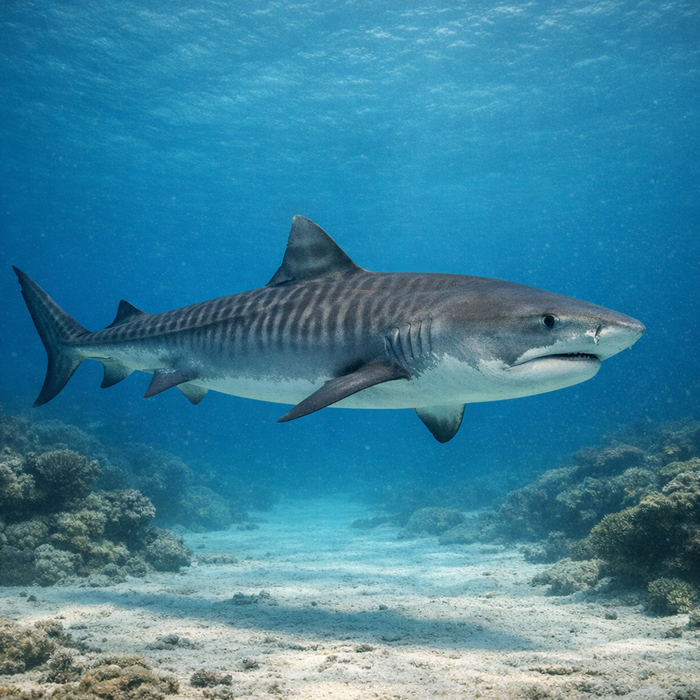
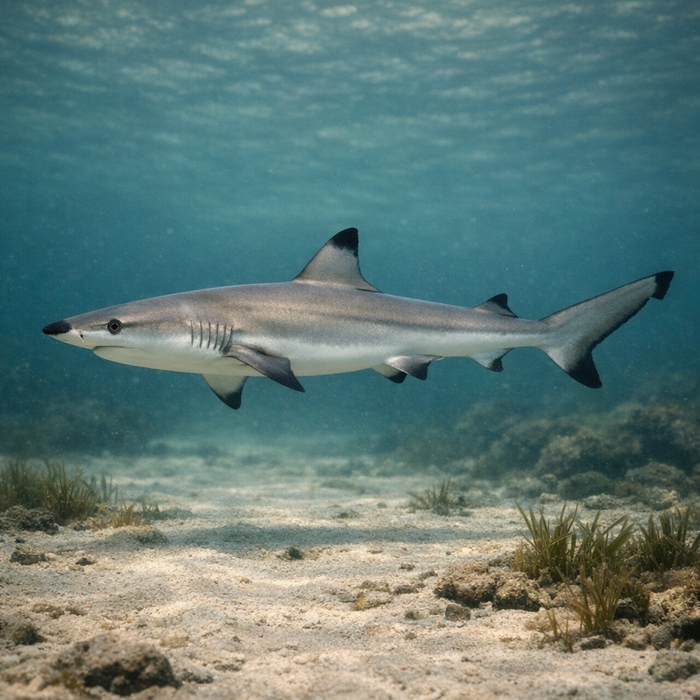
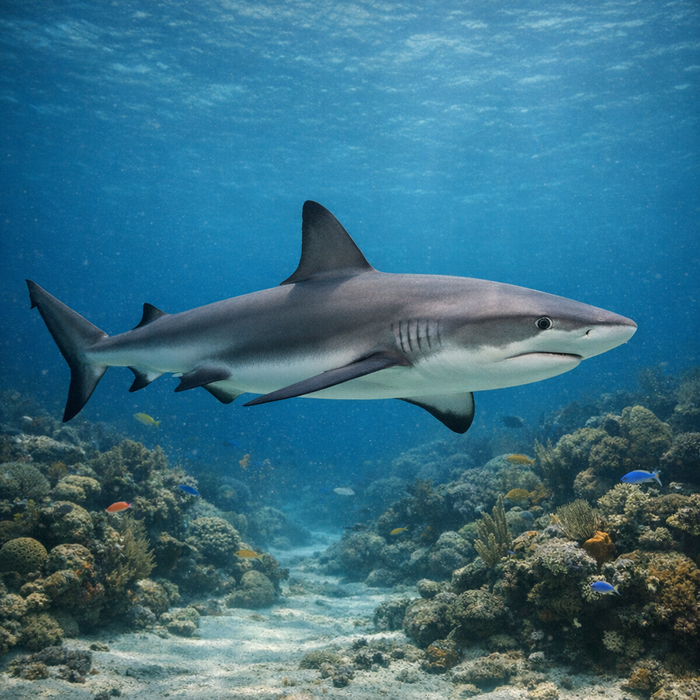
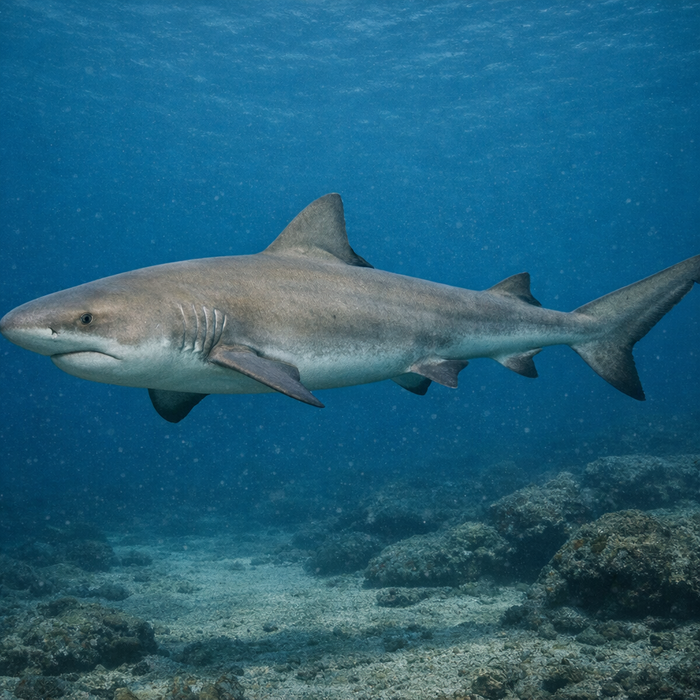
Night shark (carcharhinus signatus): The stargazer of the deep with glow-stick eyes and serious attitude.IntroductionThe night shark is the offshore angler's ghost story that happens to be real. Big, dark, and seen mostly after sundown, this deep-leaning requiem shark patrols the edges of canyons, banks, and seamounts where currents pile bait in midwater. While it's a common bycatch on tuna longlines, a night shark on sport tackle is rare and unforgettable. The eyes tell you everything: emerald, oversized, and built to wring every photon from the dark. If you came here for Night shark facts and straight-up angler intel, buckle in.What Makes the Night shark Unique?Start with the optics. Those green, light-amplifying eyes are specialized for dim, blue wavelengths and explain the shark's habit of rising at night into midwater. Then there's the behavior: unlike many coastal Carcharhinus, night sharks often roam in loose groups offshore, tracking squid and pelagic fish. They're not shoreline ambushers; they're long-haul commuters. Add in a placental form of live birth and you've got a predator that matures slowly, travels far, and doesn't bounce back quickly from heavy harvest.Habitat & Global RangeThink offshore structure more than shoreline drama. The classic Night shark habitat is the outer continental shelf, canyon walls, and seamount flanks swept by steady current. They work the water column from deep ledges up through midwater, often pushing higher at night and dropping back by day. The species occurs across the Atlantic, with strong representation around the western side from the Southeast U.S. through the Caribbean and into Brazil, and on the eastern side near islands and banks. You're fishing miles out, often over thousands of feet, setting baits 300 to 800 feet or deeper.Behavior & TemperamentThe night shark is a cruiser, not a rock-hugger. It hunts with patience, senses firing, and doesn't waste energy. Hits can feel like a freight train or a weird, midwater thump followed by a steady dogfight. Expect power over panicked runs and plenty of stubborn circles beneath the boat. They will travel in small groups, especially around productive edges. This is not a surface feeder unless prey gets pushed up; the action is usually below the lights and chum line, which is why dedicated deep drifting and weighted presentations shine.Ecological ImportanceNight sharks are mid-to-upper trophic predators that turn squid and pelagic fishes into shark biomass, passing energy up the chain. They also connect deep and midwater communities by moving vertically each day and night. Slow growth, low-to-moderate litter sizes, and offshore distribution make them vulnerable to longline bycatch. When populations dip, the ripple hits everything from squid dynamics to the behavior of more coastal predators that hunt the same edges.Conservation & Environmental PressuresThis species has taken lumps from decades of incidental capture on tuna and swordfish longlines. Mortality from deep hooks and long soak times is a real problem. Many jurisdictions now restrict or prohibit retention of night sharks, and proper identification is critical offshore where multiple deepwater Carcharhinus overlap. As management tightens and gear changes reduce bycatch, some areas are seeing stability, but the species is still considered at risk. Responsible handling, deep-release tools, and limited fight times help when catch-and-release is the law or the goal.The FishyAF TakeIf the ocean had a bouncer, it would look like a night shark: built, calm, and unblinking. You don't stumble into this fish on a Sunday beach stroll; you earn it offshore with heavy braid, big baits, and patience. The night shark demands real logistics, sharp fish ID, and a conservation-first mindset. Whether you tangle with one intentionally or as a deep-drop surprise, it's a masterclass in why offshore edges are addictive. When those green eyes roll up in the light, you'll understand exactly why the deep is never truly asleep.