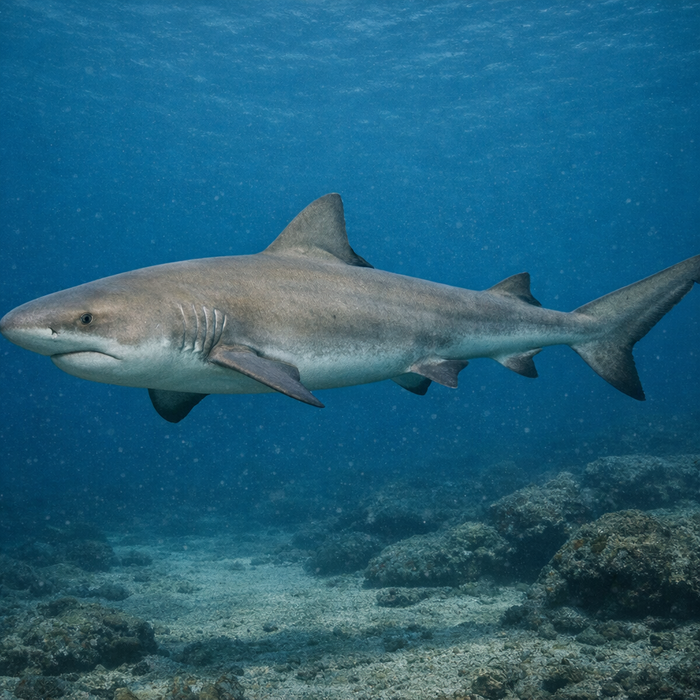
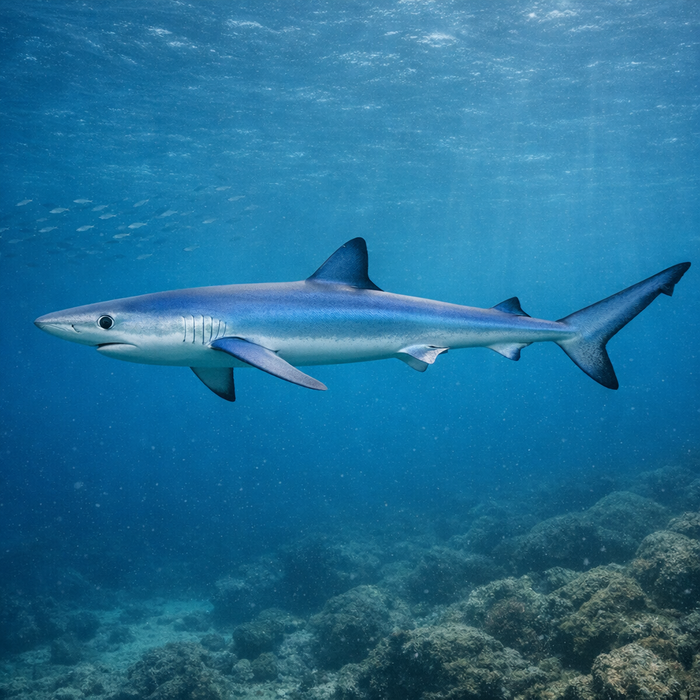
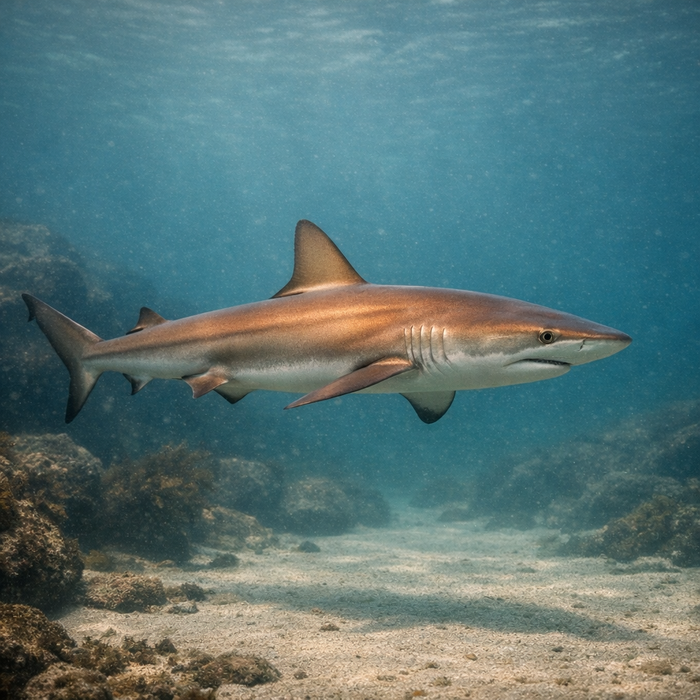
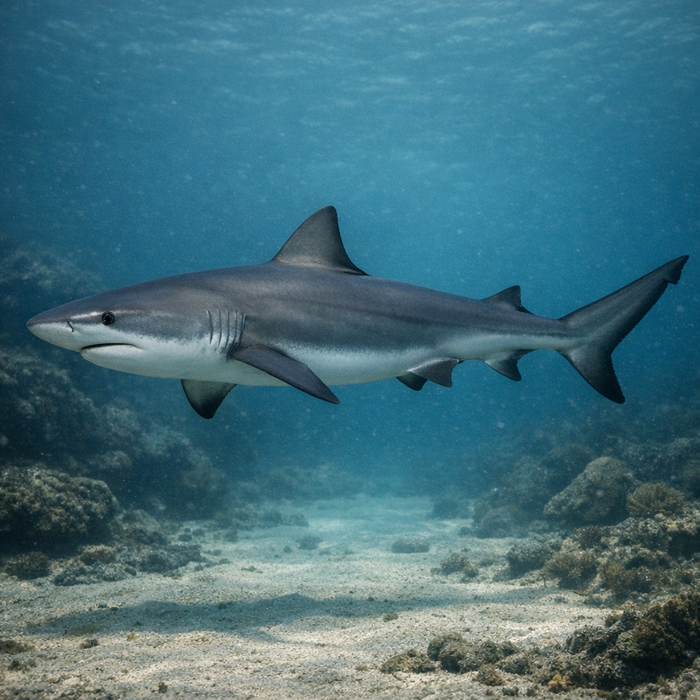
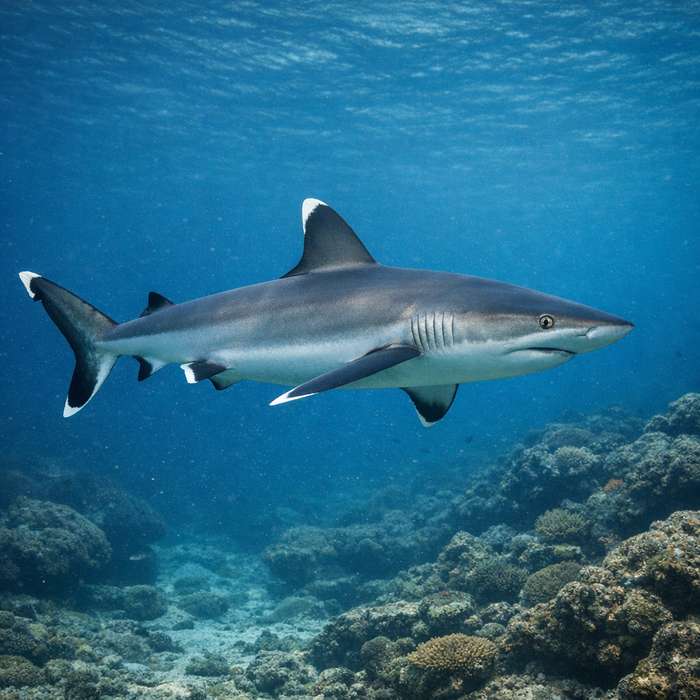
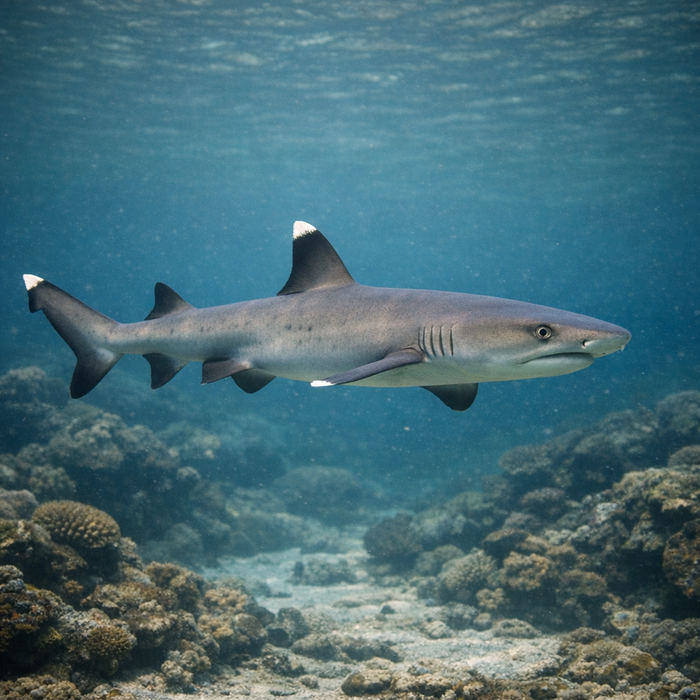
Caribbean reef shark (Carcharhinus perezii): The muscle-bound bouncer of warm-water reefs.IntroductionIf you've ever peered over a Caribbean wall and felt your pulse jump, odds are a Caribbean reef shark made the scene. Solid, streamlined, and always businesslike, this shark is the apex enforcer of many island reefs. Divers respect it. Anglers plan around it. Everything smaller keeps one eye over its shoulder. Let's dig into the real Caribbean reef shark facts without the fluff.What Makes the Caribbean reef shark Unique?Start with attitude. The Caribbean reef shark carries a classic reef-shark threat display: humped back, drooped pectorals, and deliberate, sweeping turns that say keep it respectful. It's also a master of home turf. Many individuals show tight site fidelity, visiting the same ledges, spur-and-groove channels, and current-swept points year after year. Finally, it's the reef's quality control. This shark patrols like a metronome, picking off the slow, the careless, and the unlucky, keeping prey populations honest and the whole neighborhood humming.Habitat & Global RangeThe Caribbean reef shark habitat sweet spot is obvious from the name: coral reefs of the tropical Western Atlantic. Think Bahamas, Florida Keys fringes, Cuba, the Antilles, Belize, and down to the northern coast of South America. Classic haunts include buttress reefs, outer ledges, channels between islands, and wrecks that sit near natural structure. You'll see them most in 30 to 120 feet, often in places where current pours over a lip or rips through a cut. That flow brings scent and food. Where there's a clean edge between reef and bluewater, there's a good chance a Caribbean reef shark is cruising the seam.Behavior & TemperamentPredictable but not tame. This shark works the reef like a route driver, quartering into the current, dipping over the lip, then swinging back. It's not shy about boats or bubbles in areas with heavy tourism; in quieter zones, it's alert and all business. When things get heated, that iconic display flickers on and the message is received. In a fight, Caribbean reef sharks dog down deep and circle hard. They're powerful more than flashy, happy to grind on heavy drag and test your knots for real.Ecological ImportanceAs an apex predator, the Caribbean reef shark occupies the penthouse in the food web. It pressures abundant mid-tier predators like jacks and snappers, which in turn affects the grazers that keep algae in check. Healthy shark numbers help coral by preventing imbalances that tip systems toward slime and rubble. Their presence also fuels economies: dive operations across the Caribbean rely on consistent sightings, creating a real incentive to keep these sharks alive and cruising.Conservation & Environmental PressuresThe biggest threats are overfishing, bycatch in longlines and nets, and habitat decline from reef stress. Slow growth and late maturity make recovery a slog when populations take a hit. In some countries, new protections and shark sanctuaries have flipped the script, turning once-skittish sharks into reliable sights. Elsewhere, lax regulation and enforcement still chip away. For anglers, that means adopting best practices: heavy tackle for short fights, circle hooks, dehookers, and in-water releases whenever possible.The FishyAF TakeThe Caribbean reef shark is the no-nonsense neighbor every reef deserves. It doesn't grandstand like a mako or play the tourist like a nurse shark. It clocks in, patrols the line, and breaks up trouble. If you want a crash course in apex efficiency, watch one working a current-lashed wall. If you want a fight, bring real gear and a plan. The Caribbean reef shark is a straight shooter: respect the fish, respect the reef, and you'll get a front-row seat to why this species owns its address. That's the kind of Caribbean reef shark habitat story we can get behind: structure, current, and a shark that keeps the lights on.