Giant Barb (Catlocarpio siamensis): The Plant-Eating Heavyweight That Makes Carp Tackle Earn Its Keep
The Giant Barb makes the word carp feel undersized. Deep-bodied, huge-headed and capable of extraordinary bulk, this Southeast Asian freshwater heavyweight belongs to the same family as familiar carp and minnows, but operates on a very different scale. It is widely recognized as the world’s largest cyprinid species. That alone deserves attention. The fact that much of its feeding revolves around algae and plant material makes the package even stranger: serious mass, without a predator’s menu.
For anglers, the attraction comes with responsibility. The wild species is Critically Endangered, while stocked Thai fisheries offer a managed alternative to targeting depleted river populations. Those are different situations, and they should never be confused. A big fish in a resort lake does not mean its wild relatives are doing fine. The fishing experience is impressive; the conservation context is sobering.
What Makes the Giant Barb Unique?
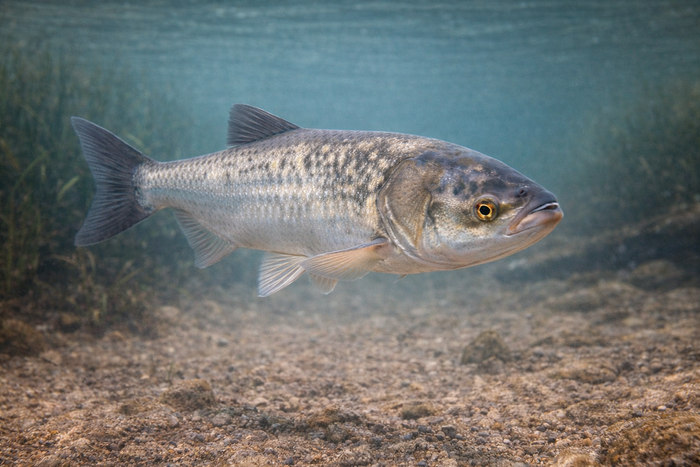
Start with the head. It accounts for roughly two-fifths of standard body length, giving the fish a profile that looks almost front-loaded. Despite its carp-family membership, it lacks barbels, those whisker-like mouth appendages familiar on common carp. It also has 90–110 long gill rakers on its first gill arch, an unusually striking piece of internal anatomy for a fish anglers mostly encounter through photographs of enormous shoulders and scales. These Giant Barb facts explain why it deserves more than the label oversized carp.
Then there is the size question. Biological accounts report weights reaching 300 kilograms, roughly 660 pounds, although the often-repeated maximum length of three meters needs confirmation. These are species-level reports, not automatically certified rod-and-line catches. That distinction matters. You can appreciate an exceptional animal without turning every historical measurement into a fishing record. Even with the uncertainty left intact, this is a genuinely extreme member of an otherwise familiar fish family.
Habitat & Global Range
The native range centers on the Mekong, Chao Phraya and Mae Klong river basins of mainland Southeast Asia. Historical distribution should not be mistaken for current abundance: conservation assessments describe severe losses, including the disappearance of wild populations from the Chao Phraya. Giant Barb habitat is therefore best understood as a connected river landscape, not simply a list of countries where the species once occurred. Large channels, deep pools and seasonally accessible floodplains all belong to that picture.
Age changes how the fish uses that landscape. Adults favor substantial river pools for at least part of the year; juveniles occur in floodplain habitats and smaller tributaries. As floodwaters recede, younger fish move back toward permanent channels. Deep pools provide dry-season refuge. The essential ingredient is connectivity: a nursery, feeding area and refuge only function together if fish and water can still move between them. A productive stocked lake can hold impressive specimens without reproducing that entire natural system.
Behavior & Temperament
The Giant Barb is primarily a plant-oriented feeder rather than a pursuit predator. Documented foods include algae, phytoplankton, detritus and fruits from terrestrial plants inundated by floodwater. Its natural feeding ecology is broader than simply rooting around for whatever an angler drops on the bottom. That matters when fishing a managed lake: an available bait is competing with other food, and a fish’s enormous size does not make it automatically cooperative.
At stocked venues, bottom presentations with feeders and concentrated bait are established approaches. Fishery accounts describe heavy fish taking line rapidly and heading toward open water. The practical response is controlled pressure, an appropriately set drag and attention to guide instructions, not a locked spool and a contest of stubbornness. Respect the fish’s weight before it reaches the net, too. Landing and handling arrangements should be settled before the first cast, not improvised when something enormous appears beside the bank.
Ecological Importance
This species connects river channels with seasonal floodplain production. Its early life history depends on access to nursery habitat, with eggs or larvae carried downstream toward areas where young fish can grow. Protecting an adult pool while losing the connected nursery is not a complete conservation solution. The fish’s requirements make it a useful reminder that a river is more than the water visible between its banks during the dry season.
Conservation & Environmental Pressures
Overharvesting and habitat loss have driven serious declines. Barriers and altered river flows add pressure to migratory fishes whose life cycles depend on connected habitats. Research also leaves important gaps in this species’ biology, including the precise locations of spawning grounds. Conservation therefore needs both habitat protection and better evidence, rather than confidence built from old maximum-size stories or the abundance of fish behind a resort fence.
The FishyAF Take
The Giant Barb deserves serious tackle and a little humility. Choose a responsibly managed stocked fishery, follow its rig and handling rules, and let staff make the call when welfare conflicts with weighing or photography. The impressive part is not proving you can lift it. It is landing an extraordinary fish without turning the last five minutes into a preventable injury. Get the photograph if conditions allow. Skip the wrestling audition. A successful release is the better finish.