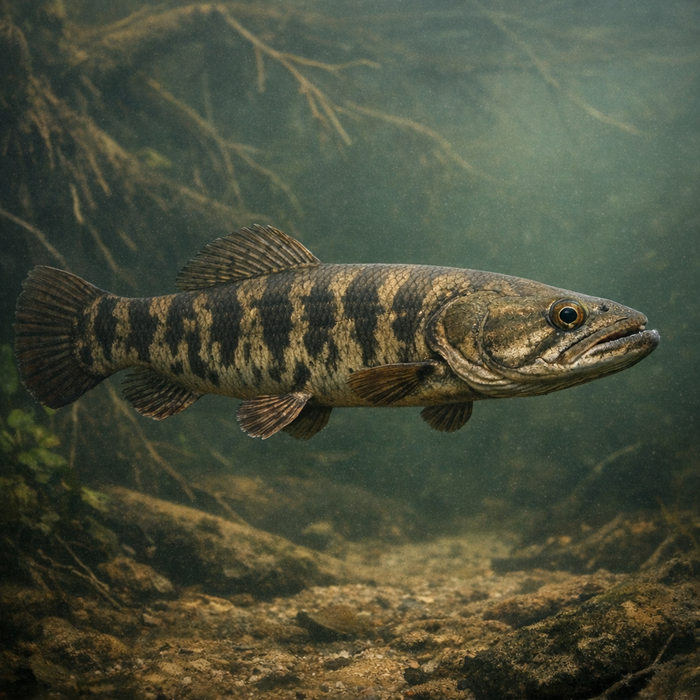
Giant Featherback (Chitala lopis): The River Knife With an Unfinished Extinction Story
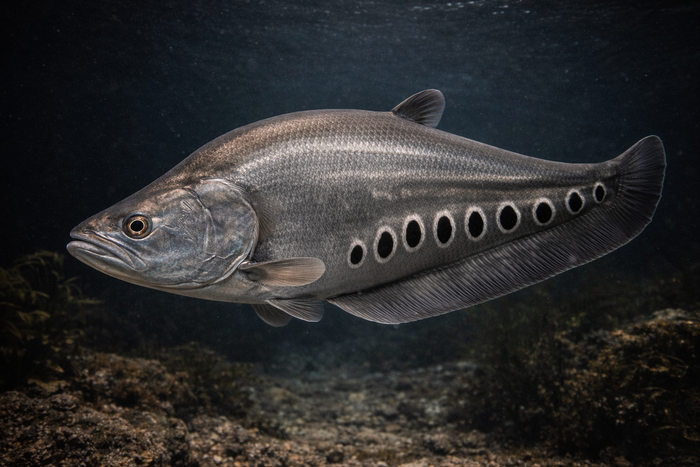
The Giant Featherback looks like someone stretched a silver blade, gave it a mouth, and sent it into freshwater. Its elongated, flattened body and towering back make an unmistakable silhouette, even if identifying the exact species is considerably less straightforward. This is a Southeast Asian predator with trophy potential, unusual anatomy, and a conservation story that refuses to fit neatly inside a database label. The approved profile retains an Extinct classification, but published rediscovery research means that label needs editorial review, not confident repetition as biological reality.
For anglers, that distinction matters immediately. A fish advertised under this name is not automatically a verified specimen, a lawful target, or evidence that wild populations are secure. The attraction is real. So is the responsibility to know what you are looking at before turning an unusual catch into a trophy claim.
What Makes the Giant Featherback Unique?
Three features give the Giant Featherback its character: remarkable proportions, an extended underside fin, and a mouth that becomes increasingly imposing with growth. Its long anal fin merges with the small tail fin, producing a continuous lower outline rather than the familiar forked-tail profile of many freshwater sport fish. The dorsal fin, by contrast, is small. Most of the visual drama happens underneath and behind the head.
The jaws lengthen as the fish grows and extend well behind the eye in large individuals. Biological summaries report a maximum of 150 centimeters standard length, measured without the tail fin. That is roughly 59 inches before the tail enters the calculation. These are genuinely outsized proportions, although a reported biological maximum is not a certified angling record or a sensible expectation for every session.
Habitat & Global Range
Giant Featherback habitat centers on tropical freshwater, including river channels, forest streams, and the slow-water environments associated with floodplain systems. Submerged timber and rocky bottoms appear in fisheries accounts, making underwater structure more useful context than a vague instruction to fish somewhere deep. Its habitat should not be reduced to ornamental ponds simply because stocked fishing venues make encounters more accessible.
Older accounts assign a broad Southeast Asian distribution, while recent work has tested which populations actually belong to which Chitala species. Indonesian research documented living C. lopis across Java, Sumatra, and Borneo, and subsequent research identified it in Peninsular Malaysia. Thailand also has published specimens assigned to this species. However, individual fishery claims still deserve verification; a regional occurrence does not authenticate every fish sold under the same common name.
Behavior & Temperament
The Giant Featherback is a predator, with fish forming an important part of its diet; insects and small vertebrates are also reported. Biological accounts describe its activity as probably crepuscular or nocturnal, which supports concentrating attention around fading light without pretending that every fish follows a stopwatch. Dawn and dusk are reasonable starting windows, not appointments the fish has agreed to attend.
Air breathing is another important adaptation: the species is classified as an obligate air-breather. That makes access to atmospheric oxygen part of its biology, not merely an emergency trick. It does not make polluted water harmless or careless handling acceptable. For fishing purposes, patience, controlled bait presentation, and a prepared landing area are better priorities than inventing a reputation for spectacular jumps or unstoppable runs.
Ecological Importance
As a freshwater predator, the Giant Featherback belongs within a network of prey, shelter, and connected aquatic habitats. Fisheries descriptions link submerged timber with the smaller animals used as food by featherbacks. Removing that structure therefore changes more than the appearance of a riverbank; it changes the setting in which feeding and refuge occur. Treating habitat as disposable scenery misses the machinery behind the fishery.
Its importance is cultural as well as ecological. Indonesian belida fishes have traditionally supplied valued foods, including pempek and fish crackers. That commercial appeal helps explain why conservation cannot be separated from livelihoods and demand. The name belida covers multiple species, however, so cultural references should not be mistaken for precise identification of every fish entering a market.
Conservation & Environmental Pressures
The Giant Featherback carries a particularly awkward conservation contradiction. The species profile says Extinct, reflecting a legacy assessment, while research published in 2023 demonstrated living fish and challenged that conclusion. Rediscovery does not mean a population is healthy, abundant, or open to harvest. It means the conservation question must be asked again with better evidence.
Indonesian authorities identify overfishing and damaging fishing practices as pressures on belida populations, and C. lopis remains listed under full protection in recent government material. Any fishing discussion must therefore begin with jurisdiction and authorization. Catch-and-release is not a universal exemption from protected-species rules, and a stocked venue's advertising should never substitute for checking the applicable requirements.
The FishyAF Take
The best Giant Featherback facts are stranger than the usual trophy sales pitch: extraordinary proportions, unusual anatomy, and a scientific identity that demanded serious detective work. That is enough. It does not need inflated fight stories, fictional records, or a guaranteed-bite calendar.
FishyAF's position is simple: earn the encounter before claiming the trophy. Verify the species, verify permission, and have the net ready before the bait goes out. A difficult fish deserves competent fishing. A conservation-sensitive one deserves restraint. The impressive part is not merely getting a river knife onto the bank; it is knowing when that bank should remain unfished.