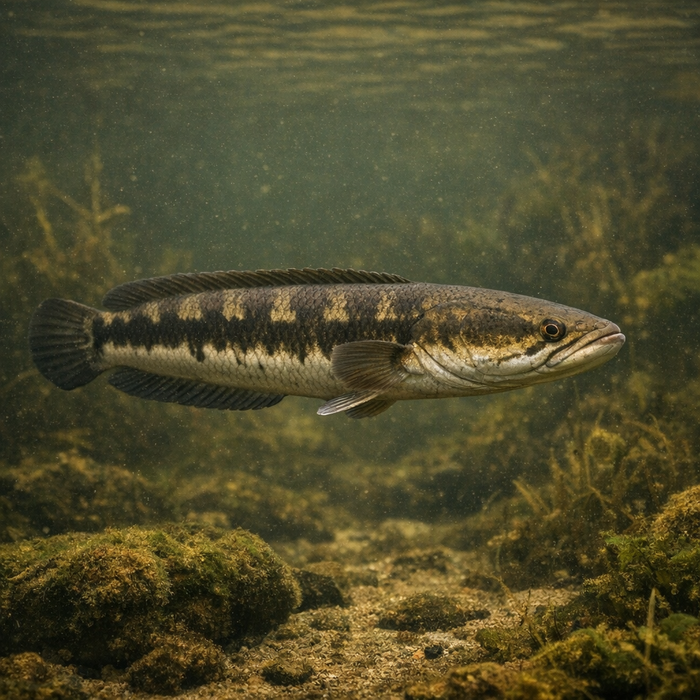
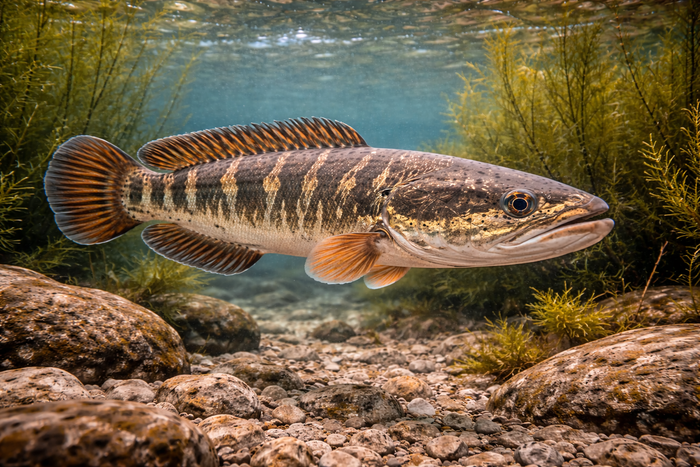
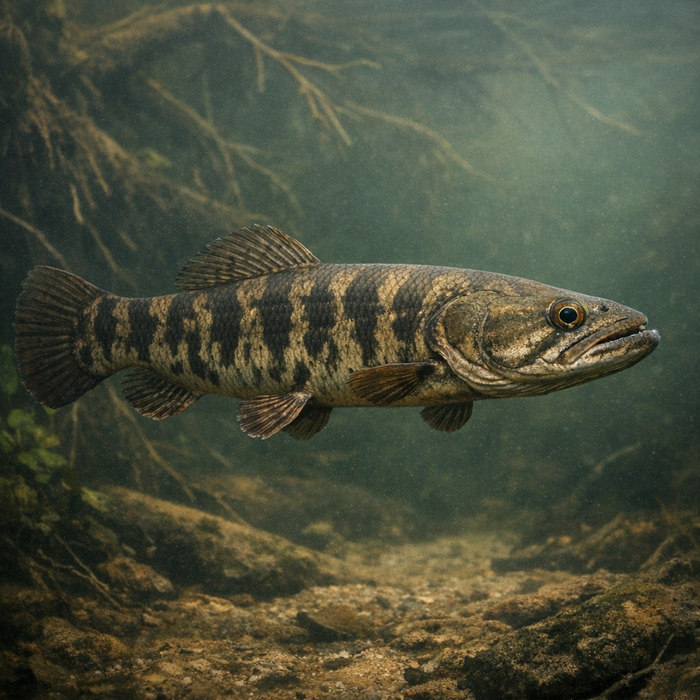
Giant Snakehead (Channa micropeltes): Built to Breathe Air and Break Your Composure
The Giant Snakehead does not need a long introduction when it hits a surface lure. One violent disturbance, one loaded rod, and suddenly that peaceful tropical lake feels considerably less peaceful. Known to Malaysian anglers as toman, this elongated freshwater predator belongs to the snakehead family, Channidae, and combines serious size with a deeply inconvenient preference for cover. The excitement is real, but so is the difficulty: accurate casting and dependable tackle matter more than looking impressive at the boat ramp.
Forget the cartoon monster reputation. This is a highly specialized fish with unusual breathing physiology, formidable teeth, and parental behavior that deserves more attention than another exaggerated attack story. Understanding those details makes the fishing more interesting—and the fish considerably more impressive.
What Makes the Giant Snakehead Unique?
Three Giant Snakehead facts explain much of its reputation. First, it is an obligate air-breather. Access to atmospheric oxygen is part of its normal biology, not merely an emergency trick. That creates a distinctive angling opportunity: fish can reveal their position when they surface to breathe, including over water much deeper than the shoreline weedbeds anglers often associate with snakeheads. A surface appearance is a location clue, however, not proof of feeding.
Second, its enlarged canine teeth have cutting edges suited to shearing prey. This is not just a big mouth with an attitude problem. Third, both parents protect their eggs and young. Adults clear a nesting area, guard floating eggs, and continue defending the brood after hatching. The same predator that intimidates anglers can also be an intensely committed parent. That combination is far more interesting than the usual freshwater-villain treatment.
Habitat & Global Range
Native to Southeast Asia, the species occupies freshwater systems across mainland and island portions of the region. Giant Snakehead habitat includes lakes, reservoirs, canals, and standing or slowly flowing rivers. Vegetated margins are important, but deep water also belongs in the picture. Treating it strictly as a shallow-swamp fish leaves a substantial part of its environment unexplored.
For anglers, Malaysia and Thailand offer well-established opportunities. Temenggor and Kenyir are prominent Malaysian destinations; Cheow Lan, Khao Laem, and Srinagarind feature among Thailand's trophy waters. Reservoir fishing often means working a complicated mix of drowned timber, shoreline vegetation, and open-water breathing rises. Water-level changes can shift useful cover, making yesterday's productive bank a poor starting point today. The important question is not simply where the weeds are, but where usable cover meets the fish's current position.
Behavior & Temperament
The Giant Snakehead is primarily a daytime predator. Its feeding ecology centers heavily on fish, although other prey are documented. Older juveniles can school and feed in packs, adding a social dimension to a species often pictured as a solitary ambusher. That does not mean every surface disturbance signals a feeding frenzy; observation still beats assumptions.
Brood defense is another important distinction. An adult responding near its young may be protecting them rather than hunting. Reports of aggression toward people approaching nests exist, but they should not become claims that this fish routinely hunts humans. Give guarded broods space. For anglers, patience and controlled approaches are more useful than treating every fish as permanently furious.
Ecological Importance
Within its native waters, the Giant Snakehead is part of the freshwater predator community, consuming smaller animals and linking different levels of the food web. Its importance extends beyond sport fishing: capture fisheries and aquaculture also use the species as a food resource. A fish can be an exciting trophy, a commercial product, and a functioning part of an ecosystem at the same time. Those roles should not be confused.
Outside its natural distribution, the assessment changes. Introducing a large predatory fish into unfamiliar waters creates ecological risks, not a clever shortcut to better fishing. Aquarium releases and unauthorized stocking are particularly poor ideas. A worthwhile native fish does not automatically become a worthwhile addition somewhere else.
Conservation & Environmental Pressures
The Giant Snakehead is classified as Least Concern globally. That describes its overall extinction-risk assessment; it does not certify every lake as healthy or every local fishery as secure. Anglers should distinguish a broad conservation category from the condition of a particular waterbody. Heavy use and changing habitat deserve local attention even when the species remains widespread.
Reservoir drawdowns can remove shoreline cover and change fishing locations. Responsible practice means respecting protected areas, avoiding unnecessary disturbance of guarded young, and following local harvest or release requirements. Release decisions also depend on geography: conserving a native trophy fish and managing a nonnative introduction are different responsibilities. One universal slogan cannot handle both.
The FishyAF Take
The Giant Snakehead earns its reputation without needing imaginary powers. Air-breathing physiology, cutting teeth, protective parents, and demanding cover fishing are plenty. Bring tackle built for the job, make the first cast count, and leave the monster mythology at home. This is advanced predator fishing, not a contest to see who can describe a fish with the most aggressive adjectives.
Our take: the strike gets the attention, but understanding the animal earns the respect. Fish it seriously. Handle it thoughtfully. And never mistake a spectacular surface explosion for a guarantee that the next cast will produce another.