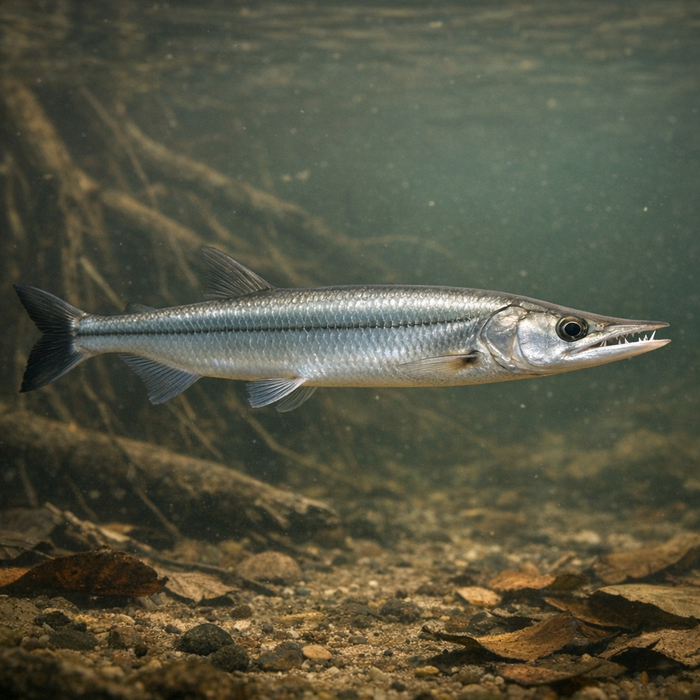
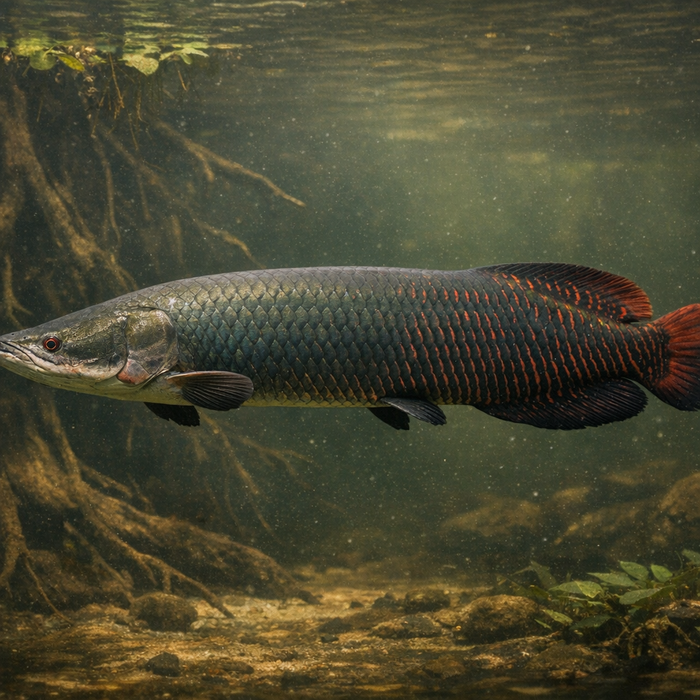
Arawana (Osteoglossum bicirrhosum): A Bold, Memorable Hook LineIntroductionThe Arawana is the jungle's surface missile, a chrome ribbon with an attitude and a vertical leap that embarrasses half the NBA. When something twitches at the waterline, this fish doesn't hesitate; it launches, gulps, and glides away like nothing happened. If you like visual eats, airborne chaos, and a bit of Amazon weirdness, welcome to your next obsession.What Makes the Arawana Unique?Start with that mouth. The Arawana's upturned, scoop-like jaws and two feeler barbels are built for scanning the film, triangulating tiny ripples, and detonating on cue. Then there's the athleticism. Silver arawana are famous for leaping up to six feet to pluck insects, lizards, and the occasional unlucky rodent off submerged branches. Finally, parenting: males mouthbrood eggs and fry for weeks, a tender twist in an otherwise savage topwater hunter. These aren't generic river fish; they're precision surface predators with family values.Habitat & Global RangeWhen anglers ask about Arawana habitat, think floodplain life. The Arawana thrives across the Amazon, Orinoco, and Guiana Shield drainages, cruising tannin-stained creeks, oxbows, and seasonally flooded forests. Rising water spreads them into the trees, literally, where overhanging limbs drip a constant buffet. Falling water pulls fish into channels, lagoons, and woody edges. If it's warm, shallow to mid-shallow, and shady with cover overhead, you're in the zip code.Behavior & TemperamentArawana are classic sight-feeders with a hair-trigger. They cruise slowly, then burst forward with a head-up surge. Expect violent jumps the instant you stick one, followed by headshakes that shred sloppy knots. They're curious enough to patrol boat shadows but wary in clear water, so long casts and quiet entries matter. They're usually solo or loosely grouped unless you're around juveniles, which sometimes school. Feeding windows are crepuscular in many spots, but a sudden cicada swarm can flip the switch at noon.Ecological ImportanceCall the Arawana a surface janitor with style. By vacuuming insects, small fish, and amphibians at the waterline, it links the forest to the river, moving energy from tree canopies into fish muscle. Mouthbrooding boosts juvenile survival, and that famous air gulping lets adults tolerate low-oxygen water where other predators fade. It's a keystone surface hunter in a floodplain where seconds and inches decide who eats and who becomes lunch.Conservation & Environmental PressuresThe species is generally listed as Least Concern, but that doesn't mean bulletproof. Overharvest for local markets, habitat loss from deforestation, and sketchy water quality can chip away at local stocks. Aquarium demand mostly targets Asian relatives, yet silver arawana still see capture pressure. Sensible size limits, community-managed lakes, and habitat protection keep fisheries lively. If you care about future trips, support lodges and guides who practice careful handling and release larger brood fish.The FishyAF TakeThe Arawana is proof that freshwater can be as cinematic as any saltwater flat. You stalk under branches, slide a bait into a saucer-sized pocket, and then the river erupts. It's part finesse, part mayhem, and 100 percent addictive. If you came here for Arawana facts, here's the one that matters: they reward accuracy. Put the offering where the bugs would fall, and you might witness the cleanest surface eat in freshwater. Miss by a foot, and you'll swear the fish vanished. The Arawana doesn't just survive the jungle; it owns the top inch of it.