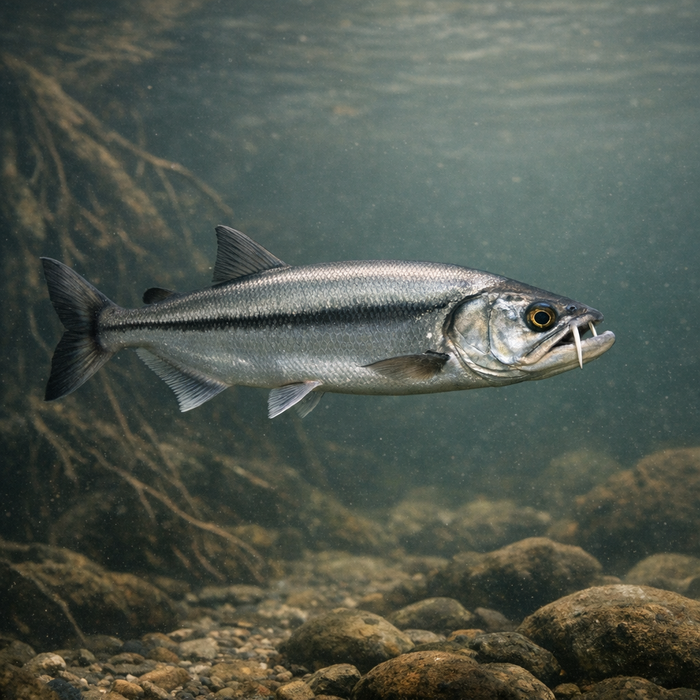
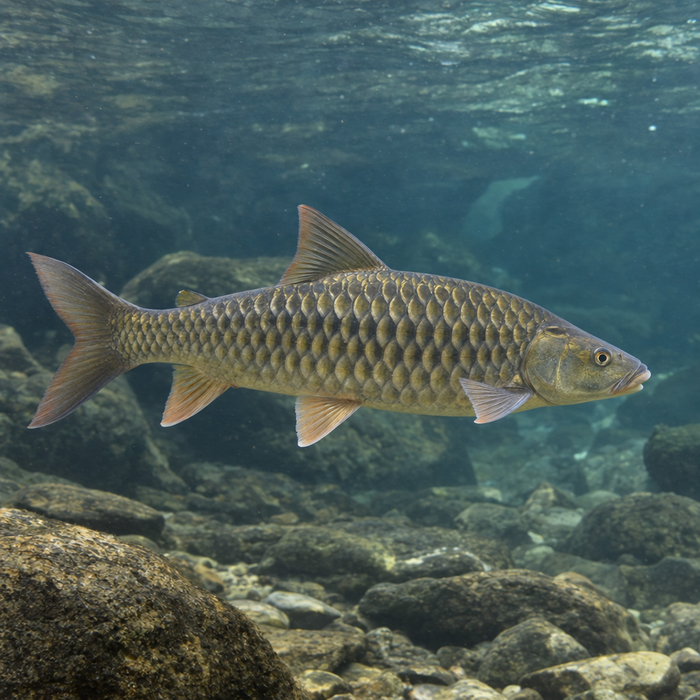
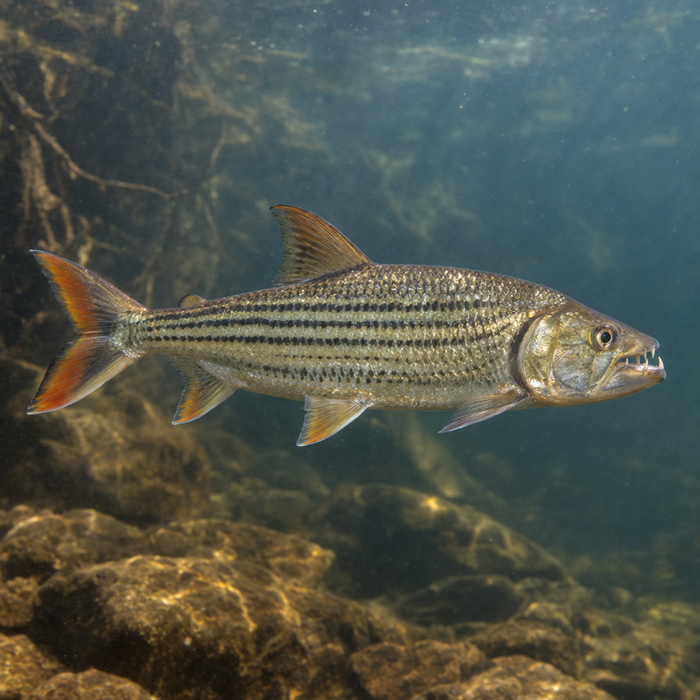
Dorado (Salminus brasiliensis): A Bold, Memorable Hook LineIntroductionThe Dorado is South America's river bruiser: gold armor, a chainsaw mouth, and a launch button for aerial chaos. It is a freshwater apex bruiser in attitude if not by taxonomy, a fish that makes grown anglers rethink knots and drags. If you want a trip that rewires your casting hand and your definition of fast water power, this is it.What Makes the Dorado Unique?First, the hardware. The Dorado carries interlocking, razor teeth in a reinforced jaw built to crush bony prey. It's like a piranha graduated to heavyweight. Second, the color: bright coin-gold flanks with tiger bars, glowing even brighter in clear flows. Third, the attitude: Dorado punish sloppy presentations, then cartwheel through rapids like a salmon with a grudge. Those three traits wrap into a fish that rewards bold casting and decisive fighting. If you came here hunting Dorado facts, start with this: everything about them is built for speed, shock, and hang-on violence.Habitat & Global RangeDorado habitat centers on big, dynamic rivers with healthy current, rocky shoals, and migratory baitfish. Think the Paraná-Paraguay-Uruguay basins and connected tributaries, plus seasonal floodplain lagoons where young fish grow up under a roof of drifting debris and flooded grass. They patrol seams, eddies, and tailouts, and will slide into calmer side channels when flows spike. Seasonal water pulses move fish long distances; Dorado are potamodromous, following bait like sábalo with serious intent. Clear to lightly stained water shows off their glow, but even in tannic or off-color flows they feed aggressively along current edges and structure.Behavior & TemperamentThe Dorado is all-in aggression packaged with strategic patience. Packs sometimes pin bait against banks, then detonate in unison. Singles stalk boulders and timber, slashing first to stun and then swallowing headfirst to bypass dorsal spines. Strikes are violent and often followed by immediate, high leaps. They test leaders, hooks, and your ability to keep tension while the fish goes airborne. Dorado also learn fast; in pressured waters they'll track a fly hard and still refuse if something feels off. Time on the clock matters: dawn, dusk, and weather shifts can light the fuse. When conditions settle and flows moderate, fish spread and hunt, giving persistent anglers multiple quality shots.Ecological ImportanceAs a top river predator, the Dorado regulates baitfish populations and redistributes energy across channels, floodplains, and backwaters. Their migrations connect habitats, moving biomass upstream and downstream with flood pulses. Spawning coincides with rising water, releasing drifting eggs that feed countless invertebrates and small fish on the way to nursery zones. Healthy Dorado mean healthy flow regimes, intact migration corridors, and enough bait density to drive the engine.Conservation & Environmental PressuresThe Dorado benefits from strong catch-and-release culture in premier fisheries, but it's not bulletproof. Dams fragment migrations, alter timing of flows, and drown critical rapids. Sand and gravel extraction scrapes nursery habitat. Overharvest, especially of big females, trims the trophy class fast. Water quality matters too; sediments and ag runoff can muddy the deck just as surely as low oxygen zones can stall feeding. Many regions now protect prime stretches with strict rules or full release policies. The best Dorado habitat is moving water with intact seasonal rhythms, and every new barrier puts that at risk.The FishyAF TakeIf trout make you precise and tarpon make you stubborn, the Dorado makes you fearless. It's the rare fish where casting boldly into ugly current pays off, and where mistakes get punished immediately and theatrically. Dorado habitat is a living obstacle course, and that's the point. Pack wire, trust your knots, and throw something with a pulse into the seam. When gold rockets out of the foam, remember the only real plan: hit it, stick it, and keep the line tight through the chaos. That's the Dorado experience, distilled and delicious.