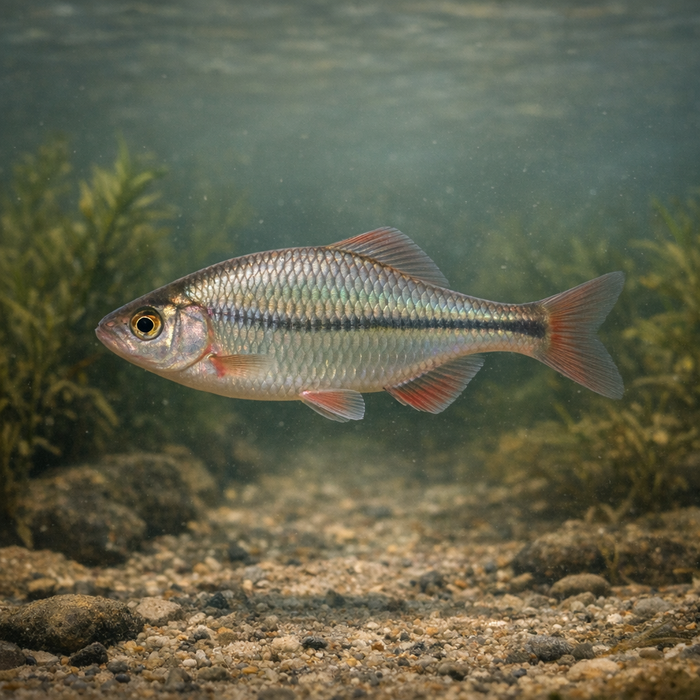
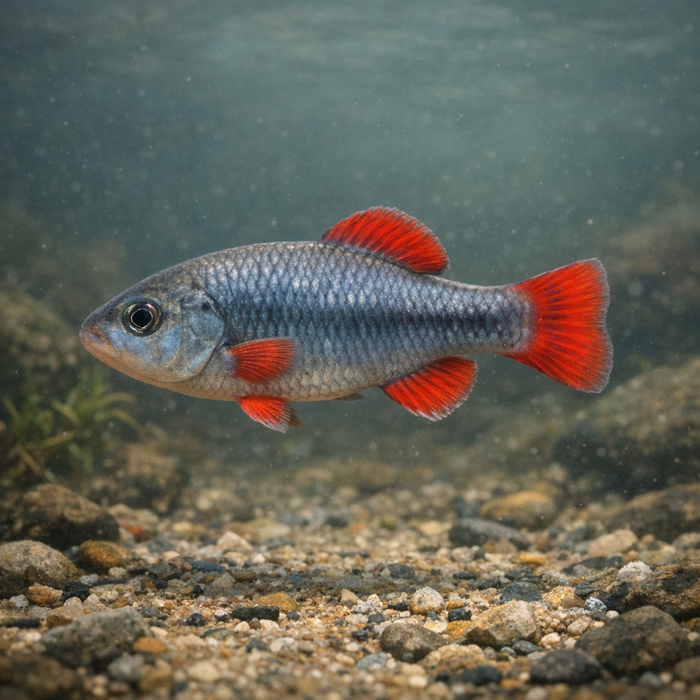
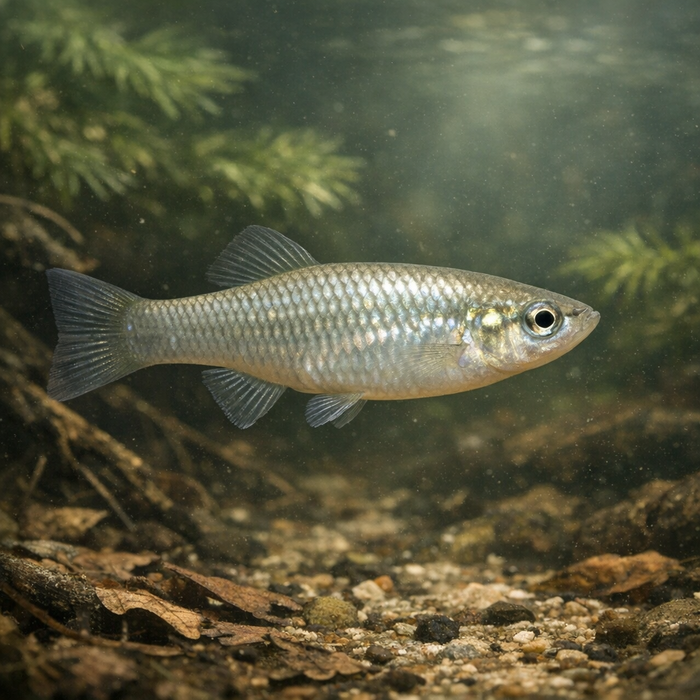
Texan Tetra (Astyanax argentatus): Small Fish, Big AttitudeIntroductionYou want chaos in miniature? Meet the Texan tetra, a silver flash mob that turns quiet creeks into glitter storms. It is a micro-sized, big-energy fish that beginners can catch and fish nerds absolutely obsess over. Quick to school, quicker to spook, and always ready to peck a tiny morsel, this Texas native puts more action per ounce on a light rod than most fish twice its size. If you like clean water, subtle presentations, and watching bait disappear the second it lands, the Texan tetra is your kind of trouble.What Makes the Texan tetra Unique?First, speed. These little missiles pivot as one, throwing synchronized shimmer that blindside everything nearby. Second, the gear check: no spines, soft fin rays, and a tiny mouth that demands micro hooks and delicate drifts. Third, it wears the characin calling card, an adipose fin behind the dorsal that screams South and Central America, yet here it is in Texas. Put it all together and you get a fish that hits like soda fizz, then evaporates if your shadow twitches. That combination of visibility and vanishing act makes the Texan tetra strangely addictive.Habitat & Global RangeThe Texan tetra works the moving-water neighborhood: springs, clear creeks, river runs, side channels, and resacas connected to bigger flows. It handles current well but loves soft edges where foam, leaves, and micro-bait gather. You will see it around submerged brush, root wads, and the calm water tucked behind riffles. While its home base is Texas border country and northern Mexico, it has a knack for colonizing canals and reservoirs linked to those drainages. If you are sorting through Texan tetra habitat, think bright, clean, and well-oxygenated, with just enough current to deliver snacks without flipping the school into chaos.Behavior & TemperamentThis species is built for the group chat. Schools are tight, and the fish react instantly to light shifts, surface disturbances, or a lure landing off rhythm. They graze micro-prey and nip anything suspiciously edible, then bolt if something feels wrong. During the warm season, courtship bursts happen fast, with males flashing brighter sides and chasing in quick spurts. Expect most feeding action during low light, plus any time the current stacks food at a seam. Hook one Texan tetra and you often stir the whole school, which is half the fun and half the puzzle.Ecological ImportanceSmall does not mean small-time. The Texan tetra shuttles energy from tiny invertebrates and detritus up the food web, fueling everything from sunfish to bass, wading birds, and water snakes. It is also a top-tier water-quality messenger. Healthy, active schools usually mean cool, oxygen-rich flows and intact riparian cover. Watch a creek lose current, shade, or clarity and the Texan tetra thins out or vanishes. In short, this fish is a living health meter for spring-fed streams. That is one of the best Texan tetra facts you can carry into the field.Conservation & Environmental PressuresThe threats are not surprising: groundwater depletion that weakens springs, silt from bad land practices, and warm, stagnant water during drought. Add nonnative predators and habitat fragmentation from poorly designed culverts or diversions, and populations can get boxed in. The species itself is hardy for a tetra, but it still needs moving water, oxygen, and connected habitat. Local stewardship matters. Keep the flows alive and the banks shaded, and the Texan tetra will keep zipping around like silver confetti.The FishyAF TakeHere is the rub: the Texan tetra looks like a background extra until you rig down and pay attention. Then it becomes the main event. Ultralight line, tiny hooks, clean drifts, and you are suddenly stacking fish while everyone else complains about a slow day. It is also a gateway drug to micro angling. Want to teach a kid water reading, stealth, and drift control? This fish is perfect. Want to nerd out with a 2-weight fly rod on clear water and watch fish materialize from nowhere? Also perfect. If you are chasing Texan tetra habitat, look for clean current and life at the edges. Find that and you will never call this fish "just a baitfish" again.