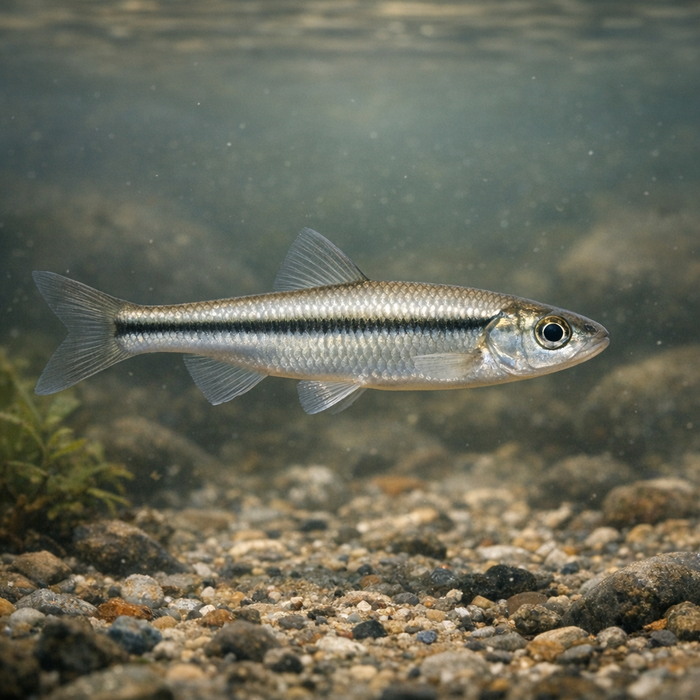
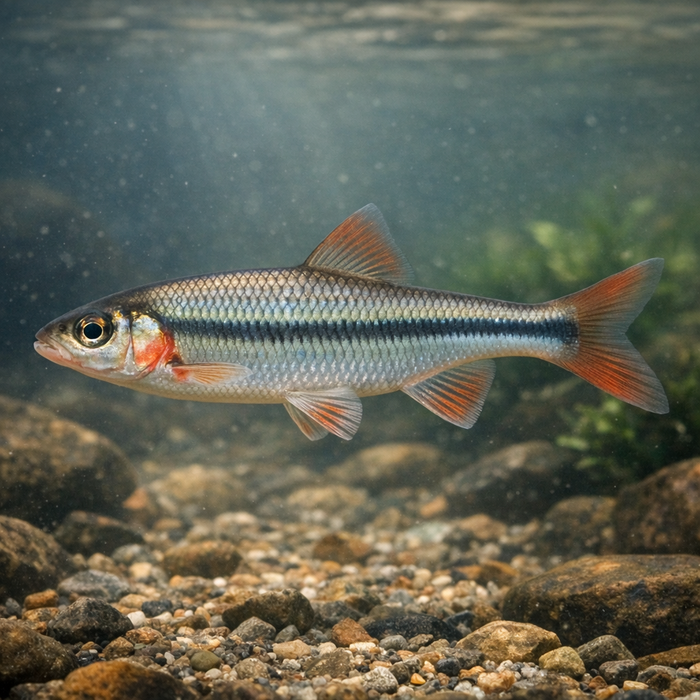
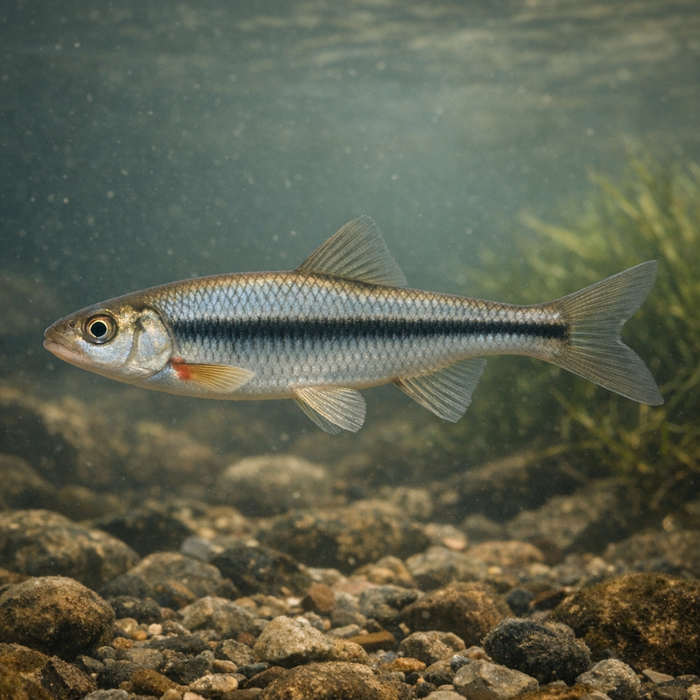
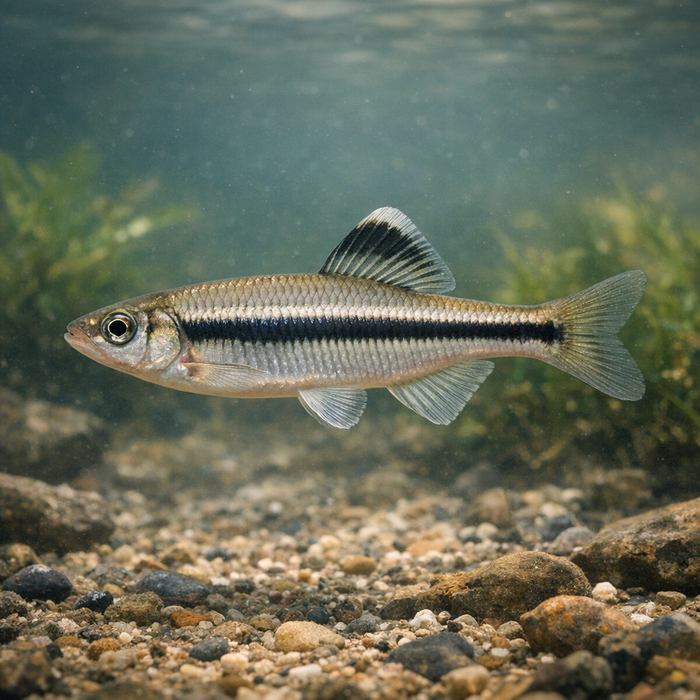
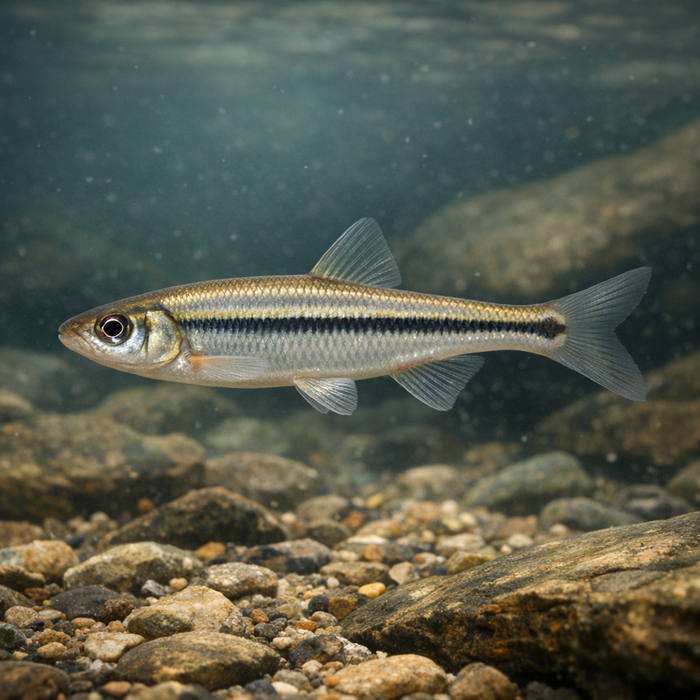
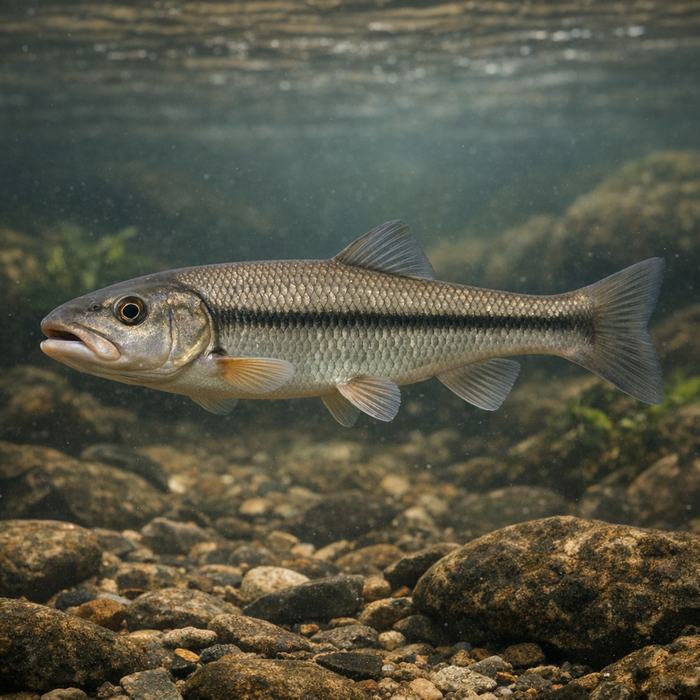
Gravel chub (Erimystax x-punctatus): A Bold, Memorable Hook LineIntroductionIf your split shot chatters across pea gravel and the current hums in your waders, you've wandered into gravel chub country. This is a small, fast-water specialist that treats riffles like a conveyor belt, skimming bites from the stones and vanishing if the bottom silts up. Not glamorous, not big, but absolutely dialed for clean current. For anglers who love micro detail and exact drifts, the gravel chub is a sneaky-addictive target and a living gauge of river health.What Makes the Gravel chub Unique?Start with the name. The species tag x-punctatus nods to its tiny X-shaped pigment marks that line the sides like a dashed crosshatch. That pattern, plus a slim, hydrodynamic build and a slightly downturned mouth, screams riffle life. The gravel chub isn't a brawler. It's a surgeon. It lives by precision: hugging bottom, slipping into micro-eddies, and vacuuming insect larvae from the gaps between pebbles. Few fish are more honest about what your river is made of; healthy gravel means chubs, muddy slop means a disappearing act. If you're here for Gravel chub facts, start with that brutal honesty.Habitat & Global Range"Gravel chub habitat" isn't complicated, but it's picky. Think small to medium, clear rivers with steady current, stony riffles, and very little silt. The fish favors coarse substrate where water can percolate through the stones. Across the central and eastern United States, especially in the Mississippi and Ohio River basins and parts of the Great Lakes drainages, the story repeats: clean riffles, modest depths, and nearby pools for low-flow or winter refuge. They're not wanderers in the oceanic sense, but they do shuffle seasonally from swift riffles to calmer holes as temperatures and flows swing.Behavior & TemperamentThe gravel chub is a bottom-hugger with a minimalist playbook. It holds position with tiny fin flicks, nips at drifting morsels, and rarely wastes energy. You can watch a pod lock onto the tongue of a riffle and pick the drift like skilled trout, but without the splashy theatrics. They school loosely, get jumpy in bright sun, and reward stealth. Hook one and it's a short, jittery fight, more about gentle handling than drag-screaming glory. Your main challenge is presentation: micro hooks, accurate drifts, and keeping the bait or fly ticking just above the stones without snagging.Ecological ImportanceGravel chub are little custodians of current. Because they require clean, well-oxygenated gravel, they are a living barometer for sediment and runoff issues. Lose the rock, you lose the fish. Their foraging helps energize that zone between boulder and flow, transferring insect production up the chain. They also feed a host of larger predators, stitching riffles to pools in a tidy food web. When you see them in good numbers, you're looking at a river that still breathes through its substrate.Conservation & Environmental PressuresGood news: many populations are stable. The caveat: they're one bad land-use decision away from trouble. Siltation from construction, poorly managed agriculture, and riparian abuse can smother the gaps between stones where eggs settle and larvae develop. Channelization straightens out their world, removing the riffle-pool mosaic they rely on. Pollution knocks clarity and oxygen. The gravel chub is resilient to current, not to mud. Protect the rock, protect the fish. Simple, but not easy.The FishyAF TakeThe gravel chub is the minimalist's microfish. No hype, no drama, just ultra-clean reads and surgical drifts. If you're the angler who notices pebble size, seam speed, and whether your shot ticks or drags, you'll appreciate this fish. It teaches truth: your presentation is either right or wrong, your river either breathes or doesn't. Chase a few and you'll start seeing substrate as strategy. That's the fun. Small fish, big lesson. And if anyone asks why you're grinning at a five-incher, tell them the river just passed inspection.