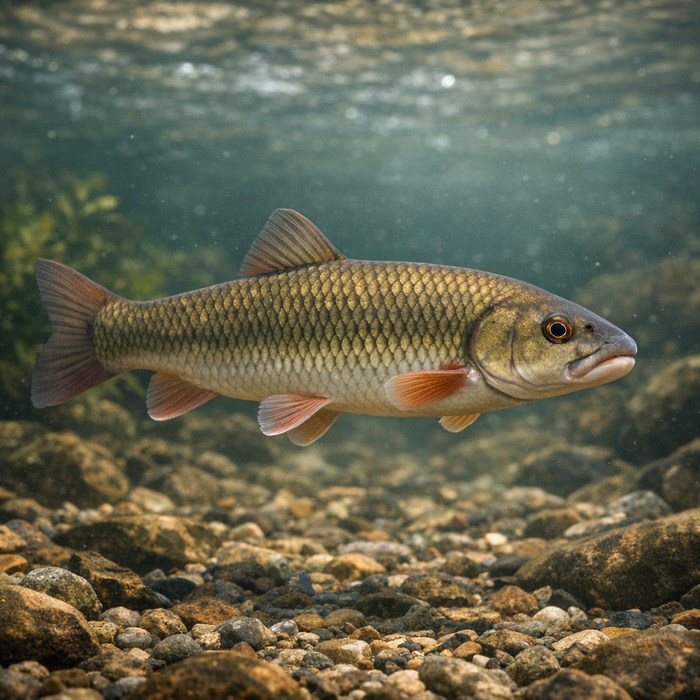
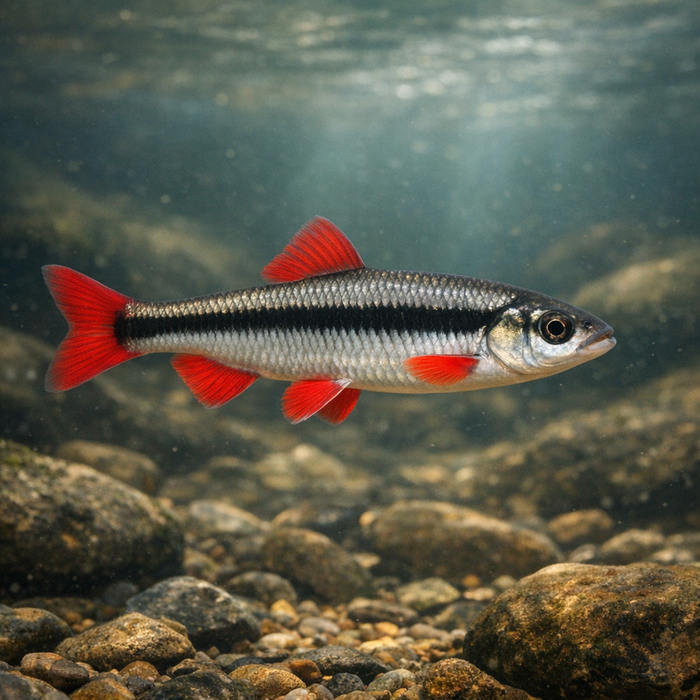
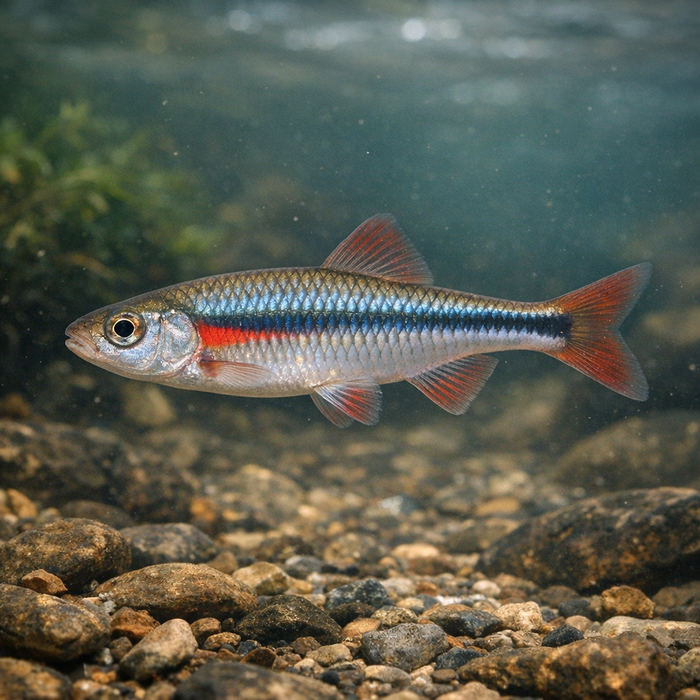
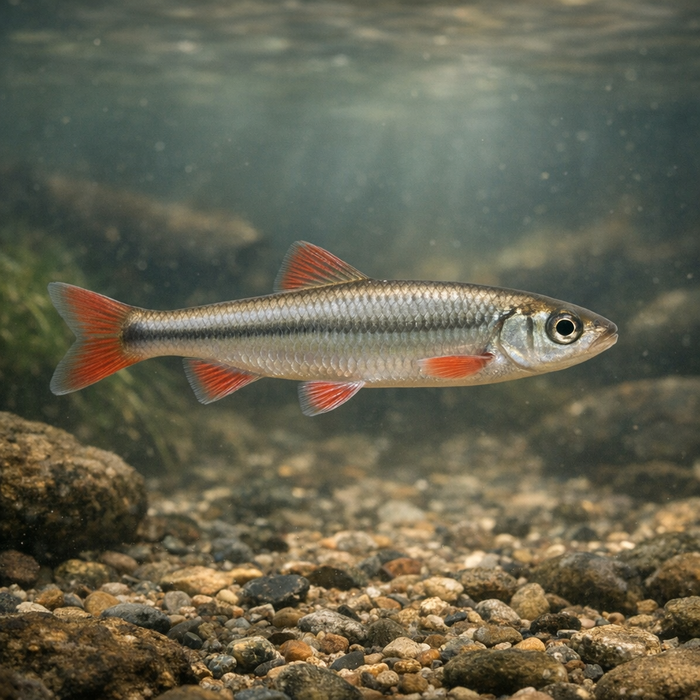
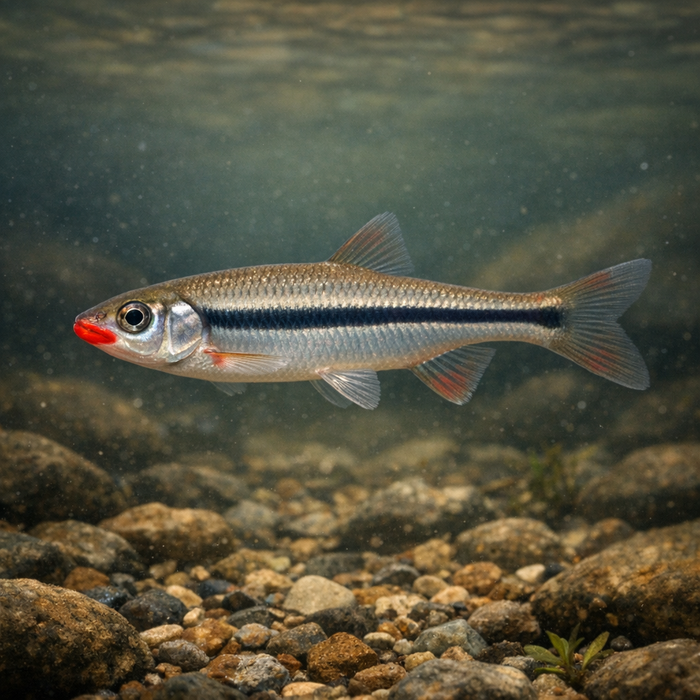
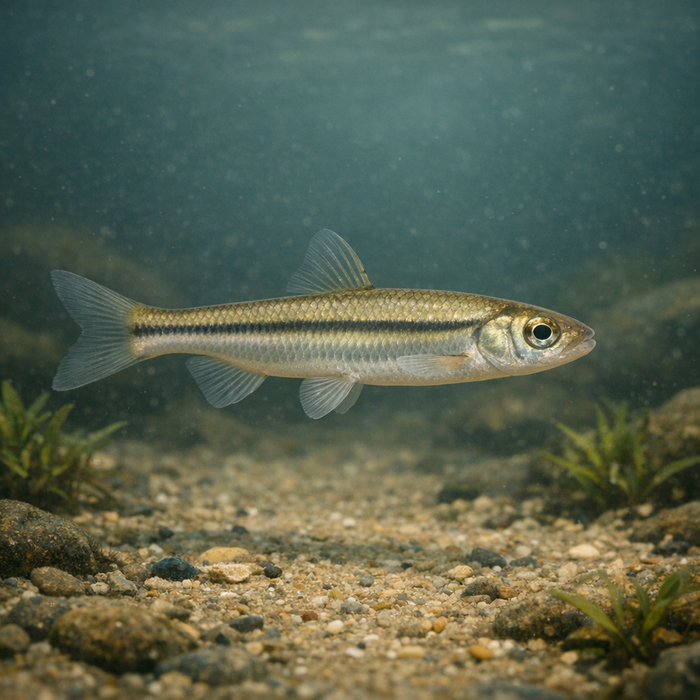
Greenfin shiner (Cyprinella chloristia): A Bold, Memorable Hook LineIntroductionThe Greenfin shiner is proof that not all stars are big. This is a micro-sized, high-octane riffle dweller with breeding colors that punch way above its weight. When the fins go lime green and the snout gets raspy with nuptial tubercles, even jaded anglers notice. Tiny fish, loud personality. That's the Greenfin shiner.What Makes the Greenfin shiner Unique?Two things set this minnow apart: the show and the hustle. First, the show. In spring, males light up with vivid green fins and defend rock crevices like mini pit bosses, corralling females to lay eggs in their chosen cracks. Second, the hustle. The Greenfin shiner lives in brisk current, tracks drifting morsels with big-for-its-body eyes, and snaps at food with quick, efficient strikes. It's a small package perfected for life in riffles. If you're hunting Greenfin shiner facts, start with that display and that current-savvy shape.Habitat & Global RangeGreenfin shiner habitat screams clean, moving water. Think clear riffles, shallow runs, and rock gardens with just enough pockets to rest without being tossed downstream. They stage around cobble, broken bedrock, and undercut edges where current peels off. While their overall geographic range is relatively tight within the Southeast, they're locally common where the habitat is right. That selectivity keeps them clustered, often in lively schools that work the same lanes the way trout do, just downscaled.Behavior & TemperamentSchooling is the default setting. The Greenfin shiner uses numbers for safety and efficiency, pivoting in quick bursts to flash those greenish fins as visual cues. In spawning season, males occupy and defend crevices, often entertaining multiple females at a single site across repeated spawning bouts. They're alert but not impossibly wary; precise, small presentations get eats. In faster water, they hold with minimal effort, their streamlined bodies doing real hydrodynamics work.Ecological ImportanceThis little fish is an energy courier. The Greenfin shiner transfers calories from aquatic insects and biofilm up the food web to larger predators, with eggs and larvae feeding invertebrates and juvenile fishes. By packing into riffles and runs, they intercept drifting prey and convert it into fast-growing biomass that becomes lunch for everything from bass to herons. Healthy greenfins often signal clean, well-oxygenated water, making them a quiet indicator of stream integrity.Conservation & Environmental PressuresCurrent is life for this species, and anything that blunts or muddies it is bad news. Sedimentation from poor land use clogs the very crevices they need to spawn. Low flows and altered timing from withdrawals or impoundments strip away the habitat template. Nutrient spikes and turbidity shade out the clear-water world they operate in. The Greenfin shiner isn't a headline species, but what protects it protects a lot of the stream community, from darters to mayflies.The FishyAF TakeThe Greenfin shiner is the unsung riffle MVP. If you want a quick masterclass in current seams, scale your tackle way down and watch these fish operate. They're tiny, yes, but the colors, the crevice-guarding swagger, and the razor-precise feeding lanes are downright addictive. For anyone curious about Greenfin shiner habitat or just looking to sharpen light-line skills, this species turns small water into a big lesson. You'll leave with better drifts, a deeper respect for clean gravel, and maybe a new favorite "little" fish.