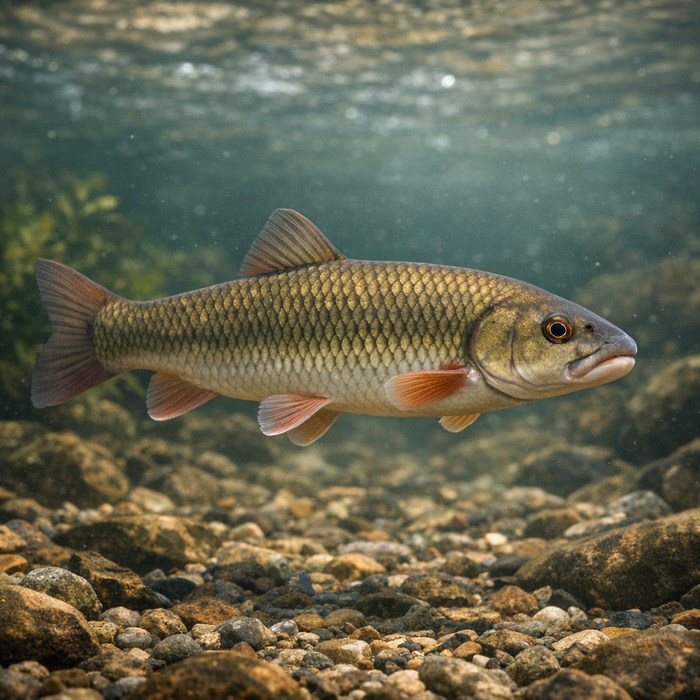
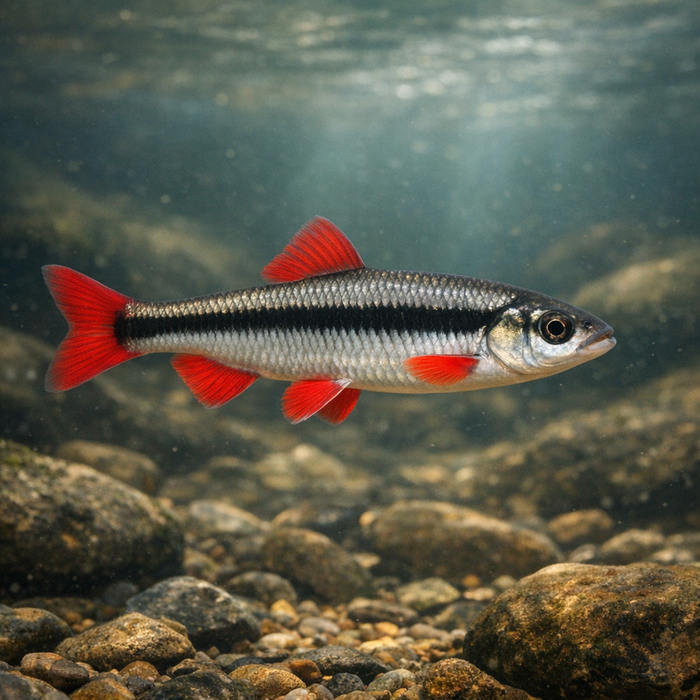
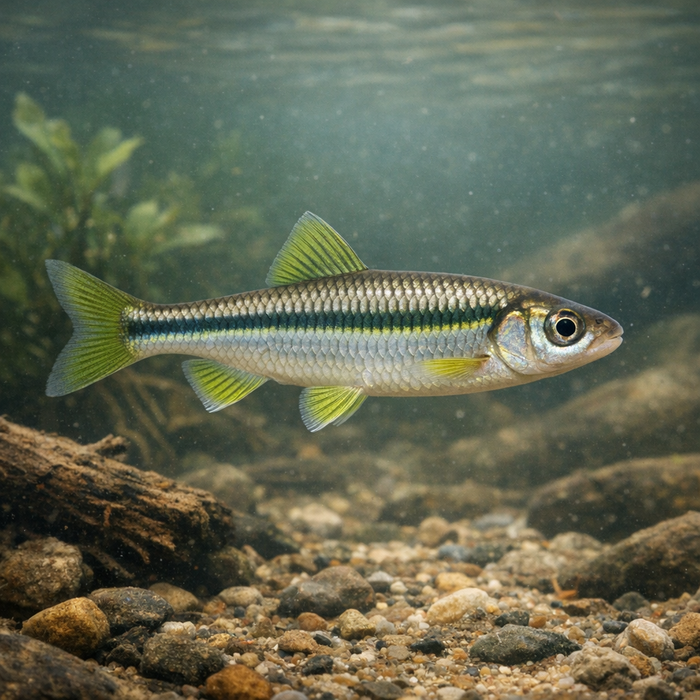
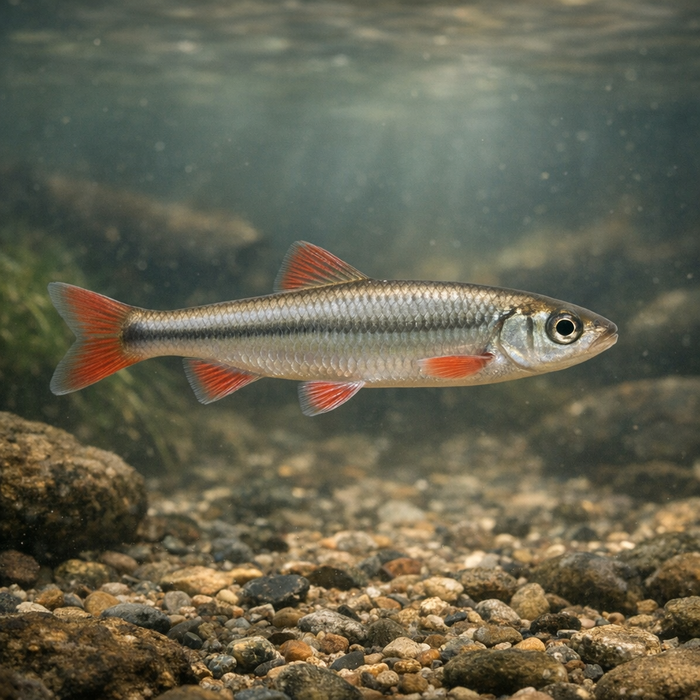
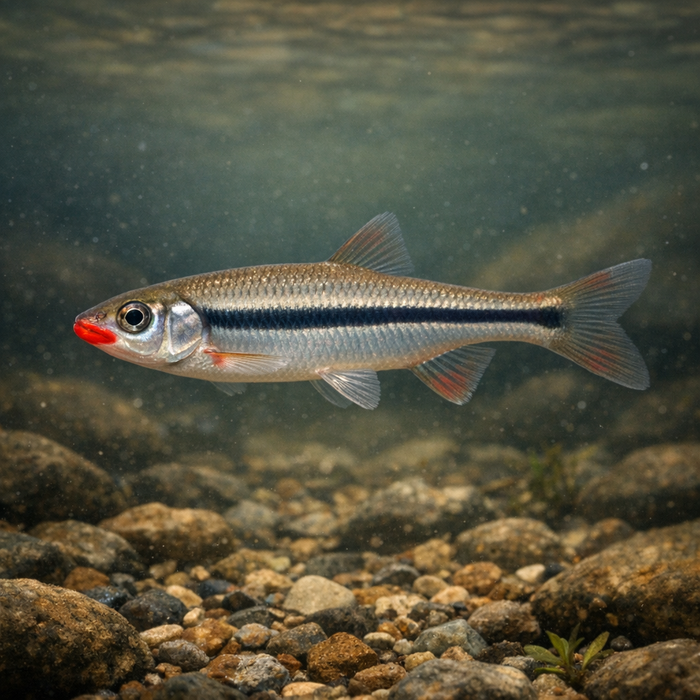
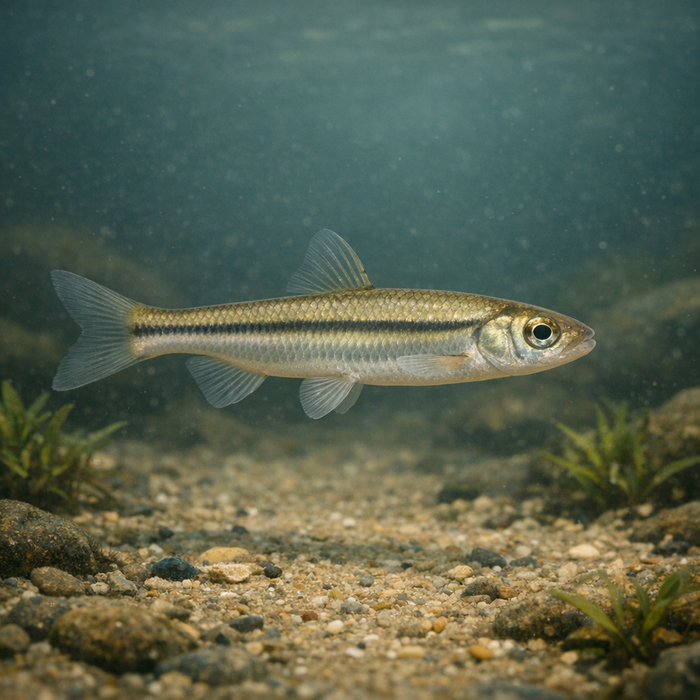
Mountain Shiner (Lythrurus lirus): A Bold, Memorable Hook LineIntroductionIf you think baitfish are boring, the mountain shiner is here to throw confetti in your face. This is a small fish with big personality: brilliant spawning colors, fast-water swagger, and schooling moves that look choreographed. For anglers exploring headwater creeks and Appalachian foothills, the mountain shiner is both a signpost of clean water and a microfishing target that rewards finesse.What Makes the Mountain shiner Unique?Two things: color and current. During the spawn, male mountain shiners light up with red or orange fins and a sharp, black lateral stripe, turning a quiet riffle into a neon sign. They're built for moving water, with a streamlined body and quick-twitch response that lets them hold in fast runs with effortless poise. Their small, slightly upturned mouth is tuned for sipping drifting morsels mid-column, which also makes them perfect practice partners for anglers honing precision presentations. If you're collecting Mountain shiner facts for trivia night, start with that springtime color show and their hair-trigger schooling coordination.Habitat & Global RangeWhen anglers ask about Mountain shiner habitat, the honest answer is: think clear, cool-to-warm upland creeks with clean gravel and steady flow. They're a Southeastern United States specialty, especially in the Tennessee River drainage and nearby highland systems. Picture pocket water, knee-deep runs, and riffles that sing. They stack in current seams, gather in pools below small falls, and slide along undercut banks where flow eases just enough to rest.Behavior & TemperamentDespite the fireworks colors, the mountain shiner is no showboat. It's a schooling fish, cautious by nature, and quick to flash away at bootsteps or overhead shadows. Feeding windows often spike at dawn and late afternoon, though steady light and stable flows can keep them active all day. Courtship is fast-paced and tight to the gravel; males develop tiny tubercles and jostle for prime spots, with eggs hatching in just a few days when water warms. Fight-wise, you're not here for drag burns. You're here for stealth and accuracy.Ecological ImportanceThe mountain shiner is a textbook energy courier. It converts insects and fine drift into streamlined protein for larger sportfish. Its presence often signals a healthy, well-oxygenated stream, and it helps stabilize food webs by grazing microinvertebrates and passing that nutrition up the chain. Lose these small players and your creek's symphony goes out of tune.Conservation & Environmental PressuresGood news first: the mountain shiner is generally listed as Least Concern. But that's not a blank check. It leans hard on clean substrate, stable flows, and intact riparian cover. Siltation from poor land use, low summer flows, and chemical runoff can erase local populations in a hurry. Dams and culverts that chop up habitat don't help either. Treat them like a litmus test. If your creek holds bright, skittish shiners, it's probably in decent shape. If it doesn't, start asking why.The FishyAF TakeThe mountain shiner is a tiny teacher. It punishes sloppy presentations, rewards gentle approaches, and makes you read current like a pro. It's also straight-up gorgeous when the water warms. If you're an angler who thinks only big fish matter, spend an afternoon with mountain shiners and a size-20 hook. Your line control gets sharper, your stealth improves, and you leave a better creek angler. Not every fish needs to peel drag to earn respect; some just need to glow like embers in the riffles and make you smile.