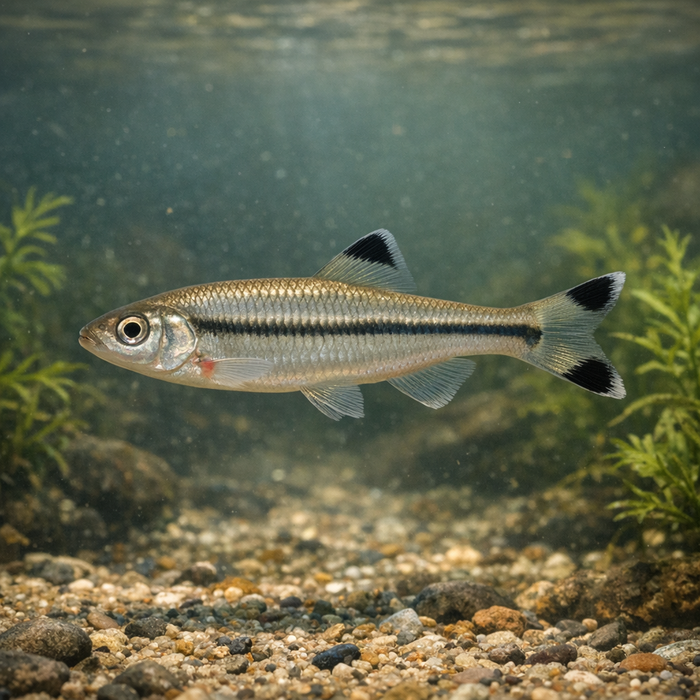
Hampala Barb (Hampala macrolepidota): The Carp Relative That Would Rather Smash Your Plug
Forget the idea that every carp relative belongs beside a dough ball. The Hampala Barb is a freshwater predator with a streamlined body and an established appetite for artificial lures. Known to Malaysian anglers as sebarau, it turns clear rivers and forest reservoirs into worthwhile casting water. The family connection is carp; the fishing experience is something considerably less polite.
Typical adult-target fishing centers on fish around 14–20 inches and 1–3 pounds, not mythical monsters. That is plenty of fish for light tackle near timber. The attraction is straightforward: accurate casts, small baitfish imitations, and a predator capable of making the next few seconds unexpectedly expensive.
What Makes the Hampala Barb Unique?
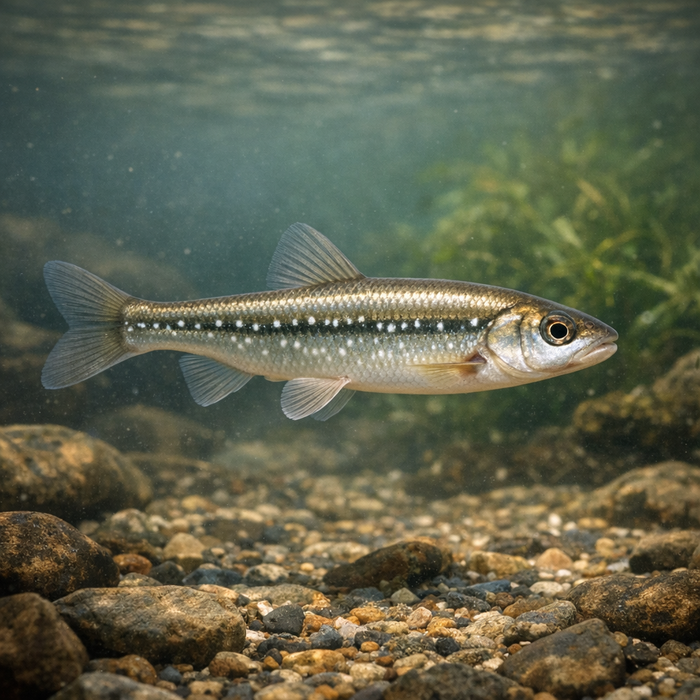
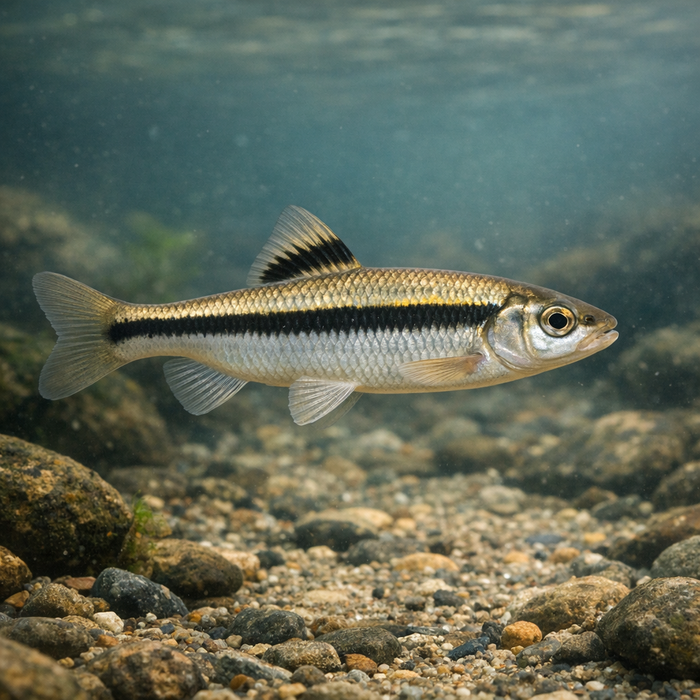
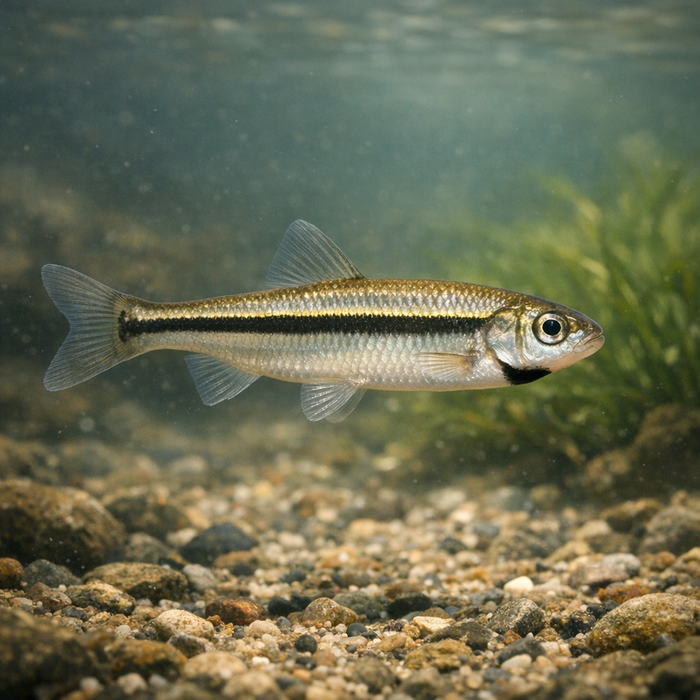
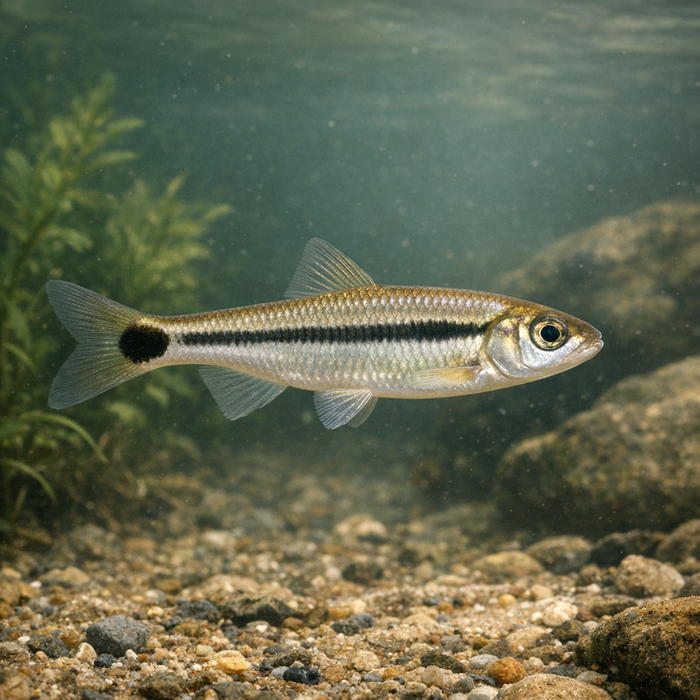
Start with its markings. Adults carry a conspicuous dark vertical bar between the dorsal and pelvic fins, while the orange-to-red tail has black edging along both lobes. Juveniles can show another bar near the tail and a dark, teardrop-shaped cheek marking. Identification gets more interesting when the youngsters arrive wearing extra paint.
Then consider its feeding flexibility. Although this is a genuine predator, its menu is not identical everywhere. Studies have documented fish-dominated feeding in one Malaysian lake and substantial aquatic-insect consumption in an Indonesian reservoir. One of the more useful Hampala Barb facts is that predator does not mean permanently locked onto minnows. Local food availability matters.
Finally, its reputation comes with evidence. A lure-caught specimen weighing 15 pounds earned recognized all-tackle record status in 2023. That puts considerable muscle behind a fish many visitors first encounter through modest-sized sebarau photographs.
Habitat & Global Range
The Hampala Barb belongs to Southeast Asia, including the Mekong and Chao Phraya basins, the Malay Peninsula, and the Greater Sunda islands of Sumatra, Java, and Borneo. Clear rivers and streams are characteristic habitat, but lakes and reservoirs are important too. Do not interpret river fish as a prohibition against still water.
For anglers, Hampala Barb habitat becomes most useful when translated into features: tributary mouths, rocky points, current breaks, and submerged timber. Lake Kenyir and Temenggor Lake in Malaysia, plus Khao Laem Reservoir and Cheow Lan Lake in Thailand, are established destinations in the FishyAF lineup. Start with the meeting places between food, structure, and moving water rather than blindly covering the largest available shoreline.
There is no single magic fishing depth. In the Mekong, deep pools provide dry-season refuge, while floodplain habitats become feeding areas during inundation. Reservoir populations can remain within their impoundments year-round.
Behavior & Temperament
This is a fish worth approaching with a casting plan. Angling accounts describe sebarau using eddies around rocks, branches, and fallen trees, while larger individuals often occupy deeper cover. The practical implication is not complicated: put the offering near something meaningful and be ready before it gets there.
The Hampala Barb also makes a strong argument against treating every fish in the carp family as a bottom-feeding specialist. Minnow plugs, spoons, small surface offerings, and baitfish flies all have a place in its angling story. Its documented lure-fishing reputation includes hard dashes around rocks and drowned wood, where tackle control becomes more useful than theatrical rod lifting.
Ecological Importance
As a native predator, this species connects smaller aquatic animals with larger consumers and human fisheries. Its changing diet also links insect production and fish prey to the same feeding population. That flexibility is ecologically more interesting than simply calling it a miniature freshwater missile.
There is an unexpectedly strange footnote: experiments found that chemical traces left in water by this fish altered where dengue-vector mosquitoes laid eggs. That does not make stocking sebarau a universal mosquito-control solution. It does show that its ecological influence can extend beyond whatever it actually swallows.
Conservation & Environmental Pressures
The Hampala Barb is classified as Least Concern. That is a global assessment, not permission to assume every accessible population is thriving. Research from Indonesia’s Ranau Lake described a still-abundant but declining population, illustrating why broad conservation categories and local fishing quality should not be confused.
Flood-season feeding areas, refuge pools, and connections between habitats deserve attention. Dam-fragmented populations can persist in reservoirs, but persistence does not prove that altered rivers function exactly as before. Protecting habitat variety is a more sensible ambition than preserving only the photogenic casting banks.
The FishyAF Take
This fish deserves better than being treated as the consolation prize between more famous Southeast Asian predators. A Hampala Barb on balanced tackle offers something refreshingly direct: read the water, make the cast, and deal with the consequences.
Bring strong hooks and an abrasion leader. Leave the assumption that carp relatives are boring at home. The taxonomic family is not the problem; the stereotype is.