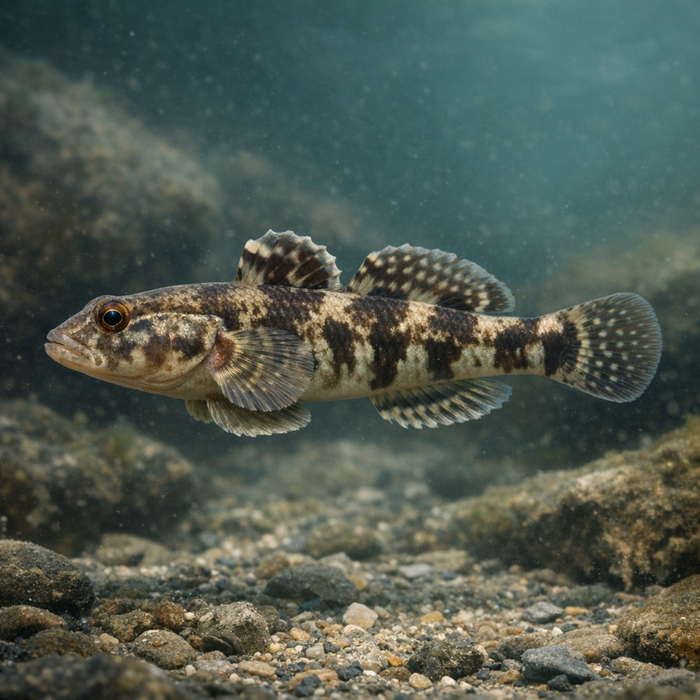
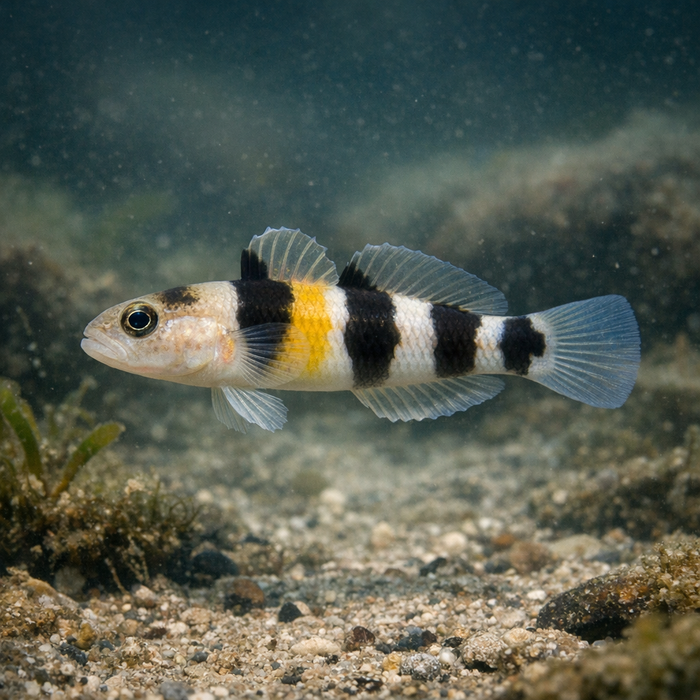
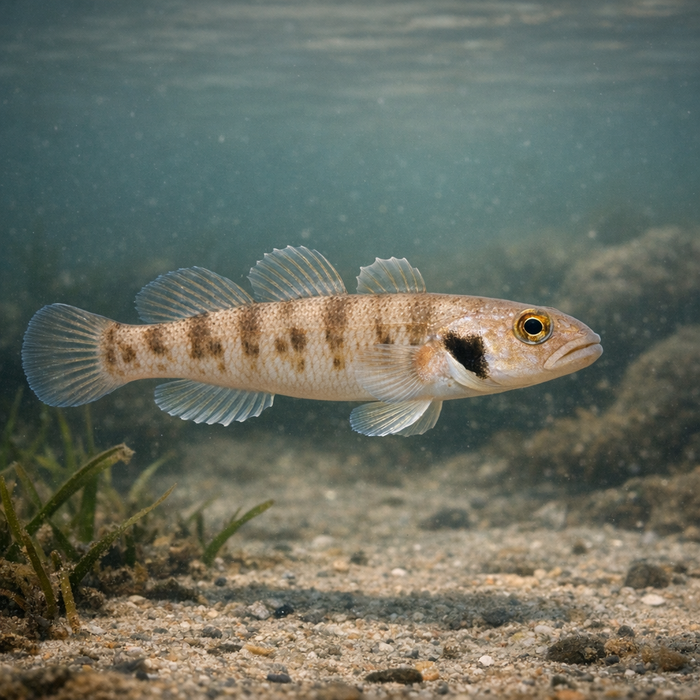
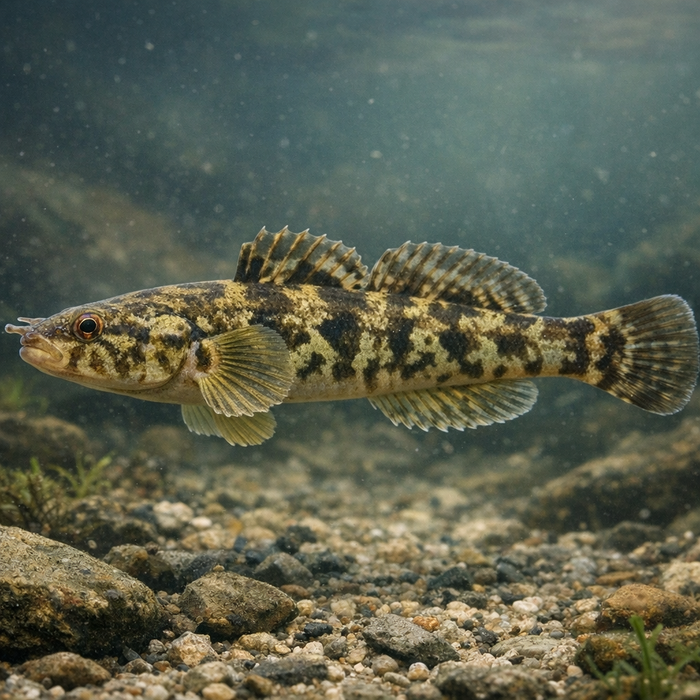
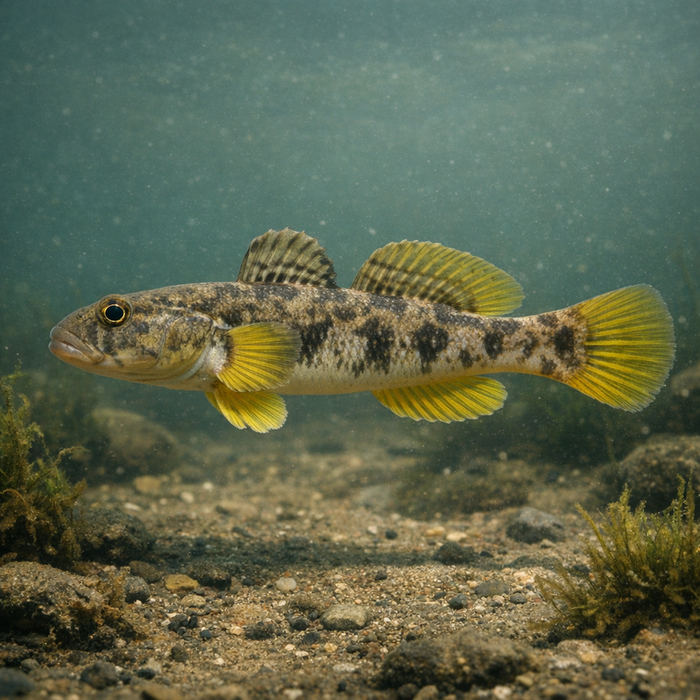
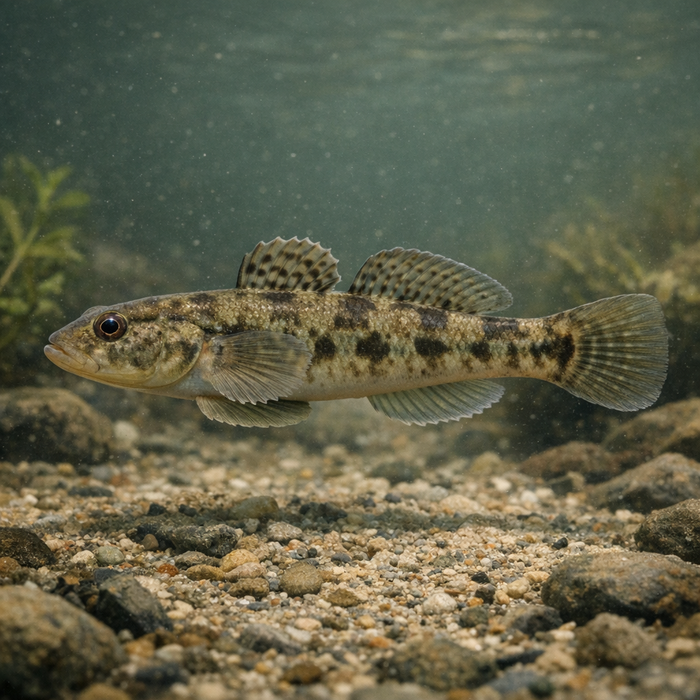
Highfin goby (Gobionellus oceanicus): A Bold, Memorable Hook LineIntroductionIf you fish tidal creeks, flats, or mangrove edges, you've probably seen a small, big-headed blur zip across the bottom and vanish. That's the Highfin goby, the estuary's pocket-sized janitor with a sail for a dorsal fin and a serious vacuum for a mouth. It's not a glamour species, but it's a master of surviving chaos: mud, tides, salinity swings, and predators that eat breakfast all day.What Makes the Highfin goby Unique?Start with the namesake fin. Breeding males hoist the first dorsal like a tiny banner, turning a low-slung bottom dweller into a billboard. Then there's the undercarriage: fused pelvic fins form a suction disc, letting this fish park on shell, grass edges, or tide-ripped mud like it has parking brakes. Finally, the feeding style is pure ambush artistry. The Highfin goby inhales micro-prey with a snap of negative pressure that's over before you process the strike. Fast, efficient, and very goby. If you wanted a compact lesson in estuary survival engineering, this fish is it.Habitat & Global RangeYou'll meet the Highfin goby across Western Atlantic estuaries, from the Southeast and Gulf Coast to the Caribbean and beyond. It's a diehard estuarine resident, happy in tea-colored brackish creeks, mangrove roots, oyster rubble, and muddy flats sprinkled with shell. The fish tracks tides like a metronome, sliding shallow to graze in minutes and bailing to slightly deeper runs when water rips too hard. It shrugs off salinity shifts that stall other fish, a calling card that explains why you see it in summer rain-diluted marshes one day and salty inlet edges the next. When anglers search "Highfin goby habitat," they're really asking where the bottom moves: grass lines, micro-channels, and soft substrate with just enough structure to break current.Behavior & TemperamentThis is a bottom hugger with a "move only when necessary" approach. The Highfin goby spends long stretches frozen on the substrate, then darts like a launched spring. It rarely roams far, but it's always working the buffet: tiny shrimp, worms, and anything small enough to inhale. During the warm months, breeding flips a switch. Males throw up that high fin, colors sharpen, and turf tiffs break out over prime micro-structure. It's not a brawler on the line, but it is a surprisingly savvy bait thief. Miss your timing and you're reeling in a naked hook, wondering what just happened.Ecological ImportanceCalling the Highfin goby a "forage cog" undersells it. This species is estuary plumbing. By gobbling small invertebrates and getting gobbled in turn, it funnels energy from the mud to literally everything with teeth. Larvae drift offshore and ride currents back to nurseries, spreading the genetic wealth between marsh pockets. And because the Highfin goby tolerates the kind of brackish whiplash that chases other fish away, it keeps the food web humming when conditions get weird.Conservation & Environmental PressuresNo one's launching petitions for the Highfin goby, but the usual estuary suspects still apply: shoreline hardening, marsh loss, stormwater pulses, and low-oxygen events. Add in summer heat spikes and the occasional pollutant slug, and you understand why small, bottom-tied fish are first to feel it. It's not headline endangered, but it's a reliable barometer for marsh health. Fewer Highfin goby encounters often mean the small stuff is slipping: grass edges silted in, shell scattered, or oxygen sagging after a heat wave.The FishyAF TakeThe Highfin goby is the estuary's proof that small doesn't mean boring. Micro anglers already know: this fish teaches finesse, timing, and attention to detail better than any seminar. Want real Highfin goby facts? Try catching one on purpose. You learn tide rhythm, how mudlines hide structure, and how to read a shoreline by the way it collects shell. Even if you never tie on a size-14 hook, remember the lesson. When the bottom teems with Highfin goby, the system's doing its job. When it doesn't, start asking questions-because the spot's story usually starts down in the mud, exactly where this fish lives.