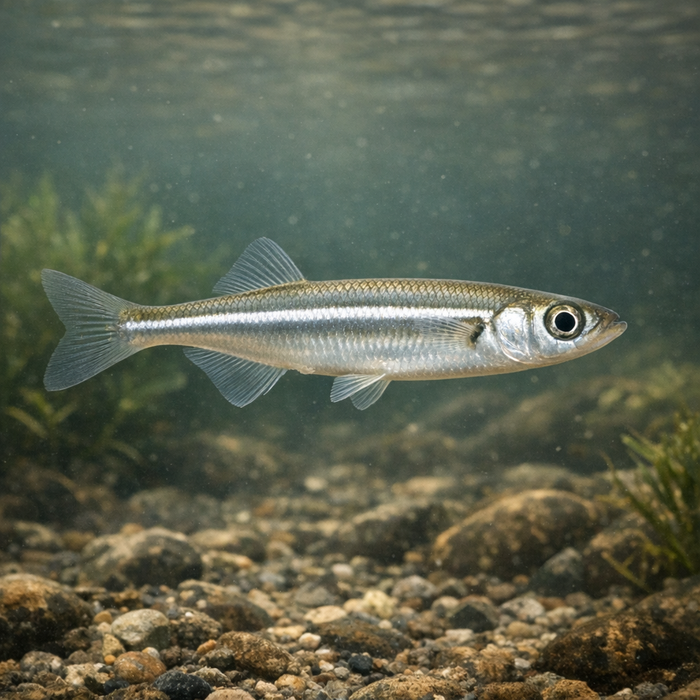
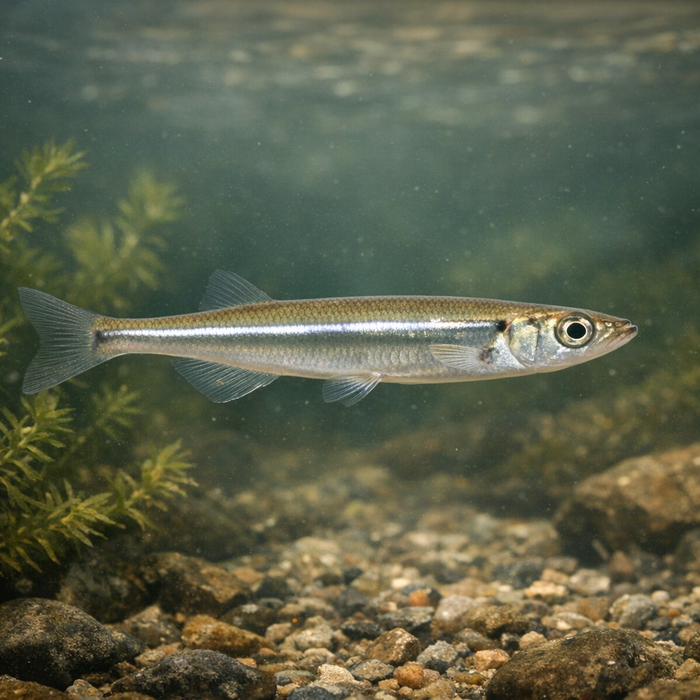
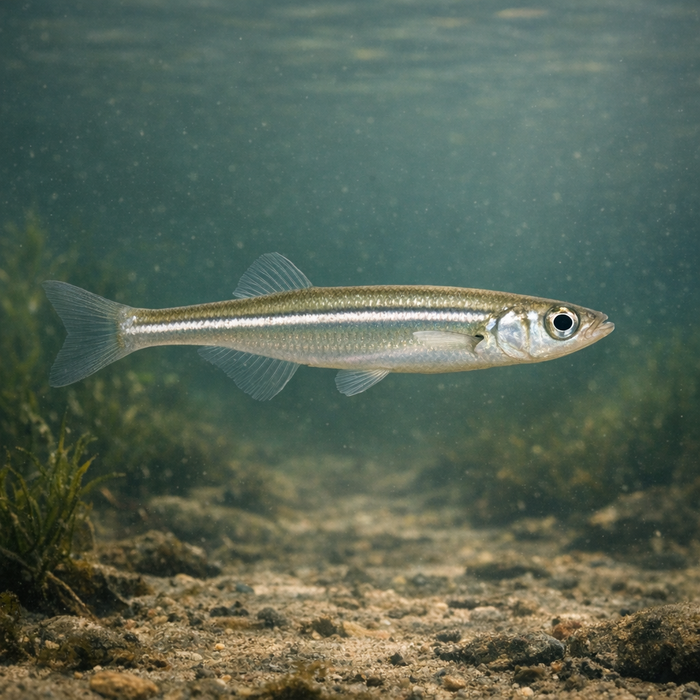
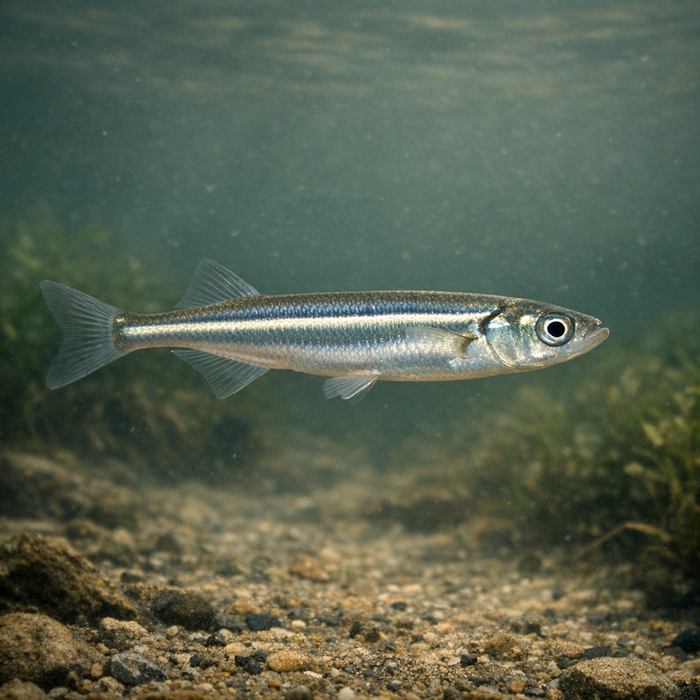
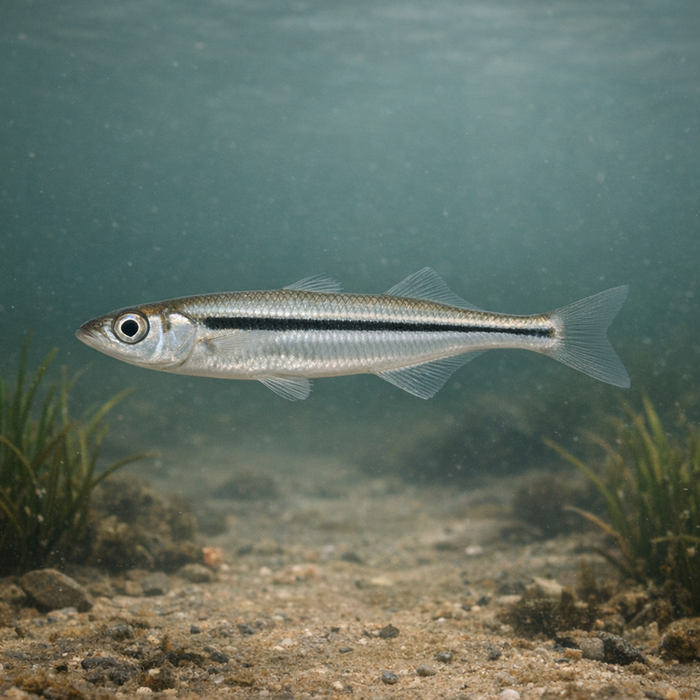
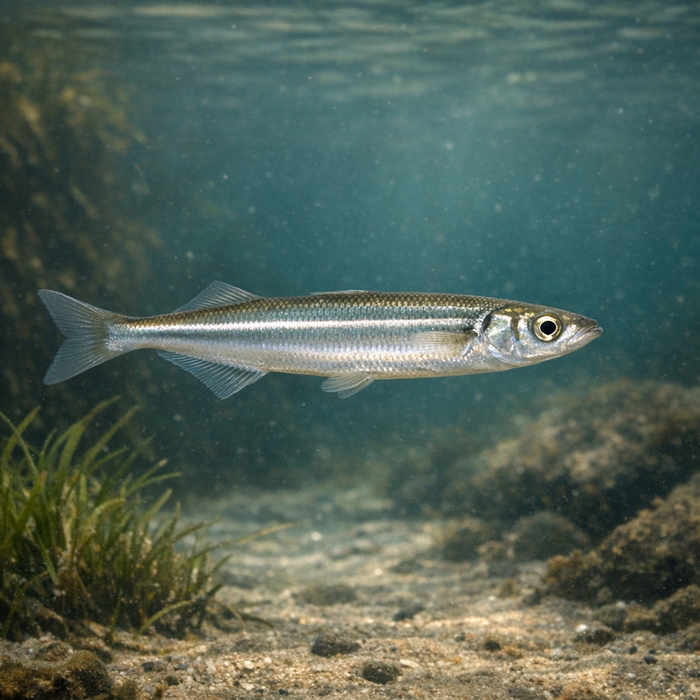
Inland Silverside (Menidia beryllina): Tiny Flash, Big RoleIntroductionThe inland silverside is the glitter in the tide line, the nervous shimmer under dock lights, and the reason your favorite gamefish hangs around a marina all night. It is small, yes, but it runs the food chain like a short king. For anglers who chase what eats the bait, knowing the inland silverside pays dividends. If you are here for Inland silverside facts or to understand Inland silverside habitat, you are already on the right dock.What Makes the Inland silverside Unique?Two things jump out. First, the build: a slender, translucent body with a chrome racing stripe, two widely separated dorsal fins, and an upturned mouth designed to sip at the surface film. Second, the lifestyle: massive schooling behavior at or near the surface, especially around lights, pilings, and calm current seams. The inland silverside may be bite-size, but it is a precision surface feeder that can turn piers into bait blizzards.Habitat & Global RangeThe inland silverside thrives in brackish estuaries, tidal creeks, low-gradient rivers, and connected lakes and ponds along the Atlantic and Gulf coasts. It handles a wild salinity range, bouncing from fresh water to salty bays without complaint. That flexibility lets it pack into backwaters, flood-control canals, and quiet marina basins. Depth is a surface story. Expect fish from ankle-deep shallows to mid-channel eddies, but almost always in the top few feet, shadowing current breaks, grass edges, and riprap where drifting insects and plankton stack up.Behavior & TemperamentCall it a nervous extrovert. The inland silverside lives in dense, coordinated schools that flash and pivot as one. It leans hard on vision, and a weak lateral line compared to many gamefish steers it toward calm, clear edges and light sources. Spawning happens through the warm months, with females laying adhesive eggs that stick to vegetation, shell, or debris. Lifespan is short, often a year or two, which keeps turnover high and feeding pressure constant. They love low-light windows, react fast to shade lines, and go full chaos when predators push them, sometimes spraying out of the water like glitter tossed in the air.Ecological ImportanceThis is the meat-and-potatoes forage for stripers, weakfish, seatrout, red drum juveniles, largemouth in tidally influenced lakes, and pretty much anything with a mouth. They convert plankton and tiny insects into rocket fuel for sportfish. On the science side, Menidia beryllina is a go-to lab organism for toxicity testing, which means it helps set water-quality standards that protect the fisheries we actually chase. Every inland silverside school buzzing under a bridge is a living link between plankton blooms and your next personal best.Conservation & Environmental PressuresThe inland silverside is listed as Least Concern, and good thing, because it props up entire food webs. But it is not bulletproof. Habitat loss, shoreline hardening, stormwater pulses, and poor water clarity can shrink surface feeding zones. Hypoxia squeezes life toward the top. Pollution hits hard, which is grimly ironic given this species helps test for it. The best conservation move is simple: protect estuarine nursery habitat, maintain flow and water quality, and keep an eye on bait-collection regulations.The FishyAF TakeIf you ignore the inland silverside, you are skipping the map to bigger fish. Learn the shimmer. On flood tides, check grass edges and dock lights. On calm mornings, watch for dimples at the surface where these fish sip micro-insects. When the silversides are thick, predators are never far. Microfishing them is easy fun with a tiny float and bread, but the real power is patterning silverside movement to unlock stripers, specks, and anything else with teeth. Small fish, big leverage. That is the inland silverside story, and it pays in bent rods.