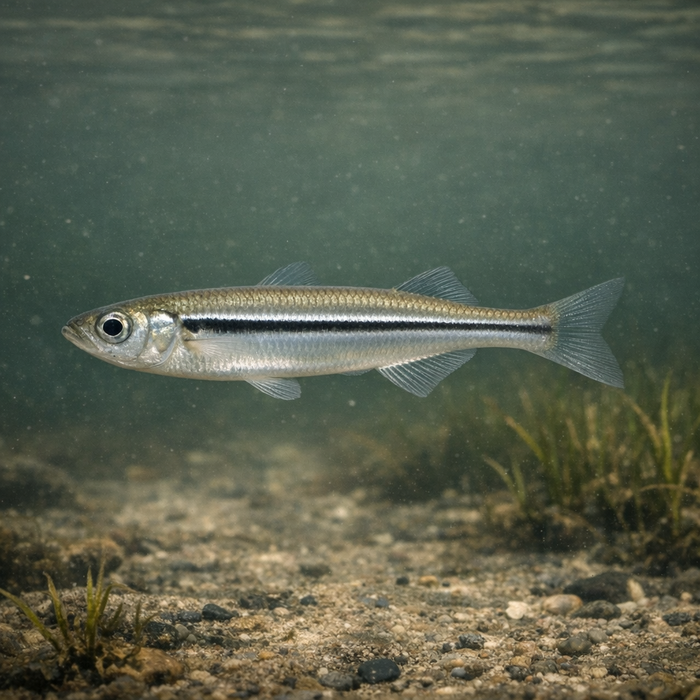
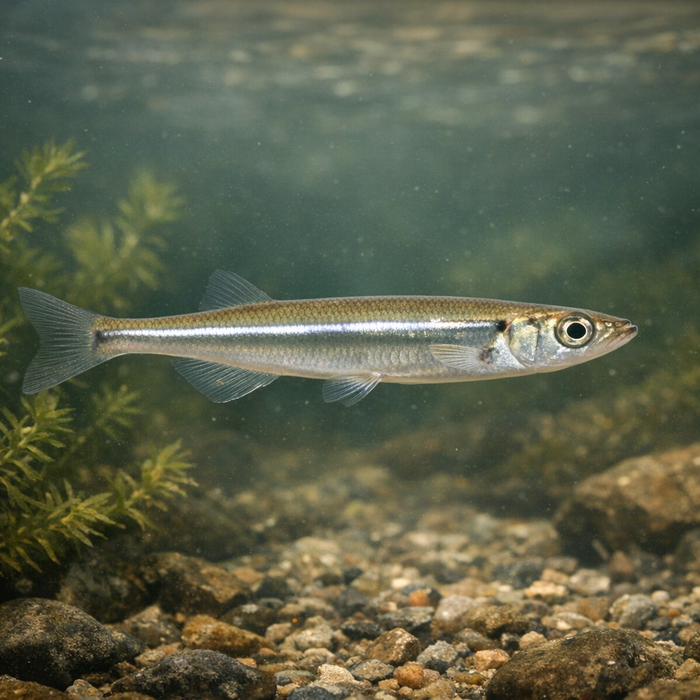
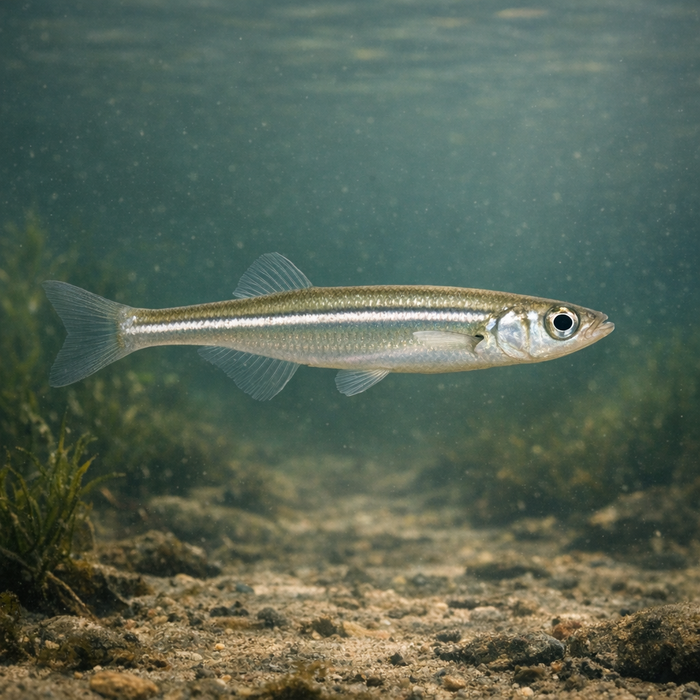
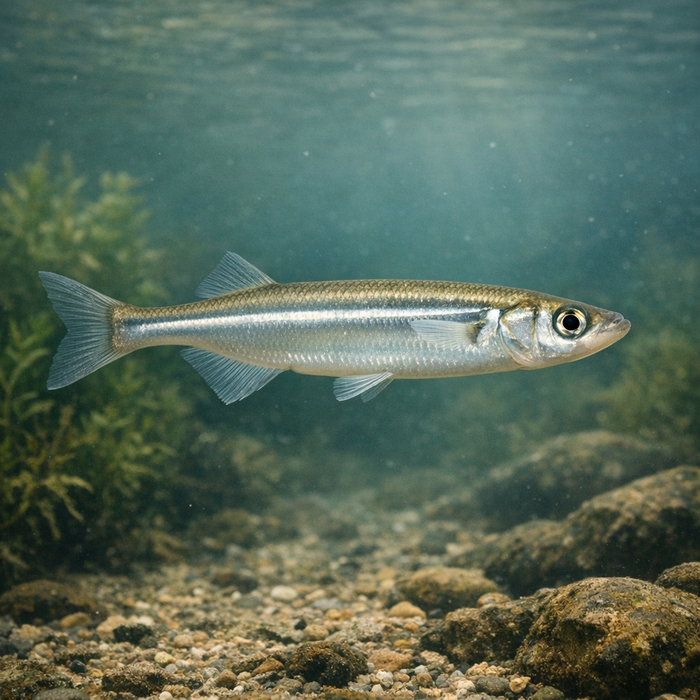
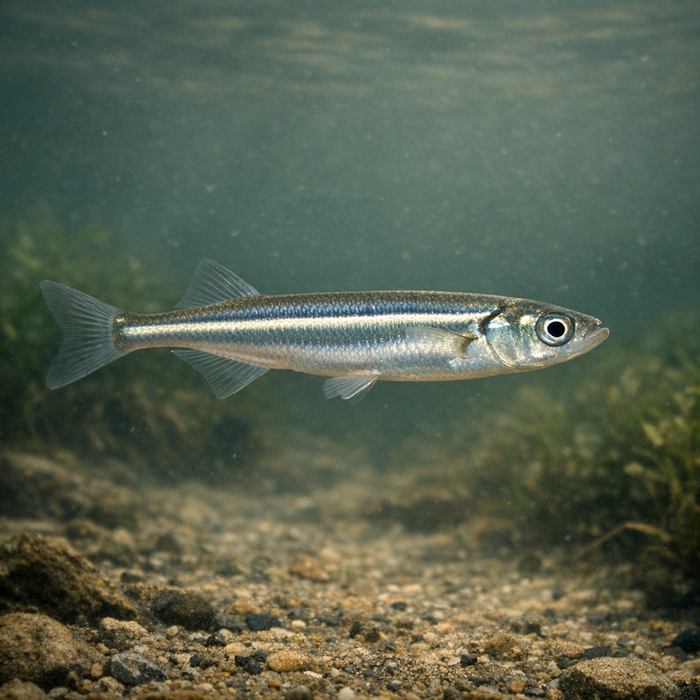
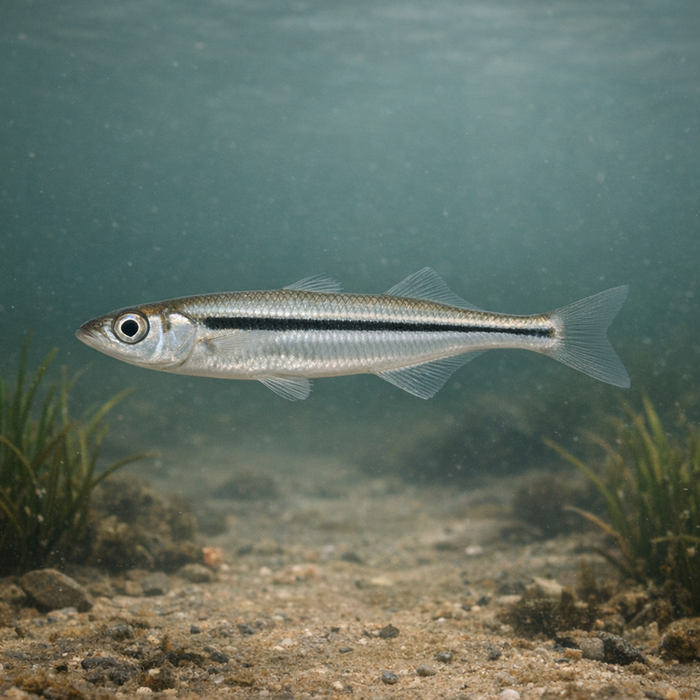
Mississippi Silverside (menidia audens): A Bold, Memorable Hook LineIntroductionIf you've ever watched the water's skin sparkle like a busted disco ball, you've probably met the Mississippi silverside. Slender, glassy, and turbo-charged in schools, this little missile lives right where air kisses water. It's more micro-snack than sportfish, but if you're into finesse, the Mississippi silverside can deliver quick, twitchy action and a surprising education in precision.What Makes the Mississippi silverside Unique?Two things jump out. First, that chrome racing stripe along an almost transparent body: it's stealth and flash rolled together. Second, the upturned, surface-cruising mouth. The Mississippi silverside is engineered to pick insects and plankton right off the film, which makes it a year-round food conveyor for everything bigger. They carry two dorsal fins, the first a tiny spiny fin that helps with high-speed stability when the school pinwheels from danger. Add freakish tolerance for fresh-to-brackish water shifts and you've got a pioneer species that colonizes new habitat fast.Habitat & Global RangeLet's talk Mississippi silverside habitat. Think shallow, clear, and sunlit: reservoirs, backwaters, channel edges, marinas, and brackish deltas. They prefer the top few feet where sight-feeding pays. Historically based in the Mississippi basin and Gulf drainages, the Mississippi silverside also shows up in western waters where it was introduced decades ago. Expect them near current breaks, riprap, weedlines, and dock shadows, especially when wind corrals plankton and midges into a tasty surface buffet. If you're mapping "Mississippi silverside facts," chart light, warmth, and a quick escape route to open water.Behavior & TemperamentThey're schoolers by design. Big eyes track movement and light changes, so dawn and calm evenings can trigger pop-and-go snacking. Spook one and the whole cloud detonates, skipping like silver tinsel. The bite is more sip than smash, which is why tiny hooks and gentle rod work matter. Spawning rolls out in warm months with adhesive eggs that stick to plants and rocks, letting them carpet new water quickly. Their fight is, let's say, polite. Hook a Mississippi silverside and you'll get a few darting kicks before it slides to hand.Ecological ImportanceThis species is the buffet line for your favorite predators. Bass, crappie, stripers, and walleye hammer schools of Mississippi silverside when conditions stack in their favor. They also vacuum up emerging insects, tying surface life to fish growth in a neat little loop. In places they were introduced, their success can elbow native forage and larvae, with well-documented tension around endangered smelts in California's estuary. Love them or loathe them, the Mississippi silverside is a powerful gear tooth in the food web.Conservation & Environmental PressuresAs a hardy generalist, Mississippi silverside populations tend to ride out moderate habitat swings. But clarity matters. Silted shorelines, toxic blooms, or chemical spikes can scramble their surface game and reproductive timing. Water management that batters plankton cycles can thin the larder. In waters where they're nonnative, managers wrestle with the balancing act of controlling them without collateral damage. They're not a classic conservation poster child, but they sit at the crossroads of water quality, flow timing, and predator health.The FishyAF TakeYou won't book a trophy trip for Mississippi silverside, but ignore them and you're missing the plot. Where they stack, predators stack. Where predators stack, anglers smile. If you like microfishing or you're teaching a kid how to read the surface, these jittery minis are perfect. Stealth, tiny hooks, a sliver of worm, and a dinky float can turn glassy water into a fireworks show. The Mississippi silverside is quick, shiny, and honest. Learn their tells and you'll unlock the bigger bites shadowing them. That's the real cheat code.