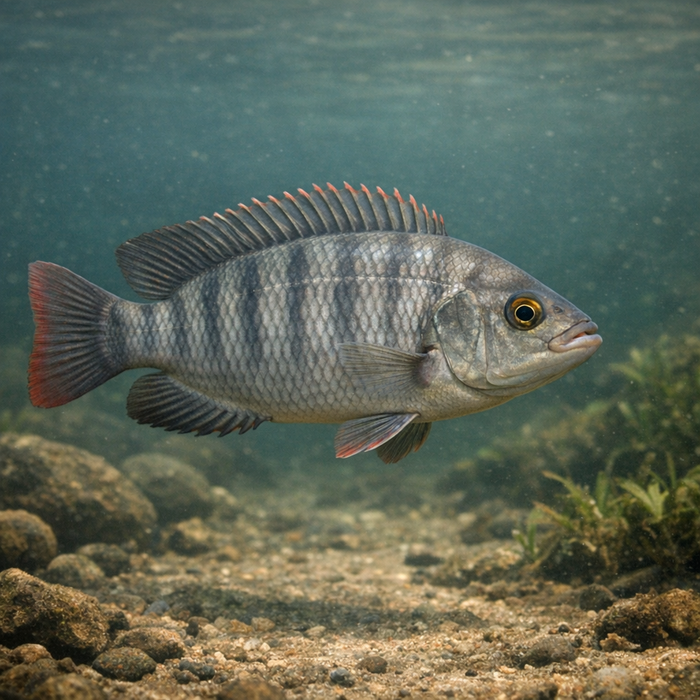
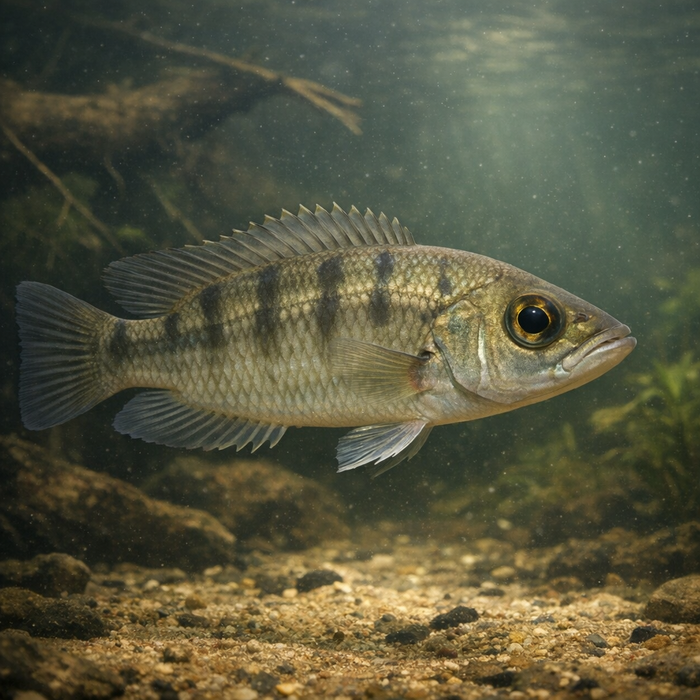
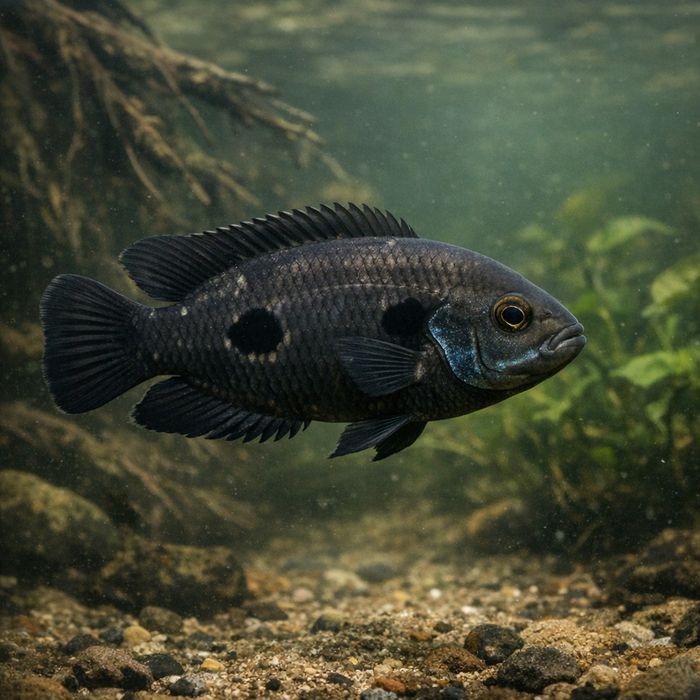
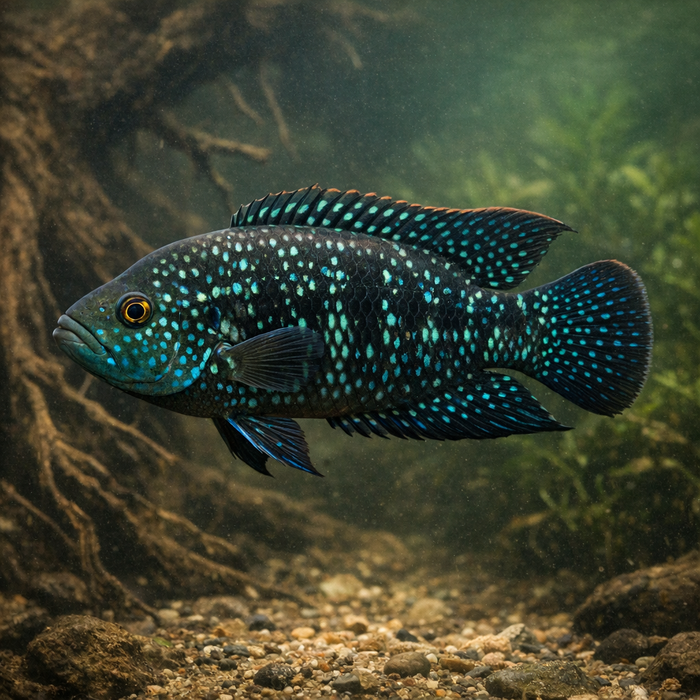
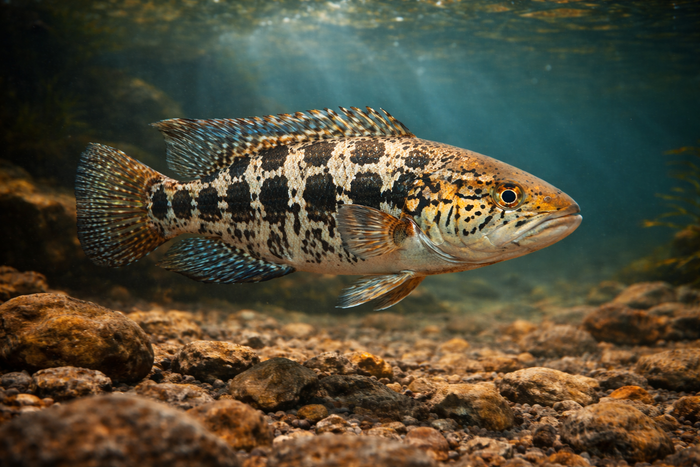
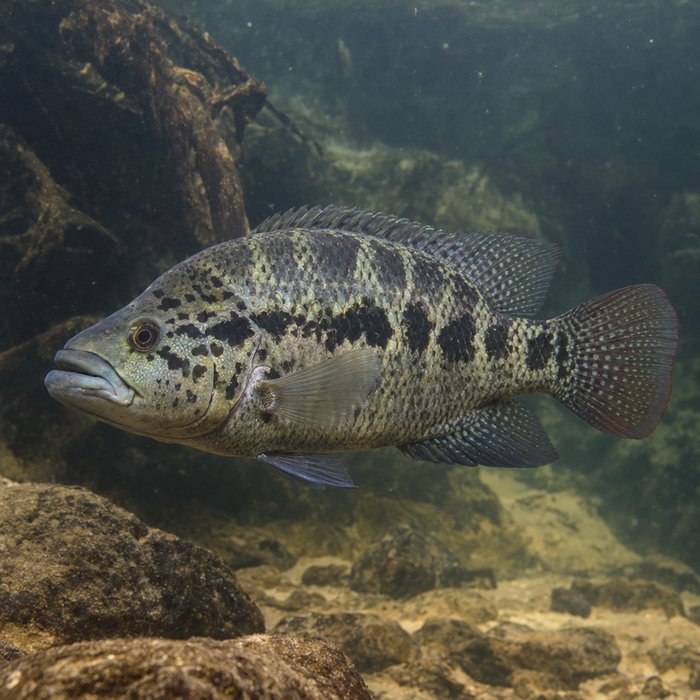
Jewelfish (Rubricatochromis bimaculatus): A Bold, Memorable Hook LineIntroductionThis is the little fish that refuses to act small. The Jewelfish is a compact West African cichlid that packs heavyweight color and heavyweight attitude into a palm-sized package. For traveling anglers, it's a fun curveball: a scrappy, ruby-red brawler hiding in reeds and backwaters where a light rod and tiny hook can still make your day.What Makes the Jewelfish Unique?Start with the paint job. Breeding pairs flare into metallic reds and blues so vivid they look Photoshopped. Then there's the personality. Jewelfish form fierce pair bonds and defend nests like sworn bodyguards, punching way above their weight against anything that wanders too close. Finally, they're great teaching fish for ultralight tactics. A small float, size 12-16 hook, and a pinch of worm can deliver fast feedback, making them a microfishing favorite for anglers willing to explore. If you came here for Jewelfish facts, here's one: you won't forget that color show.Habitat & Global RangeWhen anglers talk Jewelfish habitat, picture warm, vegetated margins of slow rivers, floodplain creeks, and coastal lagoons across West Africa. They gravitate to cover: grass edges, stick piles, root tangles, and rock shards where they can stage and spawn. Water can be tea-stained from tannins or lightly brackish near river mouths, and they handle both just fine. Their range isn't global, but in the right valleys they're downright common. If your trip itinerary includes big-name rivers and nearby lagoons, you're in the neighborhood.Behavior & TemperamentThis is a cichlid, which means family values with an edge. Jewelfish pair up, clean a flat rock or scrape a nest bowl, lay eggs, and then patrol the zip code with serious intent. They nip, posture, and flash color changes like a traffic light. They feed around structure and along edges, taking small invertebrates and fry, and they'll blast a micro jig or worm fragment without much hesitation. Fights are zippy and headshaky rather than long runs. Hook one near its nest and you'll swear it thinks it's a bass.Ecological ImportanceThe Jewelfish does the neighborhood watch routine for real. As a mid-level predator, it trims back swarms of insect larvae and small fish, while bigger predators trim it in return. That two-way street fuels energy transfer across floodplains and backwaters. Their nest-guarding lifestyle also concentrates activity in cover-rich microhabitats, turning little weedbeds into busy intersections of the food web. Pull a few Jewelfish from a pocket and you'll often see the whole micro-community stir.Conservation & Environmental PressuresMost populations are stable, but water quality and flow timing matter. Silt-choked creeks, polluted urban canals, and mangrove clearing clip the shallow edges these fish rely on. Overharvest isn't the big story here; habitat is. Extreme droughts or flashy floods can also scramble spawning windows. If you're traveling, pick cleaner side channels and protected lagoons when possible. A thriving Jewelfish population usually means the littoral zone is doing its job.The FishyAF TakeCall it a gateway exotic. The Jewelfish is a perfect detour fish: easy to approach, flashy as fireworks, and willing to bite gear you can fit in a carry-on. It won't tow your kayak, but it will teach you to read edges, stalk quietly, and think like a predator scaled to inches, not feet. Bring ultralight tackle, a tiny box of hooks and micro jigs, and follow the weeds. For a fish you could almost pocket, the Jewelfish leaves a big memory footprint and a splash of color you'll be chasing on future trips.