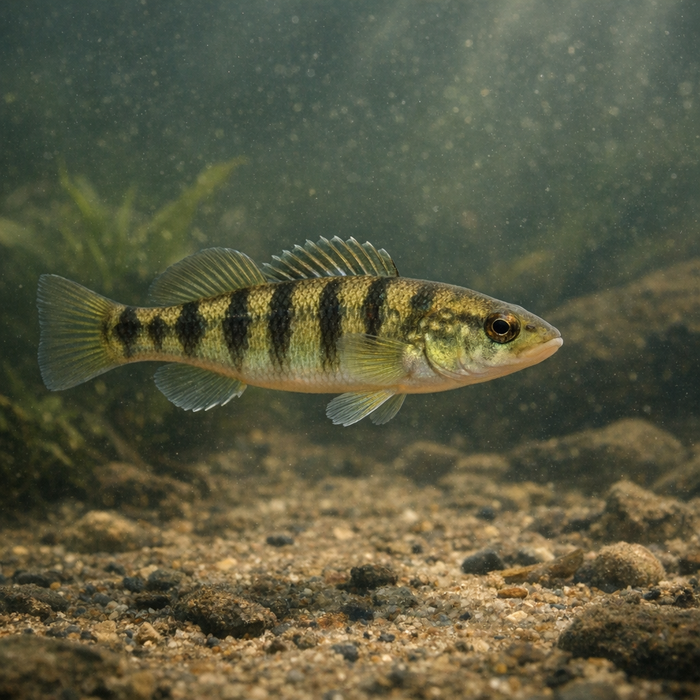
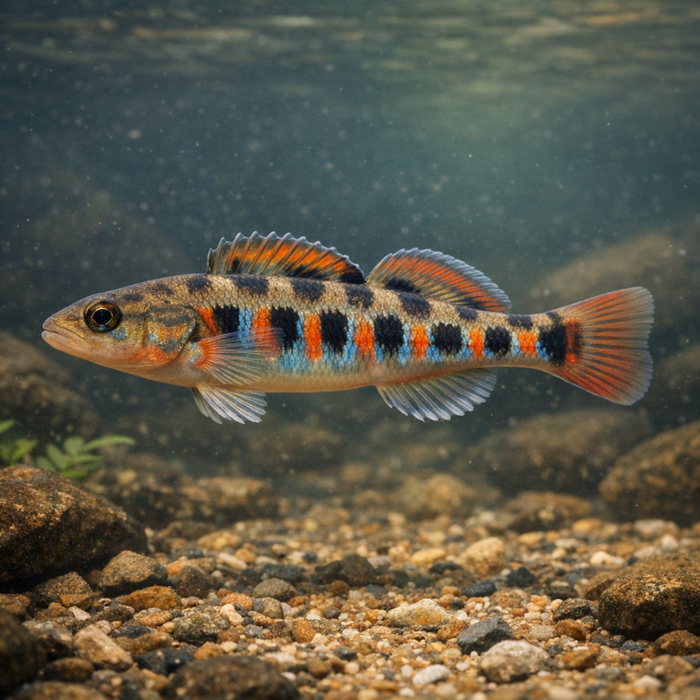
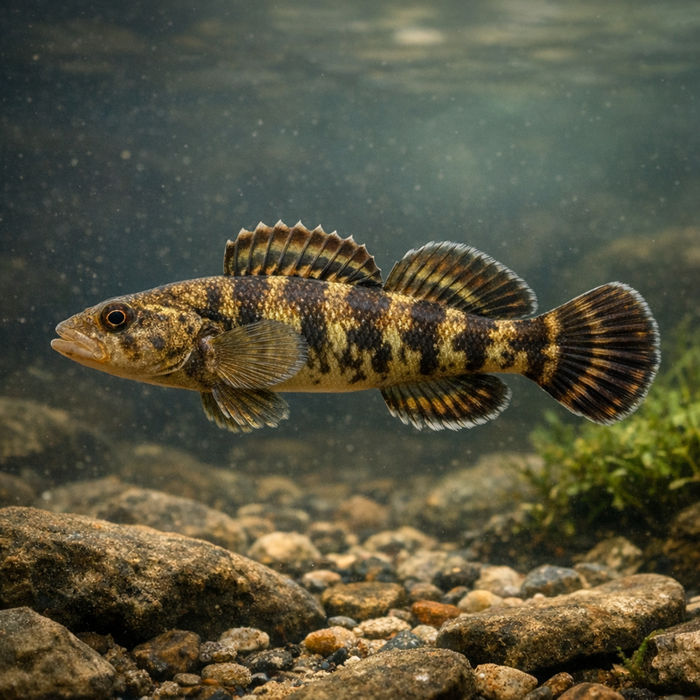
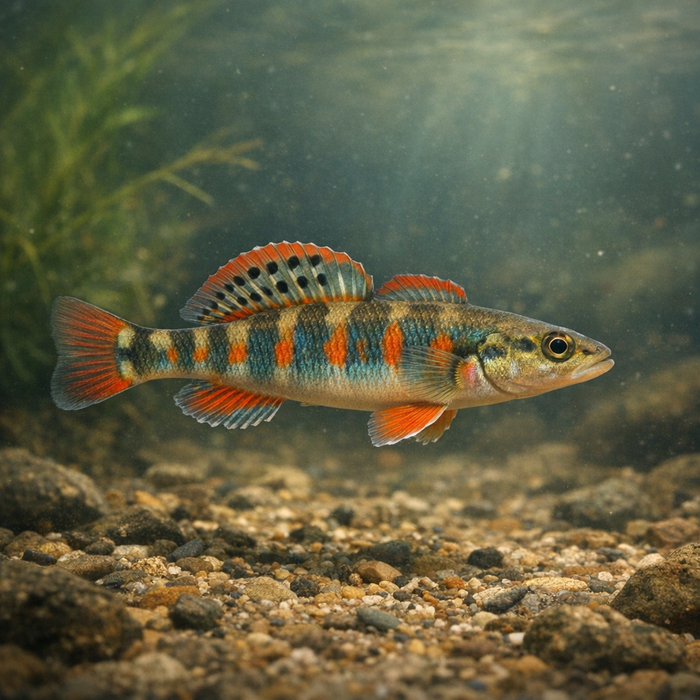
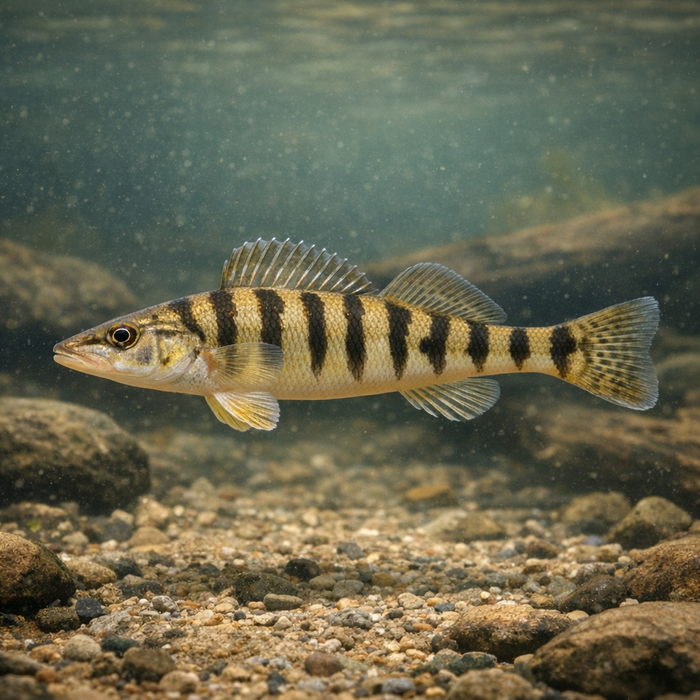
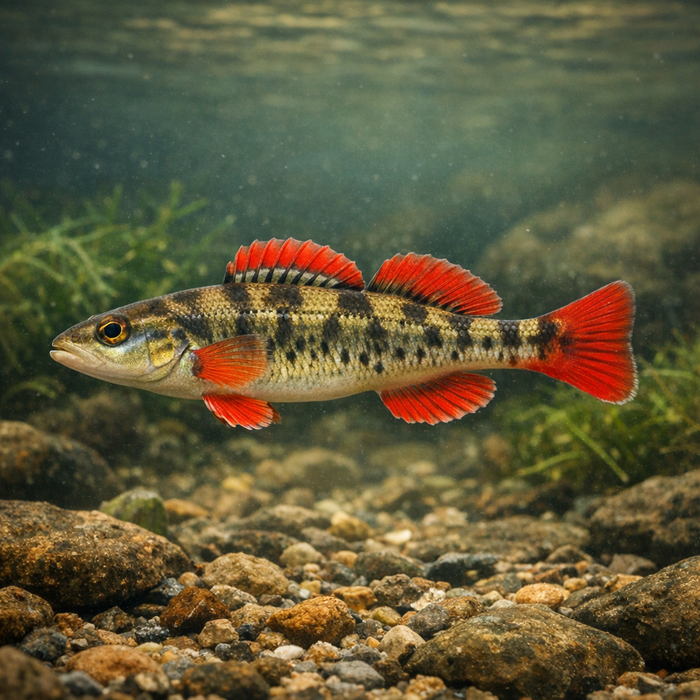
Johnny Darter (Etheostoma nigrum): Pocket-Rocket Bottom Hopper With Serious Dad EnergyIntroductionMeet the Johnny darter, the little river goblin that nobody invited and everybody ends up liking. It's a micro predator with big attitude, built to hug the bottom and vacuum up anything wiggly. Blink and it's gone. Nudge a pebble and there it is again. If you're into microfishing, you already know this pint-sized customer makes a riffle crawl feel like a treasure hunt. If not, consider this your gateway drug to small fish done right.What Makes the Johnny darter Unique?First, the Johnny darter is a nest-guarding overachiever. Males flip upside down under stones to clean, fan, and defend eggs-sometimes from multiple females-like obsessive underwater janitors. Second, it's a bottom specialist. With a reduced or absent swim bladder, it's naturally glued to sand and gravel, darting in short bursts and settling again, the perfect stealth bomber. Third, it's early to the party. Spawning cranks up in cool water long before most stream fish are warmed up, which means Johnny darter patterns pay off before spring really feels like spring. Those are the Johnny darter facts that actually matter when you're deciding where to kneel and how to drift.Habitat & Global RangeIf you're hunting Johnny darter habitat, think shallow, clear to lightly turbid streams with sandy or fine-gravel bottoms, plus the edges of lakes with current or wave-swept zones. Riffles, runs, and micro-eddies are prime, especially where clean substrate holds in place. They're widely distributed across much of the central and northern U.S. and into parts of Canada, with a heavy presence in the Great Lakes and big river drainages. They're adaptable by darter standards, tolerating some silt where fussier cousins fold, which explains how the Johnny darter ends up everywhere your boots do.Behavior & TemperamentThe Johnny darter is not a cruiser. It's a sit-and-zip operator. Expect quick, angular moves a foot or two at a time, then a hard stop. They use pectoral fins like parking brakes and hug micro-structure: pea gravel lips, stick shadows, tiny depressions behind cobble. Feeding is opportunistic but picky about presentation height-put it on the bottom and keep it there. When guarding eggs, males get feisty, flashing darker colors and repelling intruders way bigger than they are. They're not schoolers in any dramatic sense, but you'll find clusters of individuals packed into the best riffle lanes.Ecological ImportanceSmall fish matter. The Johnny darter helps regulate invertebrate communities and serves as bite-sized protein for larger predators like smallmouth, trout in cool reaches, and anything else with a mouth. They also support freshwater mussels by hosting glochidia on their gills during the mussels' awkward teenage phase. Translation: healthy Johnny darter numbers are a fingerprint of a functioning stream-moving oxygen, nutrients, and energy up and down the food web.Conservation & Environmental PressuresOfficially, the Johnny darter sits at Least Concern, and for good reason: it's resilient and widespread. Still, the usual villains can whittle away local strongholds. Excessive siltation smothers their preferred clean-bottom real estate. Poorly managed runoff warms water and clogs substrate. Channelization erases the riffles and pockets that hold them. The flip side? Stream restoration that rebuilds riffle-run sequences and stabilizes banks tends to yield a Johnny darter rebound. They're nature's thumbs-up that the small stuff was done right.The FishyAF TakeThe Johnny darter is the fish that teaches patience without punishing you for learning. It rewards sharp eyes, soft drifts, and tiny hooks. You don't get hero shots; you get a grin and a story about kneeling in a knee-deep riffle, threading a sliver of worm, and watching a brown little phantom materialize from nowhere. For micro heads, it's a foundational species. For everyone else, it's proof that fishing gets better-not smaller-when you zoom in. If you want Johnny darter facts that matter on the water, here's the truth: master the bottom, respect the current, and you'll meet the most hard-working dad in freshwater.