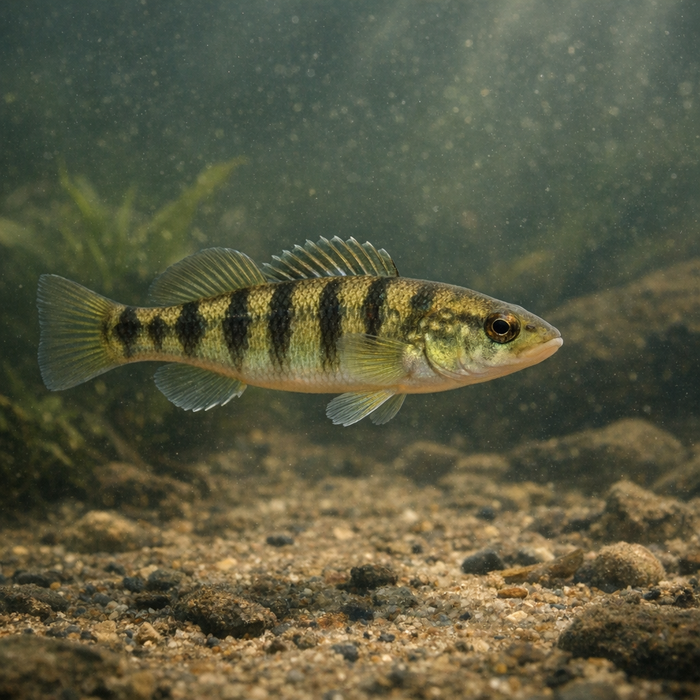
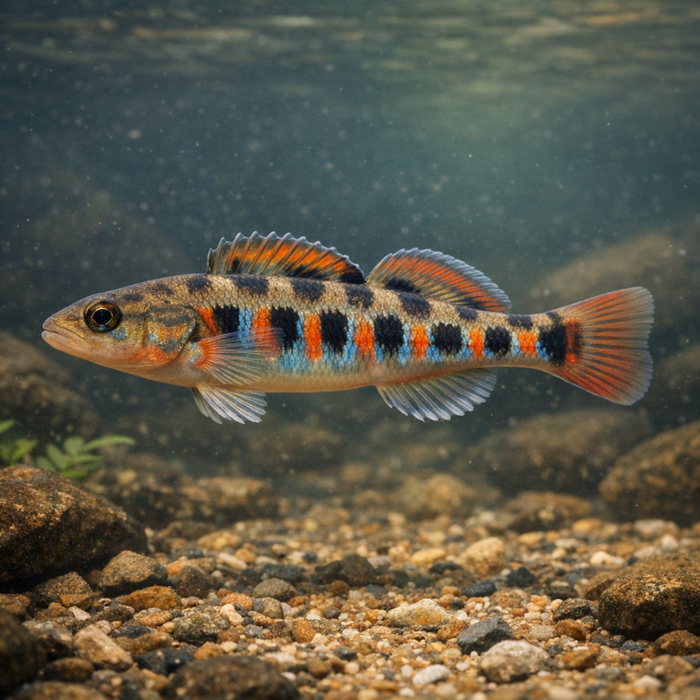
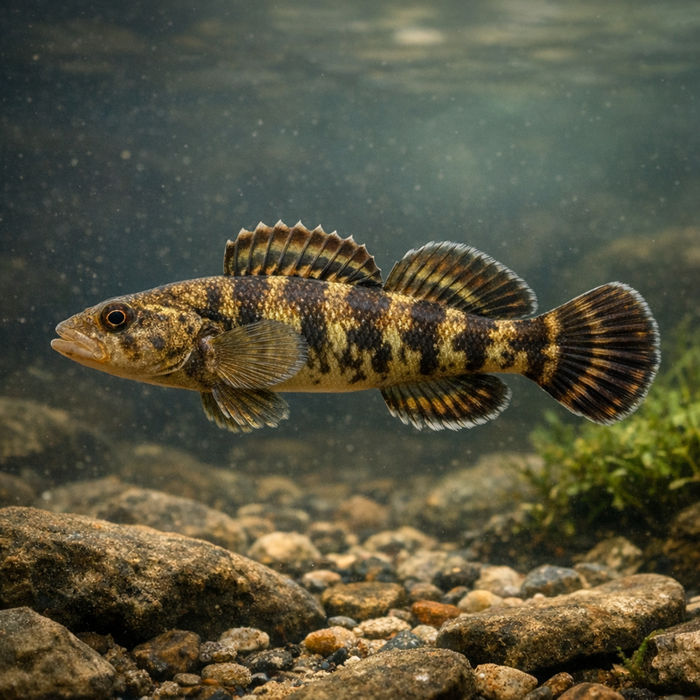
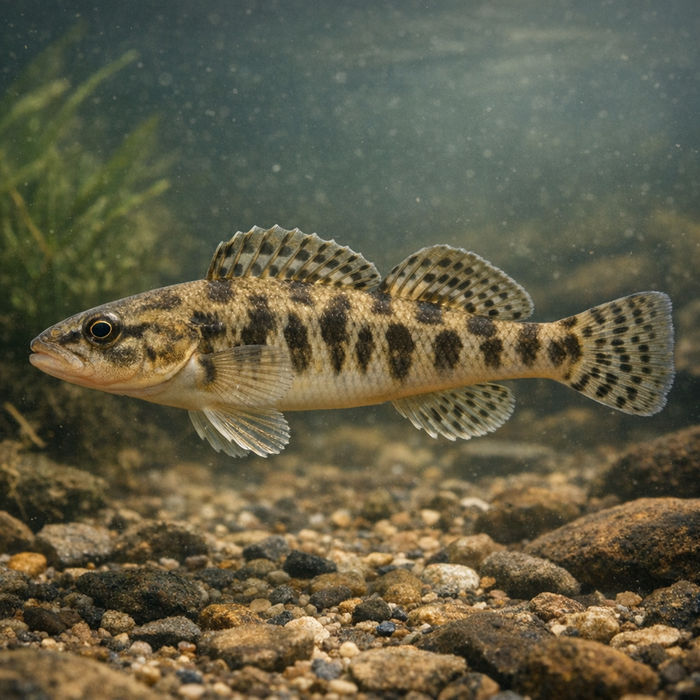
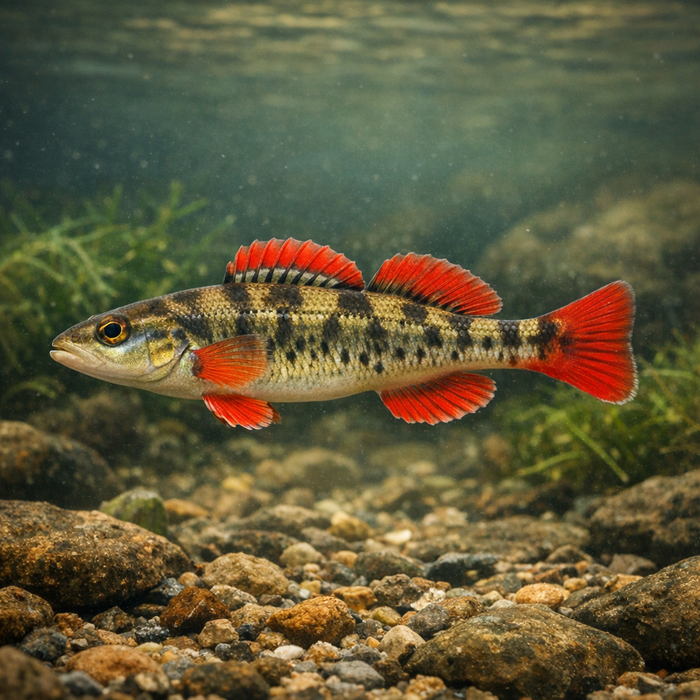
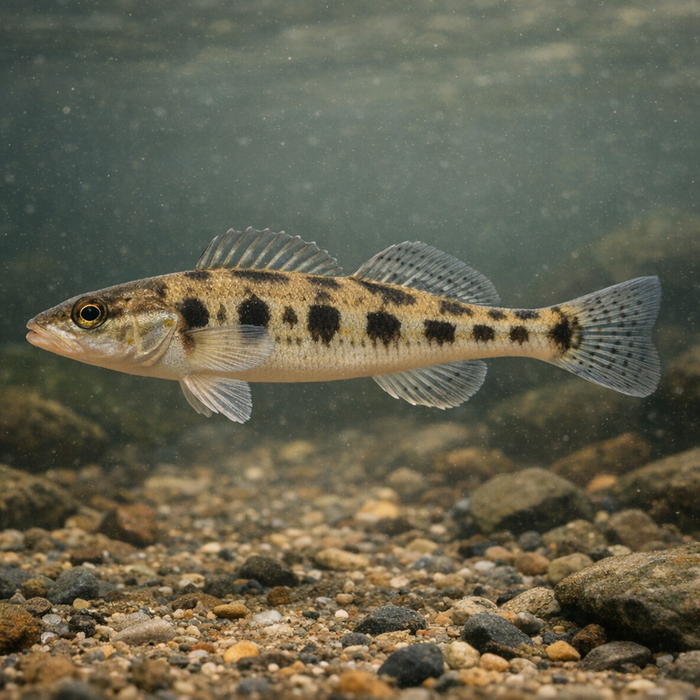
Logperch (Percina caprodes): A Bold, Memorable Hook LineIntroductionMeet the stream's tiny bulldozer. The logperch is a small, striped darter with a hardnose attitude and a reputation for literally flipping rocks to get lunch. It is quick, twitchy, and way more interesting than its size suggests. Anglers who chase micro species know the logperch well. Those who do not are missing a masterclass in current reading, precise drifts, and fish behavior up close.What Makes the Logperch Unique?Two things jump out. First, that chisel-shaped snout, which the logperch slams into gravel to pry up pebbles and expose hidden invertebrates. Second, its bold vertical bars that can fade or sharpen almost like a mood ring, making this fish look like it just changed outfits mid-drift. Add in outsized pectoral fins that lock it down in fast water and you have a bottom-hugging predator built for riffles.Habitat & Global RangeLogperch habitat is all about clean flow and texture. They thrive in clear rivers, streams, and lake shorelines where current scrubs the bottom and gravel or cobble creates a million tiny hiding spots. You will see them near the breaklines of riffles and runs, on the upstream shoulders of boulders, and anywhere pebbles turn over easily. Distribution spans much of the eastern and central United States, including the Great Lakes and big river drainages. They often slide into deeper pools in winter and surge back onto riffles as water warms. If you want Logperch facts, start with this: current, clean substrate, and stealth.Behavior & TemperamentThe logperch does not cruise like a minnow school or stalk like a bass. It darts. Short bursts, dead stops, hard stares. It holds position with those wide pectorals, then rockets six inches to nail something the size of a breadcrumb. They are visual, daylight feeders more often than not, and they spook easily in skinny water. Hooking one is part bowling a strike, part threading a needle, which is exactly why micro anglers love them.Ecological ImportanceCall the logperch a quality-control inspector for riverbeds. By flipping pebbles and hoovering what squirms, it turns over the nutrient layer and redistributes tiny critters. That feeding style links algae, invertebrates, and fish in a tight loop, and it helps keep the gravel clean. They are also an honest indicator of habitat condition. When sediment chokes riffles or pollutants cloud the water, logperch tend to vanish first, well before the headline species.Conservation & Environmental PressuresRegionally, Percina caprodes is doing fine, but it is not bulletproof. Excess silt, bank erosion, and poorly managed runoff bury the coarse substrate it needs. Low summer flows and warm water squeeze habitat. Dams and hard channelization erase riffle sequences and the varied flow that keep pebbles turning. The good news is simple: fix the water quality, protect natural flows, and the logperch bounces back fast.The FishyAF TakeThe logperch is proof that small fish can teach big lessons. You cannot fake a clean drift or sloppy approach with this species. Learn to watch current tongues, read micro seams, and keep your shadow off the spot, and logperch will make you a better angler for everything else. If you are into microfishing, it is a bucket-list fish. If you are not, give it one afternoon with ultralight gear and clear water. Odds are good you will walk away grinning and a little humbled by a five-inch fish named like a piece of lumber.