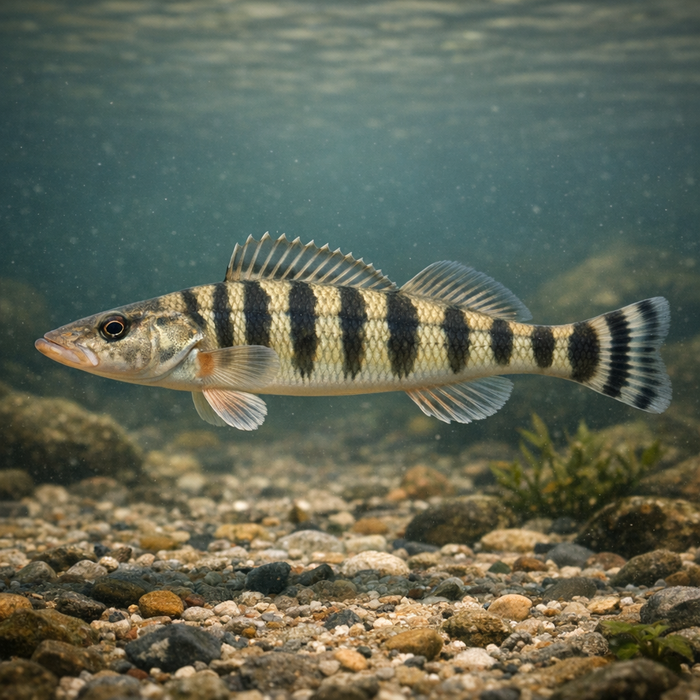
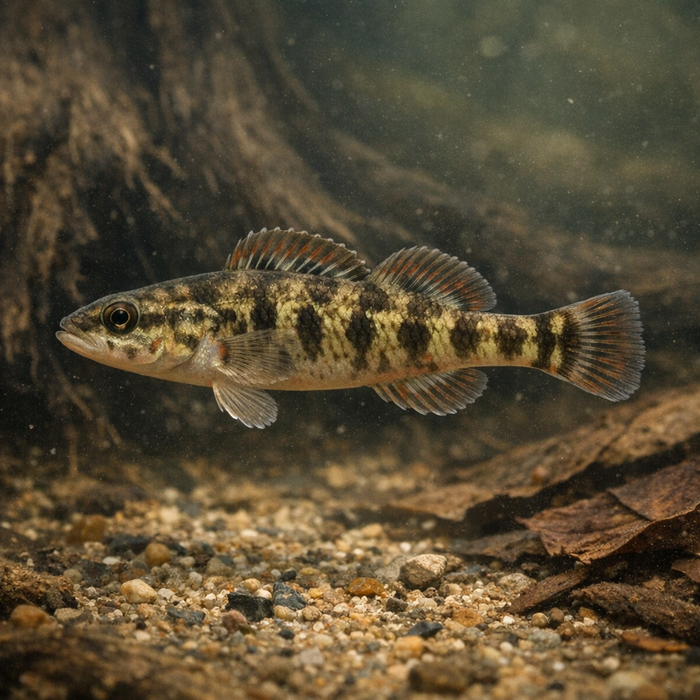
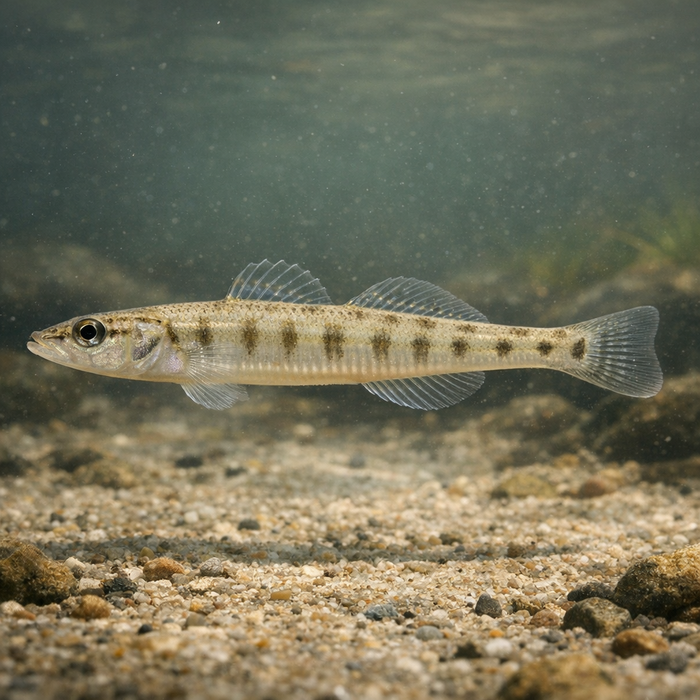
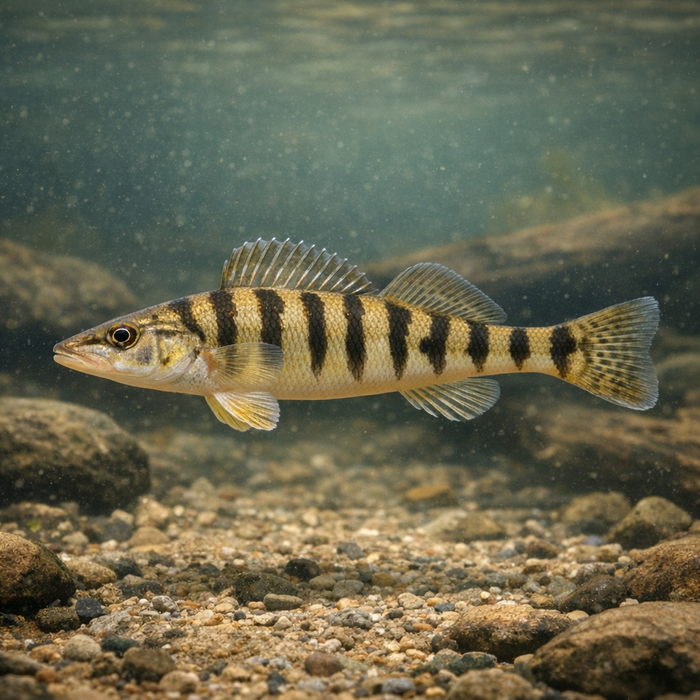
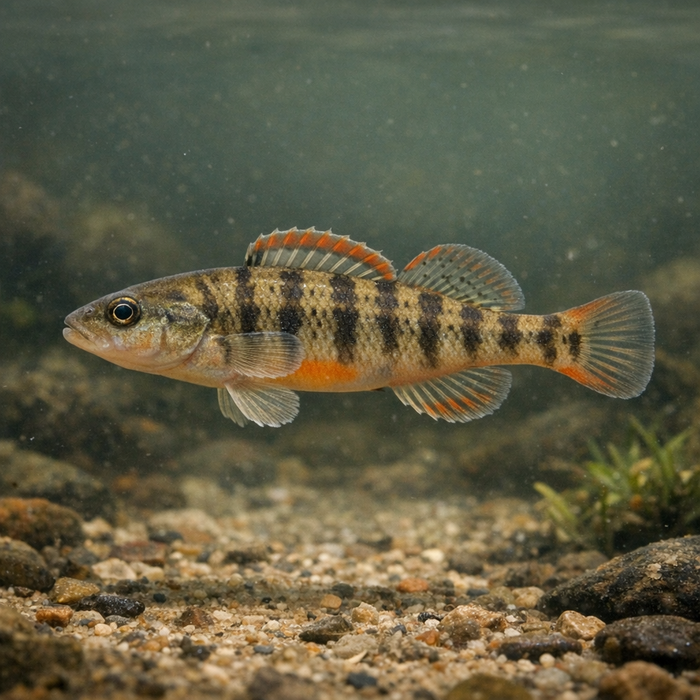
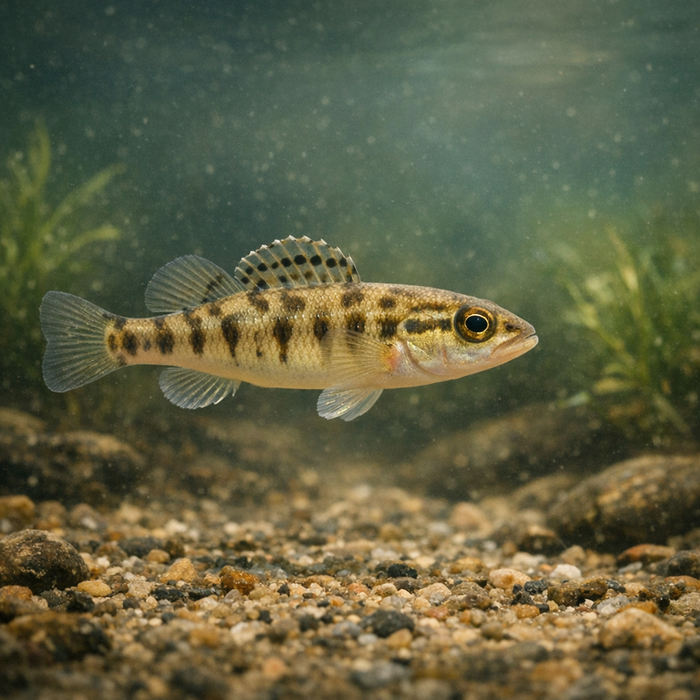
Channel darter (Percina copelandi): A tiny sprint car glued to the bottom and built for riffles.IntroductionThe Channel darter is the micro that turns casual stone-kickers into full-on creek detectives. Blink and it's gone. This little Percina is a master of the skinny water slipstream, popping from pebble to pebble like it's late for something important. For anglers who enjoy solving puzzles others ignore, the Channel darter is catnip. It's not about brute fights or glory shots; it's about reading current, matching micro-prey, and grinning when the smallest tap of the day turns into a new species unlocked.What Makes the Channel darter Unique?Two things jump out. First, the build: low-slung, elongated, with big pectorals that act like kickstands so it can park in fast current without wasting energy. Second, the attitude: the Channel darter is all business in short bursts. It doesn't cruise around; it ambushes. Those dusky side blotches and a dark spot near the back of the first dorsal fin are more than field marks-they break up the outline so this fish disappears until it darts. For anglers, that means precision matters. Miss the rock seam by a foot and you're fishing air.Habitat & Global RangeThink "river channels" in miniature. The Channel darter thrives on sandy to fine-gravel substrates with steady flow, often along runs and the tails of riffles. It also uses lake shorelines where current pushes along points, inlets, and channels, including Great Lakes-connected waters. Its North American footprint reaches across parts of the Great Lakes and St. Lawrence system and down select tributaries of the Ohio and Wabash basins. If a stream has shifty sand patches, scattered pea gravel, and traffic-lane current, this fish might be clocked in. If it's muck and slackwater, don't hold your breath. For quick Channel darter facts, remember this: current plus clean-ish substrate equals possibility.Behavior & TemperamentThe Channel darter is a bottom hugger with a bursty personality. It holds tight, then rockets a few inches to the next ambush point. Feeding skews to invertebrates, so it keys on drift-midges, small larvae, and micro-crustaceans getting tumbled along the bottom. Activity windows favor low light and steady flows. Sudden spikes in turbidity can slow things down, but this species is more sand-tolerant than many darters, so it won't panic at the first hint of clouded water. Expect singles and pairs more than tight schools; they share neighborhoods, not addresses.Ecological ImportanceSmall but not trivial, the Channel darter is a current-lane translator. It turns drifting bugs into fish protein, then hands that energy up the food web to larger predators. Because it relies on intact riffle-run complexes, it's also an indicator of stream health. Keep the gravel clean and the current honest, and you'll likely keep your micro fish diversity humming. Smother those same seams with silt or jack up flows with hard-edged channelization, and the darter community thins out fast.Conservation & Environmental PressuresBig threats are small-scale but relentless: excessive sediment, shoreline hardening, and poorly timed water withdrawals that flatten seasonal flow pulses. Add nutrient loading, and algae mats can carpet the very gravel pockets Channel darters use for spawning. While the species is globally assessed as Least Concern, it's flagged in parts of its range for local declines tied to habitat fragmentation and degraded substrates. Translation for anglers: if your go-to riffle suddenly looks like chocolate milk with bowling-ball rocks buried to their necks, expect fewer darters.The FishyAF TakeThe Channel darter isn't a photo trophy; it's a mindset trophy. It forces you to read micro-habitat like a hawk and to thread presentations with surgeon-level accuracy. If "Channel darter habitat" sounds like a yawn, you haven't watched one disappear into riffle glare and then reappear two stones over. It's a perfect entry point to microfishing and a killer teacher for current management at any scale. Learn to catch Channel darter cleanly, and you'll up your game on everything else that eats in the seam.