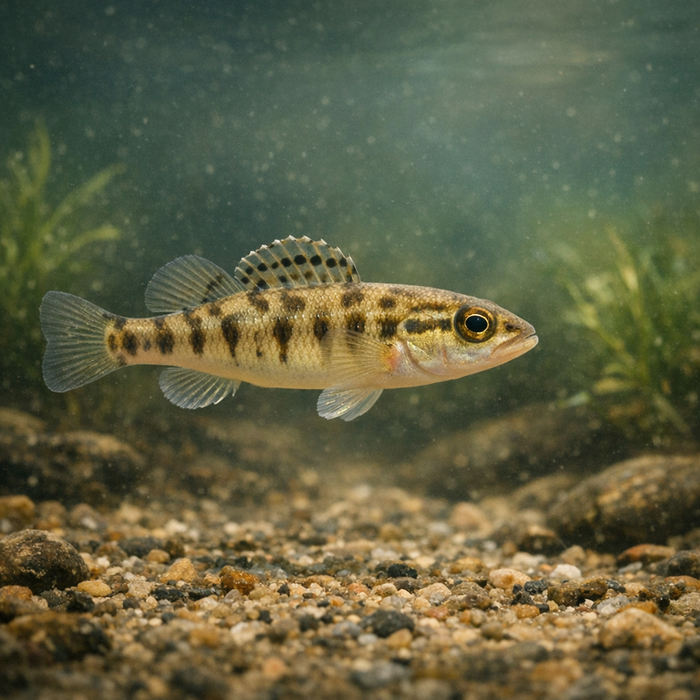
Eastern Sand Darter (Ammocrypta pellucida): A Bold, Memorable Hook LineIntroductionSmall, see-through, and sneaky as a pickpocket, the Eastern sand darter is the ghost of sandy river bottoms. Blink and it's gone, literally buried. For anglers who love the weird corners of freshwater life, this tiny percid is a masterclass in stealth and specialization. Here's your deep dive into Eastern sand darter facts and why this sandy sprite steals so many biologists' hearts.What Makes the Eastern sand darter Unique?First, it swims like a fish that forgot it had a swim bladder, because in a way it did. With a reduced bladder, it hugs bottom and hops in quick bursts. Second, it dives into clean sand by vibrating its fins, leaving just eyes and a snout peeking out like a periscope. Finally, true to its name pellucida, it's semi-translucent. You can sometimes see internal bits through the body. That combo of see-through, bottom-hugging, and sand-burying is a rare trick set.Habitat & Global RangeWhen anglers ask about Eastern sand darter habitat, the answer is precise: clean, sandy runs in clear, moderate-flow rivers and streams, plus some sandy nearshore lake shoals. Think gently rolling current, ripple-washed bars, and outside bends where sand stays mobile and oxygenated. The species is patchy across the Great Lakes basin, the St. Lawrence system, and parts of the Ohio River drainage. It's never truly common, even where it persists. Habitat fragmentation, dams, and siltation restrict movement and erase those perfect sand patches it needs.Behavior & TemperamentThis is not a brawler. The Eastern sand darter sits tight, bursts forward, then vanishes into the sand. It feeds on tiny invertebrates with quick ambush zips. Schooling is loose at best; more like several loners using the same sand seam. Activity ramps up in warmer months. Spawning happens in clean sand, and if the river gets cloudy with silt, the fish shut down or move. It's sensitive, picky, and built for bottom.Ecological ImportanceThe Eastern sand darter is a minimalist predator that turns micro-invertebrates into fish biomass without bullying the neighborhood. Its presence flags a river segment that's still clean, cobble-light, and sand-stable. Lose the darter, and it's often because fine sediments and algae mats have taken over, signaling broader habitat failure. In short, the species is a canary in the sand mine.Conservation & Environmental PressuresThis fish faces a death-by-a-thousand-grains problem. Excess silt from erosion, altered flows from dams, and vegetation overgrowth all smother its micro-habitat. Because populations are naturally scattered, local losses hit hard and reconnection is tough. Many jurisdictions list the species as threatened or otherwise protected. The fix is old-school riverkeeping: stabilize banks, reduce sediment inputs, maintain natural flows, and protect sandy riffles and bars.The FishyAF TakeThe Eastern sand darter is proof that not every prize fish needs shoulders. It's a specialist's specialist: transparent, bottom-bound, and allergic to dirty water. If you want a flashy grip-and-grin, look elsewhere. If you want to understand how a river breathes, learn this fish. Spot a clean sand run, kneel down, and wait. That quick shimmer and disappearing act? That's a healthy system saying hello in the sneakiest way possible.