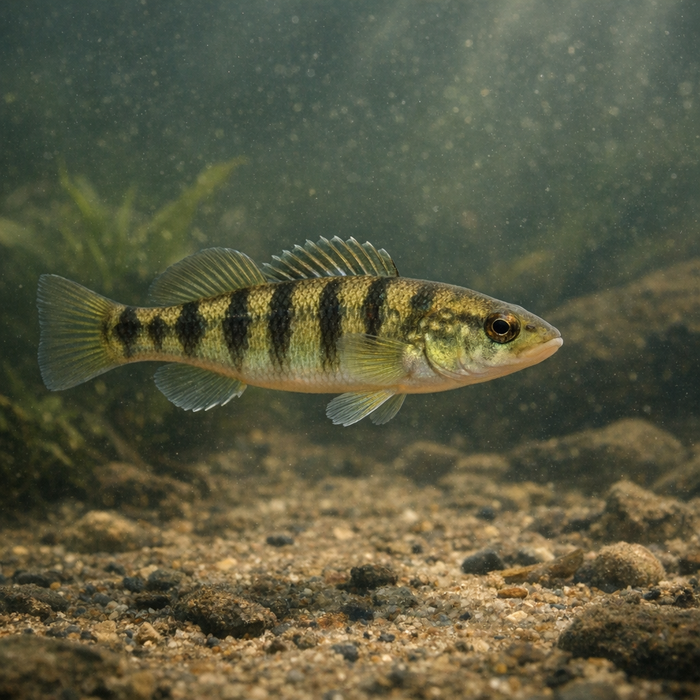
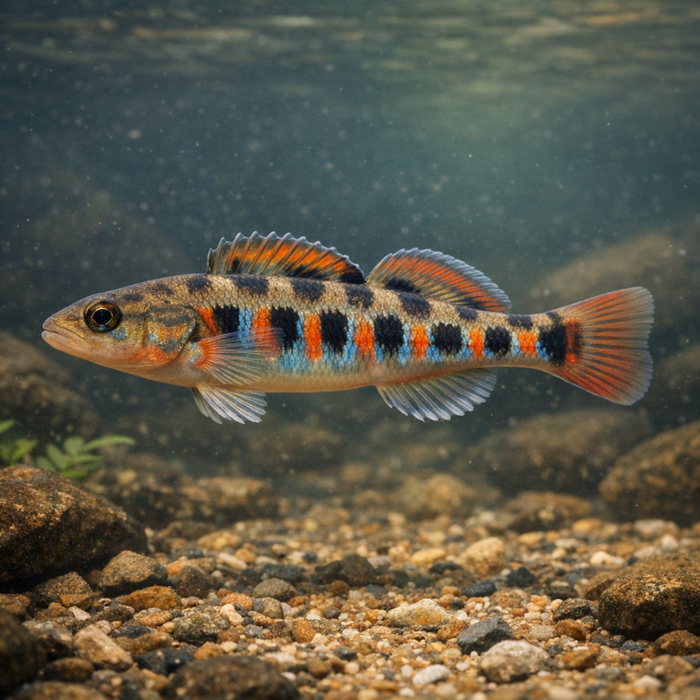
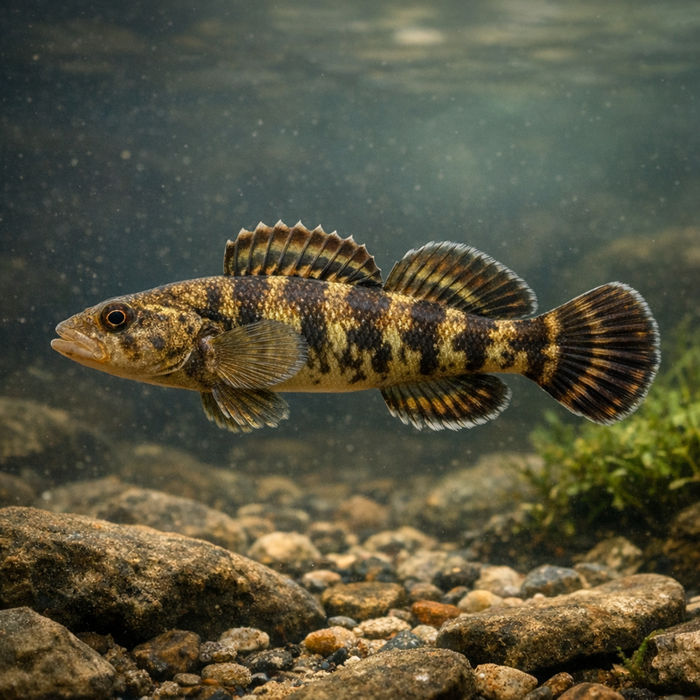
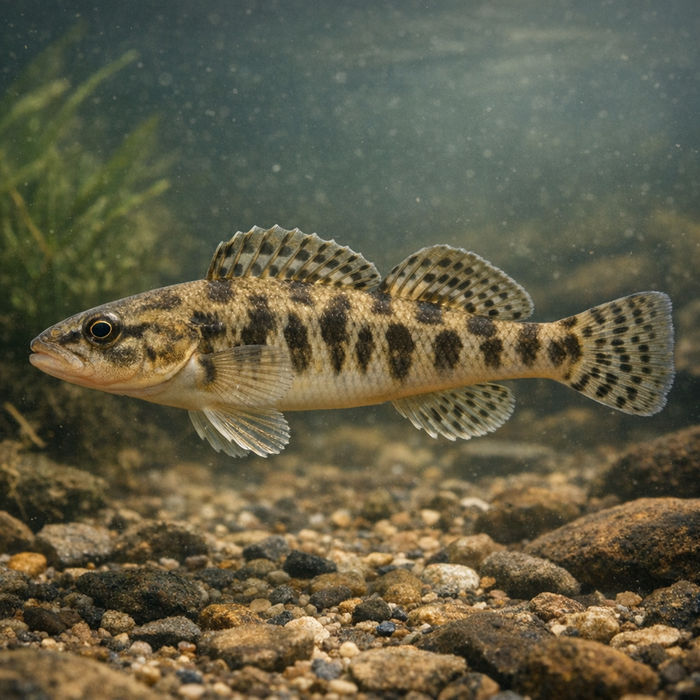
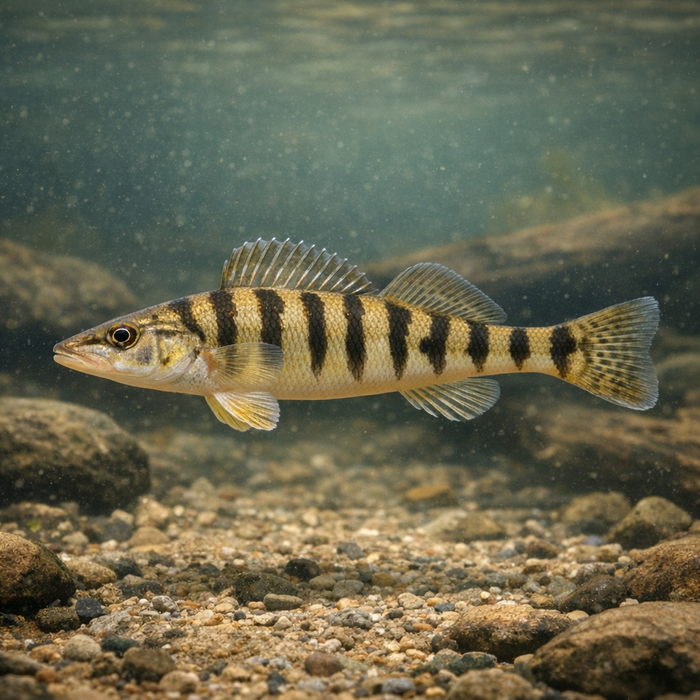
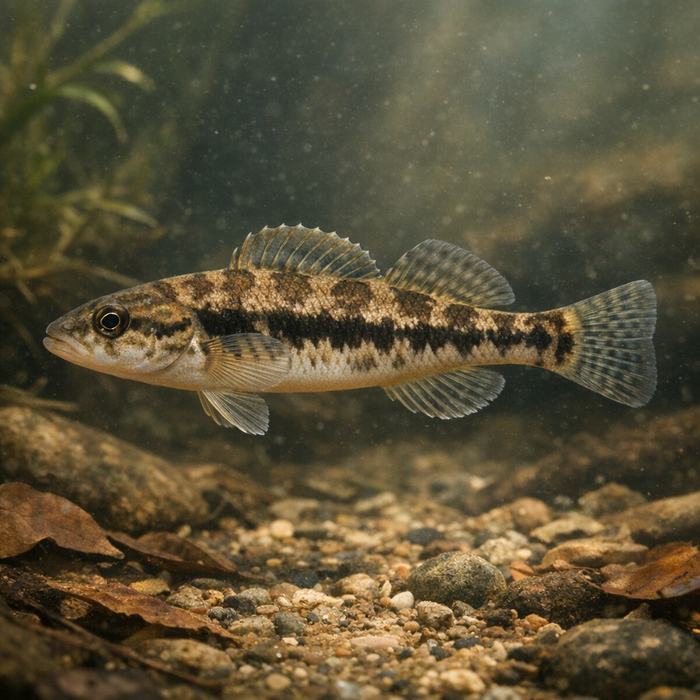
Redfin darter (Etheostoma whipplei): Small fish, big attitude, serious color pop in spring.IntroductionThe redfin darter is proof that size means nothing when the wardrobe slaps. This little riffle rocket lives in fast, shallow water and lights up like a neon sign when breeding season hits. If you think only trout deserve your finesse game, try putting a tiny hook in front of a redfin darter. You will suddenly respect stream micro-currents and pebble-sized structure a whole lot more.What Makes the Redfin darter Unique?Two things jump off the gravel bar. First, breeding males glow with lipstick-red fin margins and bold blue-green barring, a color combo that looks almost unreal in clear sun. Second, redfin darters have a reduced swim bladder, so instead of floating around like a perch, they perch like a rock-hugging goby. They grip bottom with broad pectorals, dash a few inches, then freeze. That start-stop routine is signature redfin darter behavior and a big reason they frustrate sloppy presentations.Habitat & Global RangeWhen anglers search for Redfin darter habitat, they are really hunting microcurrent. The species thrives in shallow, clear streams with clean gravel and cobble, often in the Ozark and central U.S. drainages. Think knee-deep or less, knee-knocking current, and pocket-sized eddies behind hand-sized stones. They also use spring runs, small river margins, and the calm flanks of riffles. Silt is the enemy; a healthy redfin darter stream is one that can roll a marble down its riffles without burying it. They are not global travelers, but within their Midwestern and south-central range they are locally abundant where substrate is clean and flow stays honest.Behavior & TemperamentThe redfin darter is a bottom sniper. It faces into current, watches the drift like a hawk, and pounces in short bursts. Males get territorial in spring and will chase intruders with more swagger than their size should allow. Feeding is focused near bottom, tapping invertebrates that tumble along the stones. They are alert, not spooky, but their world is small and fast, which means they punish sloppy drifts and reward tiny, accurate drops.Ecological ImportanceBecause the redfin darter depends on clean, well-oxygenated gravel, it works as a living water-quality sensor. When their numbers slip, it often signals siltation, nutrient overload, or flow alteration. In the food web they sit mid-pack, turning aquatic insects into high-protein snacks for larger fish and stream predators. They also jazz up biodiversity. That riot of spring color is not just pretty; it's a sign of a riffle community firing on all cylinders.Conservation & Environmental PressuresOfficially, the redfin darter sits at Least Concern, but that label can lull folks to sleep. The real threat is habitat death by a thousand cuts. Fine sediment from poor land use clogs gravel. Low flows magnify summer heat. Runoff clouds water just when spawning needs it clearest. None of these pressures are unique to this species, but they hit darters hard because they live literally on the bottom line.The FishyAF TakeThe redfin darter is the gateway drug to microfishing. It is colorful, common in the right water, and merciless on bad drifts. You do not need fancy gear, but you do need humility and a steady hand. If you want a masterclass in reading current, start with a fish that measures in inches. Learn the seams, mind the gravel, and keep your presentations tiny. Redfin darter facts are simple: clean riffles, small bait, sharp eyes. Nail those, and this pint-sized show-off will make your day.