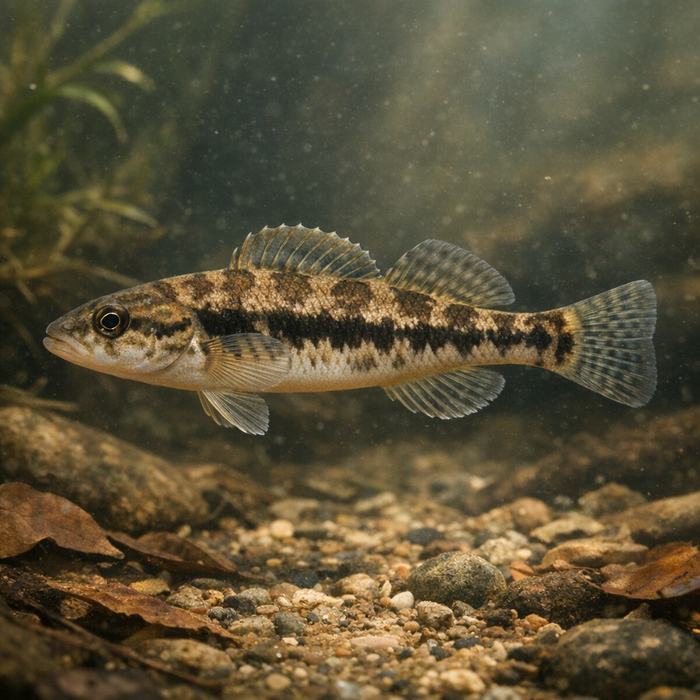
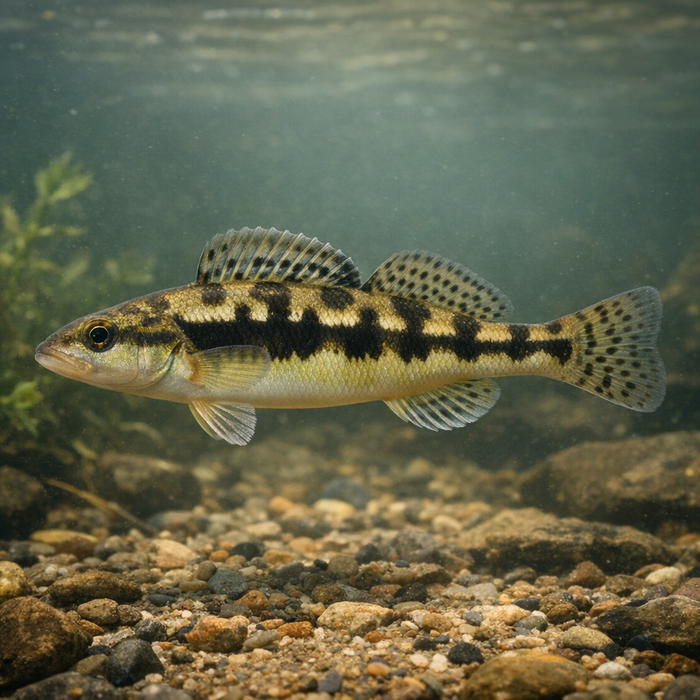
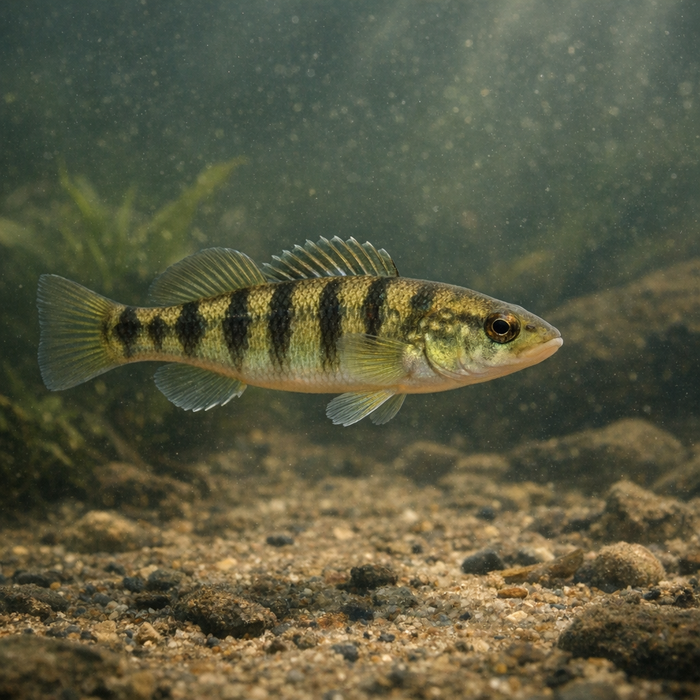
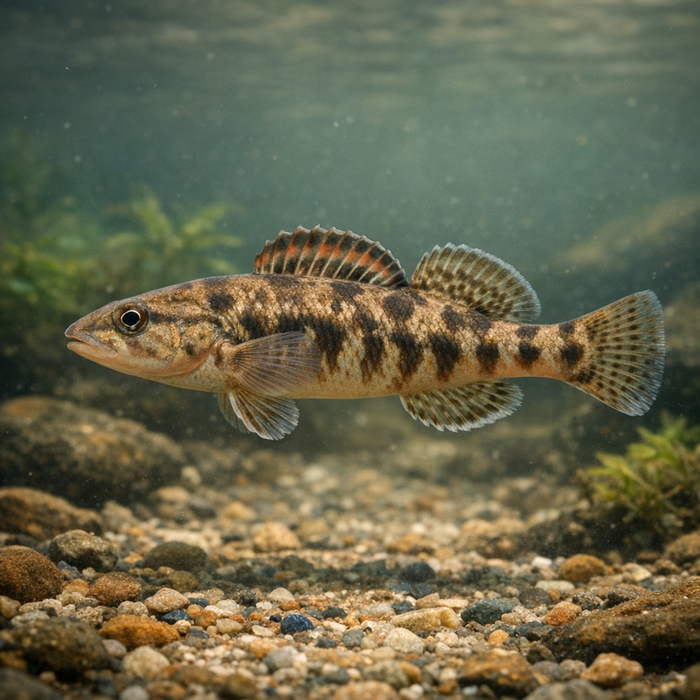
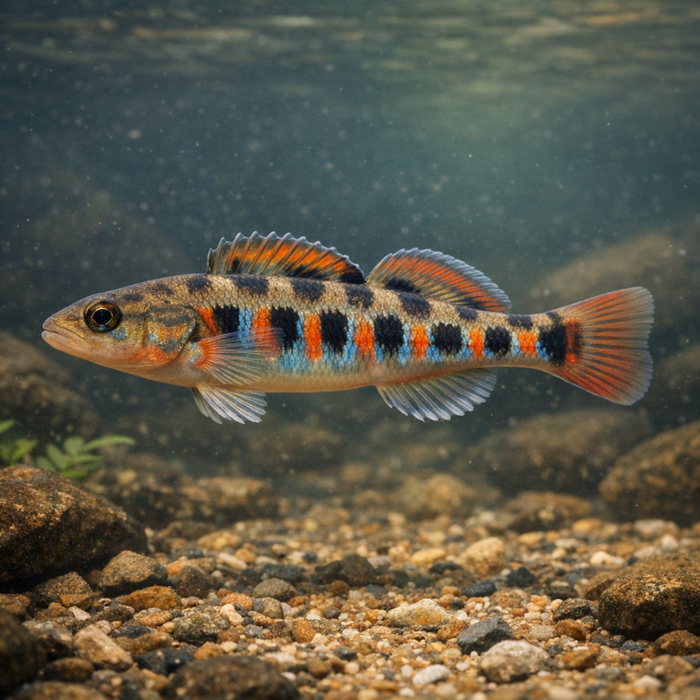
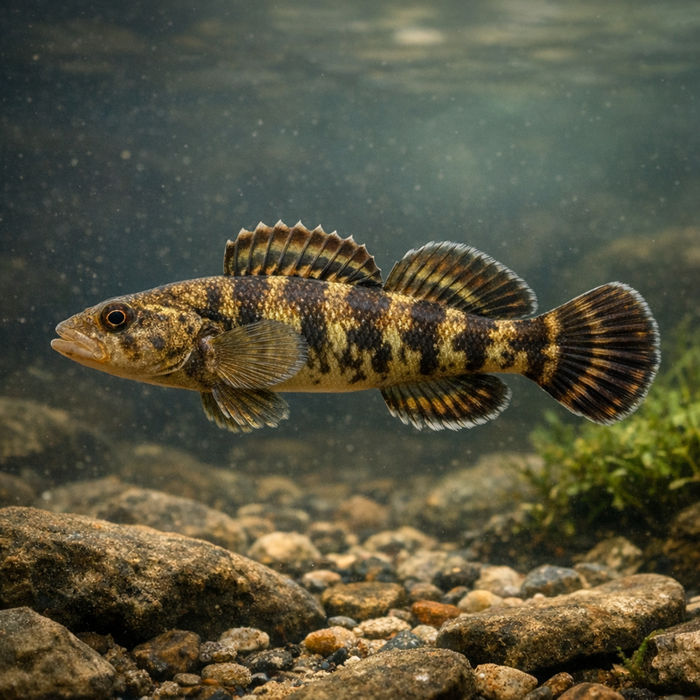
Mud Darter (Etheostoma asprigene): Tiny, silt-loving, and sneakier than you think.IntroductionThe mud darter is the antithesis of glamour fishing. No chrome sides. No screaming drags. Just a pint-sized bottom ninja thriving where most darters throw in the towel. If you're into microfishing or just appreciate weirdly specialized natives, the mud darter delivers a masterclass in staying power. Consider this your quick-hit guide to mud darter facts, behavior, and how this little Percidae oddball manages to run the muddy lane like it owns it.What Makes the Mud darter Unique?Most darters demand clear, stony riffles. The mud darter shrugs and picks sludge. It's one of the few darters built for murk, using muted patterns and a reduced swim bladder to rest flush on the bottom without drifting up. Instead of sprinting across current, it pivots on broad pectorals, making short, explosive dashes to vacuum up tiny invertebrates. During the spawn, males darken and show crisp bars, then fade back into stealth mode. It's a darter that does subtlety and survival in equal measure.Habitat & Global RangeIf you're mapping mud darter habitat, think slow to moderate lowland waters connected to big drainages. Silty side channels, backwaters off main rivers, sluggish creeks, and quiet margins of larger rivers are prime. They hold to sand-mud substrates with scattered wood, leaf litter, or sparse vegetation. The species is native to the central United States, especially the Mississippi River basin and some connected drainages, with a footprint that brushes portions of the Midwest, Great Lakes tributaries, and Gulf Coastal Plain. Local conditions rule everything. A prime mud darter spot might be ankle-deep, inches from an eddy where suspended silt settles and insect larvae drift at snack speed. Search terms like "Mud darter habitat" will land you photos of places most anglers never bother to fish.Behavior & TemperamentThe mud darter is a bottom sitter first, sprinter second. It spends long stretches posted up like a tiny turret, then unleashes a quick dart to intercept midge larvae, micro-crustaceans, and other bite-sized invertebrates. When spooked, it often freezes and trusts camouflage before bolting. Activity typically bumps during low light or when gentle current funnels food along the bottom. They don't school hard like shad, but loose clusters can stack where conditions are right. Think tight feeding windows influenced by microcurrent, not sweeping migrations.Ecological ImportanceSmall doesn't mean small-time. Mud darters plug an important gap between benthic invertebrates and larger predators, converting muck-born protein into calories for sunfish, bass, and waders with beaks. Their tolerance for turbid water means they persist where sensitive riffle darters fade, keeping food webs churning in habitats that otherwise lose complexity. They're also solid bioindicators: not pristine-water purists, but still sensitive to chronic chemical insults, severe deoxygenation, and hard habitat loss.Conservation & Environmental PressuresWhile the mud darter is generally considered stable, habitat simplification is the constant threat. Channelization scrapes away the slow margins they love. Dams and levees change flow timing and bury feeding lanes under deeper, stagnant water. Agricultural runoff can both help and hurt: silt and nutrients can create the right bottom texture, but pesticides and prolonged low oxygen kick the legs out. Because this fish often lives in overlooked sidewaters, localized impacts can erase whole pockets before anyone notices.The FishyAF TakeThe mud darter is a blue-collar specialist with a black-belt bottom game. If you chase micros, it's a rite-of-passage catch that teaches stealth, precision, and how much life hums in dingy water. There's nothing flashy here, which is exactly the point. The mud darter wins by showing up where others won't and making the most out of tiny opportunities. That's a lesson most anglers could use: slow down, read the small stuff, and fish the silt. You'll be surprised how often "nothing water" turns into everything.