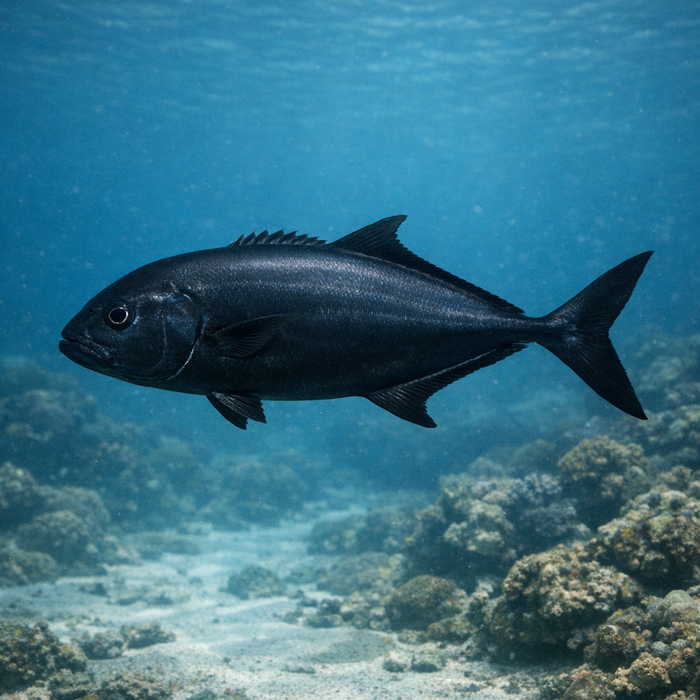
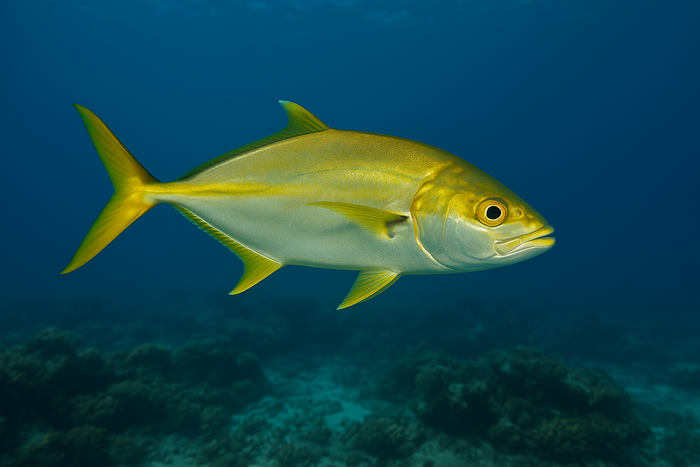
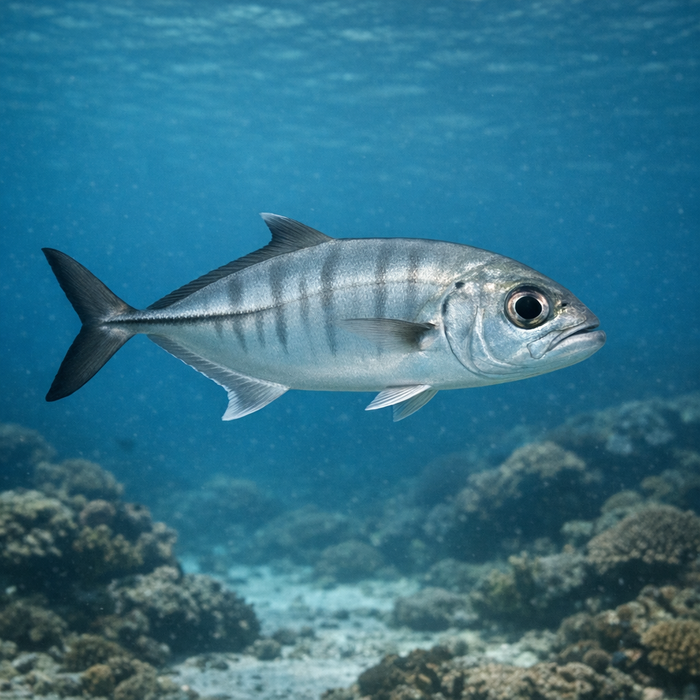
Lesser Amberjack (Seriola fasciata): Small Jack, Big AttitudeIntroductionThe lesser amberjack is the scrappy, deep-living cousin that doesn't read its own name tag. Smaller than the headline AJs, sure, but in 200 to 400 feet of blue water it punches like a prizefighter. If you're shopping for overlooked action on wrecks and ledges, the lesser amberjack delivers a spectacular test for vertical jigs and live baits, plus a masterclass in ID for anyone who thinks every hard-pulling jack is the same fish.What Makes the Lesser amberjack Unique?Two things set this jack apart: eyes and altitude. Those big, low-light eyes are built for the dim zone, where sonar marks stack like cordwood and daylight fades fast. While greater amberjack patrol higher in midwater, lesser amberjack tend to hold deeper and tighter to metal and rock. That positioning changes how you approach them, how they strike, and how they try to bury you in the structure the instant you come tight. Add the constant confusion with banded rudderfish and small almaco jacks and you've got a fish that keeps biologists and deckhands equally honest.Habitat & Global RangeLesser amberjack habitat is offshore structure with current: wrecks, towers, rock piles, and steep ledges along the Atlantic and Gulf coasts and throughout the Caribbean. They haunt the continental shelf edge and upper slope, living where bait concentrates and thermoclines shear. You'll mark them as tight stacks just above the wreck superstructure or along the face of a drop-off, often deeper than their greater cousins. They're an Atlantic species with a footprint that spans the Southeast, Gulf Coast, and island arcs. In many ports they're a bycatch name until you actually drop to them. Then they're a day-maker.Behavior & TemperamentCall them patient ambushers with a mean streak. The lesser amberjack schools loosely, uses current like a conveyor belt, and keys on windows when bait is pressed against hard structure. When they eat, it's a decisive thump that straightens rod tips and makes slow drags cry. Expect a heavy, downward spiral and repeated dives for the wreck. Their routine is predictable enough to pattern yet moody enough to blank you if the water column sets up wrong. They're not surface crashers; you win or lose the game in midwater and near the deck.Ecological ImportanceLesser amberjack are mid-tier predators that recycle energy from bait schools into bigger offshore players. They pressure sardines, scads, squid, and juvenile reef fish, then feed sharks, goliath groupers, and large pelagics. That spot in the food web matters. When wrecks and ledges hold the right gradient of current and bait, lesser amberjack are part of the calibration-one of those species that signal a healthy offshore structure zone.Conservation & Environmental PressuresYou won't often hear panic about lesser amberjack, but they ride shotgun with fisheries that do raise alarms. Habitat disruption to reefs and ledges, lost nets and cables that snag structure, and heavy harvest of bait can all numb a spot. Regulatory confusion doesn't help either; misidentification with greater amberjack or banded rudderfish can blur catch data. Add warming trends that shift thermoclines and you've got a fish that might quietly change addresses without anyone noticing unless sonar and logbooks are tight.The FishyAF TakeIf the greater amberjack is the bouncer, the lesser amberjack is the black-belt little brother who fights in a phone booth. This is a deep-structure specialist: see it on the screen, drop fast, and hang on. It's an underrated target for anglers who like reading current seams on a wreck and making smart drops with the right metal. Lesser amberjack facts are simple: they're smaller, sneakier, meaner than you'd expect, and entirely worth your time. Chase them when the ledge is alive, and you'll understand why the best jig junkies grin when the rod doubles at 250 feet.