Mangrove Jack (Lutjanus argentimaculatus): The Snapper That Turns Timber Into a Getaway Car
A Mangrove Jack does not need an entire estuary to embarrass you. One submerged branch will usually do. This deep-bodied member of the snapper family combines serious pulling power with a habit of seeking shelter among snags, creating a contest where the first few seconds matter enormously. The attraction is not simply catching a handsome red fish. It is putting a presentation somewhere awkward, getting the bite, and actually bringing your tackle home.
Behind that reputation sits a remarkably adaptable predator. Young fish occupy estuaries and sometimes freshwater reaches, while larger individuals move into coastal and offshore reef environments. Its common name captures the nursery years, not the whole biography. Understand that transition and the species becomes much more interesting than another angry fish under a pontoon.
What Makes the Mangrove Jack Unique?
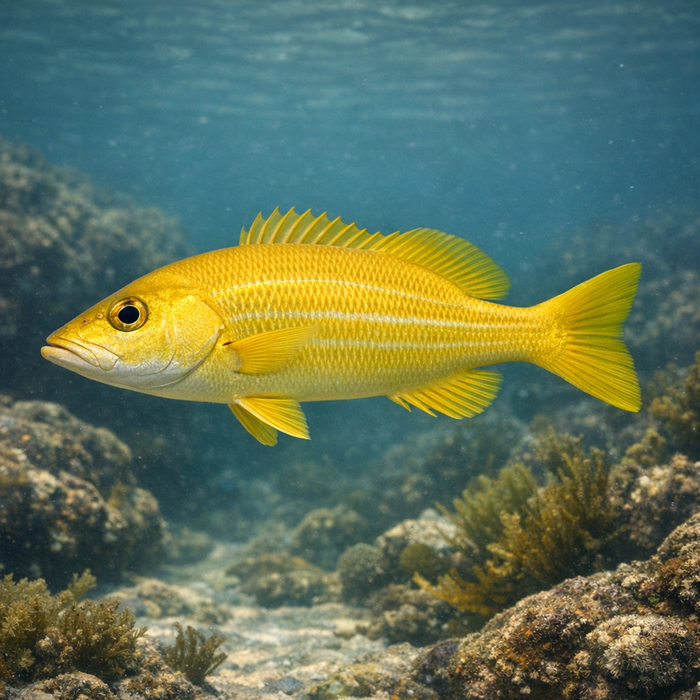
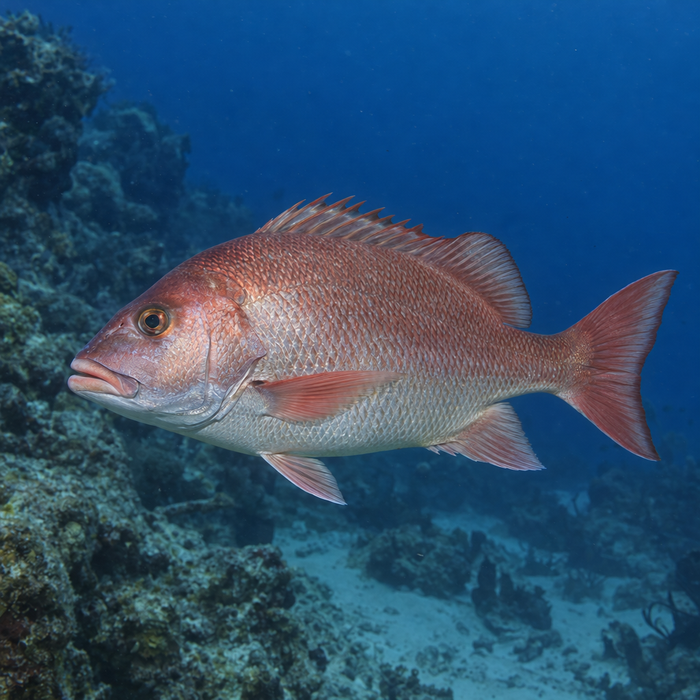
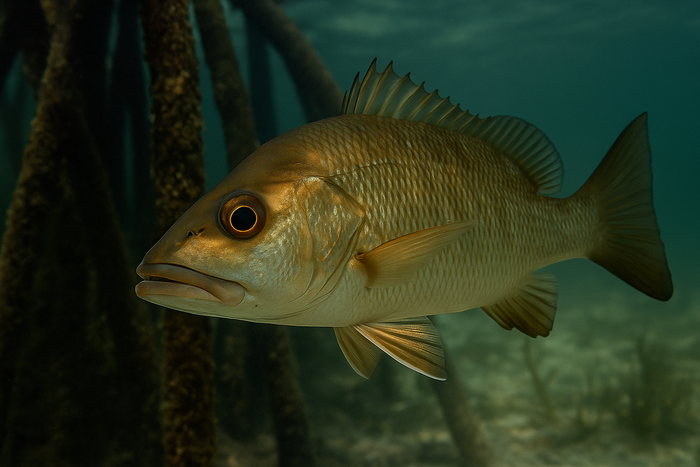
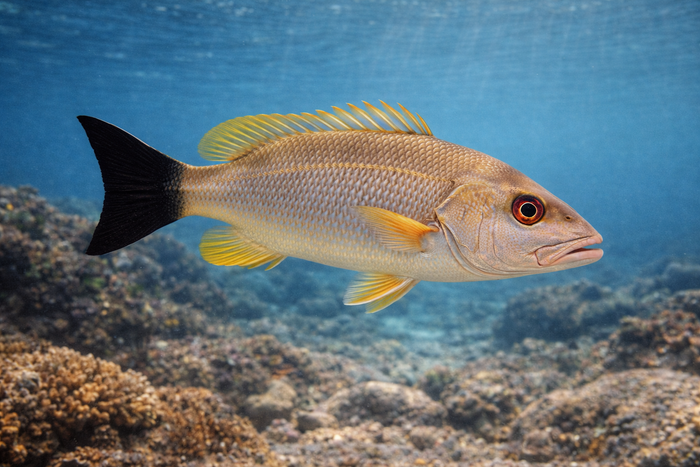
Start with the mouth. Prominent canine teeth seize and hold prey, and they deserve respect during handling. The powerful body and substantial jaws make this a convincing predator before it moves an inch. Colour adds another layer: individuals range from greenish-brown to reddish, while fish from deeper water are often red overall. Juveniles can display pale vertical bars and blue cheek lines, looking noticeably different from the adults anglers usually picture.
Then there is the lifespan. Mangrove Jack can reach 57 years, which puts a different perspective on a fish often discussed only in terms of violent strikes. This is a long-lived snapper with a complicated relationship to the coastline, not a disposable estuary resident. Its changing habitat needs and slow journey toward maturity are among the most important Mangrove Jack facts an angler can learn.
Habitat & Global Range
The species occupies tropical and subtropical waters across the Indo-West Pacific, extending from East Africa through Southeast Asia into the western and central Pacific. Australia supports fisheries around its tropical north and into warmer southern coastal waters. Despite its saltwater classification, juveniles and young adults can occupy brackish creeks and the lower reaches of freshwater streams. That flexibility is an essential part of Mangrove Jack habitat, rather than an exception to it.
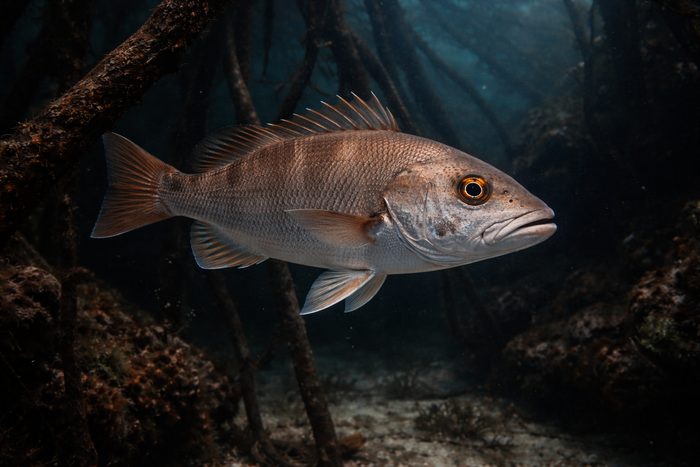
For anglers, structure ties the environments together. Mangrove roots, fallen timber, rock bars and artificial structures provide inshore targets; deeper reefs supply caves and ledges offshore. Tagged fish have demonstrated substantial movements between nursery waters and reef habitat. The snag holding a young fish and the offshore reef supporting an adult are different chapters of the same life history, not separate stories.
Behavior & Temperament
Mangrove Jack feed mainly at night, taking fishes, crustaceans and other animal prey. Their attraction to shelter shapes how anglers encounter them: the productive water is often immediately beside something capable of cutting a leader. They can take natural baits and artificial offerings, but finding suitable cover and presenting accurately matter more than owning an enormous lure collection. A flashy tackle tray cannot compensate for repeatedly missing the target.
Once hooked, expect a strong fight and an urgent attempt to regain shelter. That does not make every fish an unstoppable monster. It makes positioning, sound knots and controlled pressure unusually important. The species rewards preparation because the escape route is frequently very close. The sensible interpretation of its reputation is not panic; it is being ready before the lure lands.
Ecological Importance
Mangrove Jack illustrate why protecting a fish means protecting more than its final address. Juvenile nursery areas and adult reef habitat both contribute to the population. As predators, they consume smaller fishes and invertebrates, while their offshore movements connect life stages supported by very different environments. Damage to an estuarine nursery cannot automatically be offset by leaving a distant adult reef untouched.
Research from northwestern Australia also found different environmental relationships across those life stages. Juvenile growth was positively associated with rainfall and river runoff, while adult growth tracked broader oceanographic conditions. The practical message is straightforward: healthy populations depend on functioning catchments as well as marine habitat. What happens upstream is not somebody else's problem simply because the trophy fish eventually lives offshore.
Conservation & Environmental Pressures
Mangrove Jack is classified as Least Concern globally, but that label does not guarantee every local fishery is equally secure. Australian assessments distinguish regional management units and identify uncertainty in some areas. Long life, relatively late maturity and concentrated fishing opportunities in nursery habitats justify a measured approach to harvest. Being widespread is useful; being immune to pressure is something else entirely.
The FishyAF Take
This fish earns its reputation without needing supernatural abilities added to the story. The appeal is the precision: a difficult cast, an immediate decision and very little room for sloppy preparation. Fish the structure thoughtfully, handle the catch properly and treat release as a legitimate finish rather than a consolation prize. Landing one is satisfying enough. Turning every encounter into a freezer calculation misses much of what makes this species worth chasing.