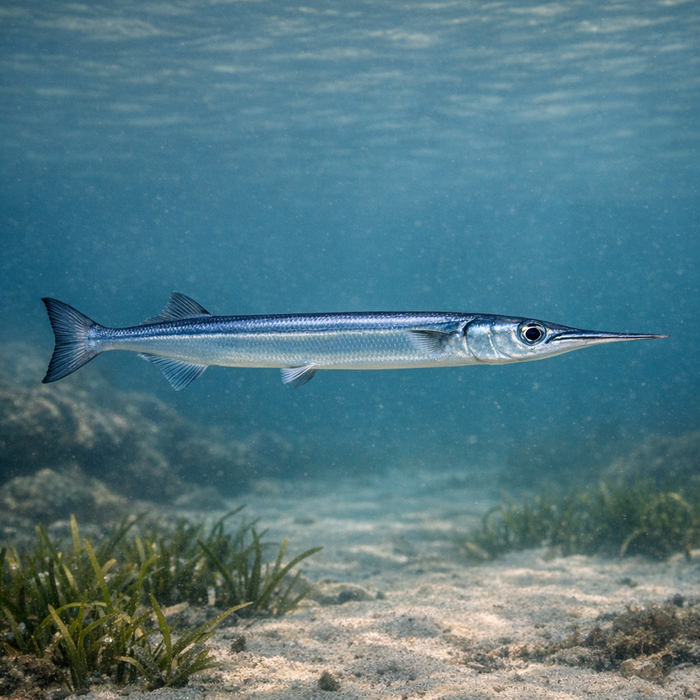
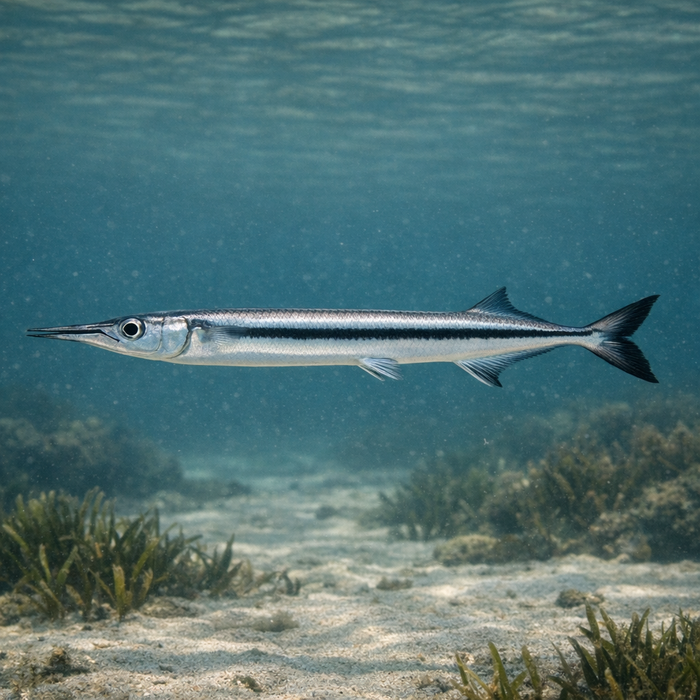
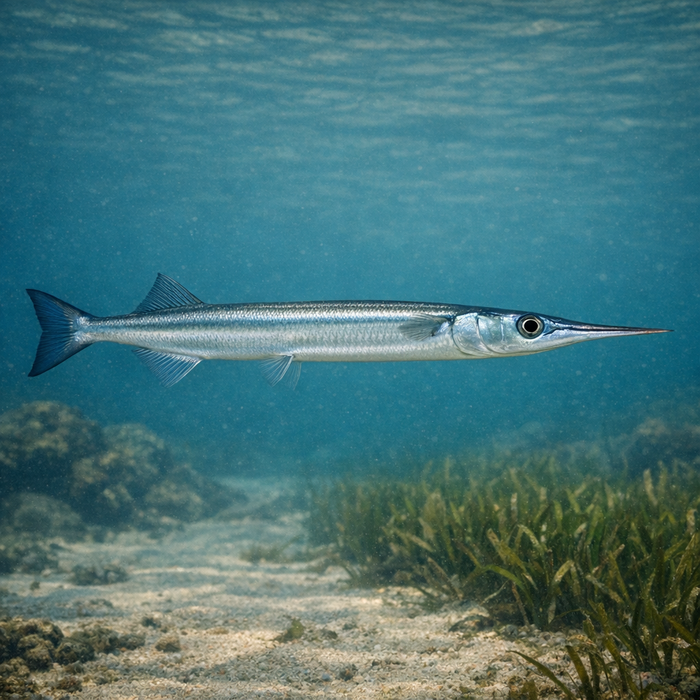
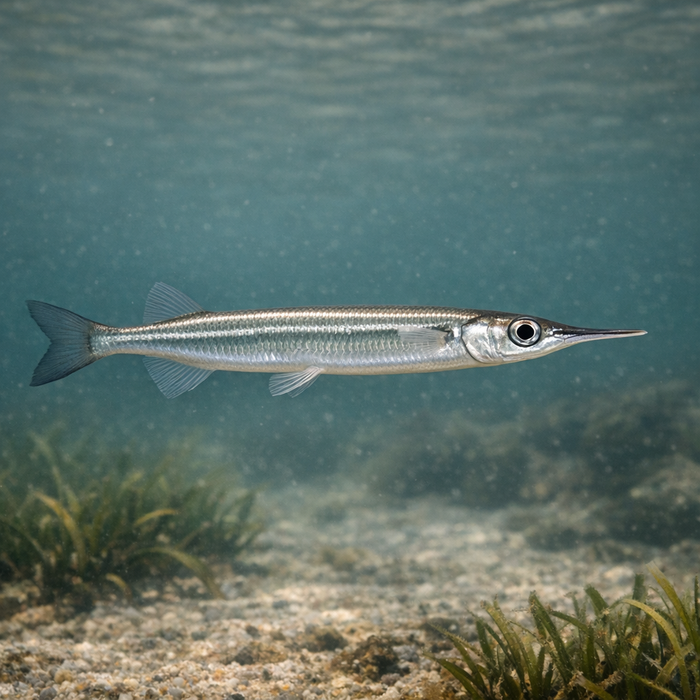
Mexican Needlefish (Tylosurus fodiator): A Bold, Memorable Hook LineIntroductionThe Mexican needlefish is a living silver javelin that hunts right on the skin of the sea. It's fast, shiny, and absolutely unbothered by your personal space when it decides to launch. Hook one and you'll get a splashy surface fight, some airborne drama, and a crash course in what razor beaks can do to monofilament. If you're here for real Mexican needlefish facts without the fluff, keep reading.What Makes the Mexican needlefish Unique?First, the hardware. This fish swings a long, narrow beak stuffed with needle teeth, engineered to slice small baitfish with minimal drag. Second, the showmanship. Mexican needlefish attack near the surface, often exploding on lures in a shower of spray, then cartwheeling across the top like a flipped kayak. Third, the weird stuff: green bones from biliverdin pigments and eggs with sticky tendrils that glue onto seagrass, rope, and whatever else is drifting.Habitat & Global RangeIf you're scouting Mexican needlefish habitat, think warm Pacific water from Baja California and the Gulf of California down through Central America to northern South America, with a presence around the Galapagos. They love edges: surflines, estuary mouths, jetties, and bay mouths where current stacks bait near the top. Depth is almost a punchline, because most action happens in the top few feet. At night, dock and pier lights turn into buffets, and the needlefish oblige by slashing right through the glow.Behavior & TemperamentThey're surface predators with big wandering energy. Expect loose packs cruising current seams and beach troughs, then sudden knife-fight bursts when bait flickers. Strikes are fast, and plenty of them miss because the beak is long and the bite is narrow. Hooked fish take off like bottle rockets, shaking and jumping, but they don't bulldog deep. They're visual hunters, which is why flash and speed trigger more love than perfectly subtle presentations.Ecological ImportanceForage fish like anchovies, sardines, and silversides push coastal food webs, and the Mexican needlefish is one of the sharpest tools keeping those schools in motion. They thin weak bait, keep shoals honest, and in turn, become prey for bigger coastal hitters. That energy ping-pongs up the line, driving everything from pelicans to nearshore gamefish. If you see sprays of bait dimpling at dusk, needlefish probably helped write that scene.Conservation & Environmental PressuresThe species isn't a headline conservation case, but it's not bulletproof either. Coastal development flattens nursery habitat, water quality can swing with runoff, and overharvest of small baitfish squeezes their food supply. Needlefish often gather around night lighting, which makes them easy pickings in some areas. As always, localized pressure and regulations vary wildly. Treat them like a renewable thrill: take what you'll use, release the rest cleanly, and keep an eye on local advisories.The FishyAF TakeMexican needlefish are chaos-in-a-can for light-tackle addicts. Want clinical, deep-water "thump" bites? Wrong fish. Want blistering surface takes from chrome torpedoes that sometimes overshoot the zip code? That's this crew. Bring small shiny offerings, cast along current edges or beach rips, and brace for aerials. They're not trophies by weight, but they are trophies for pure spectacle. You came for the splash. Stay for the mayhem.