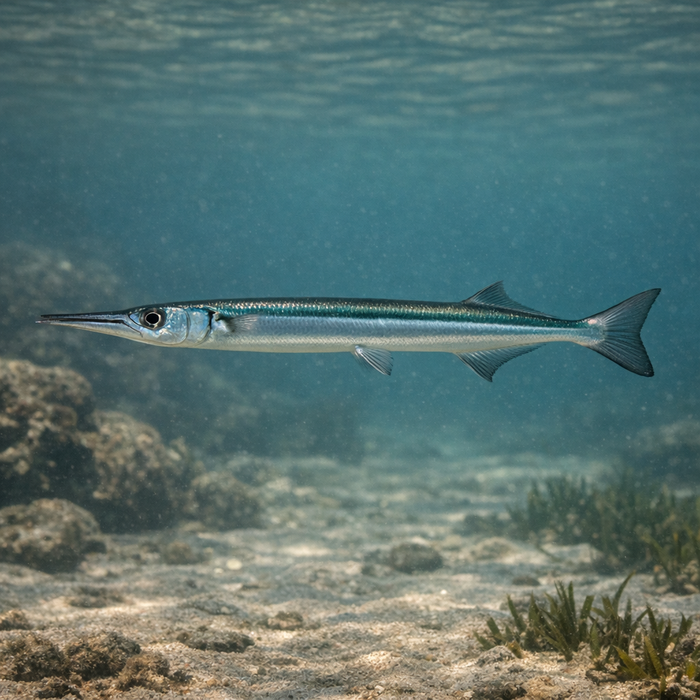
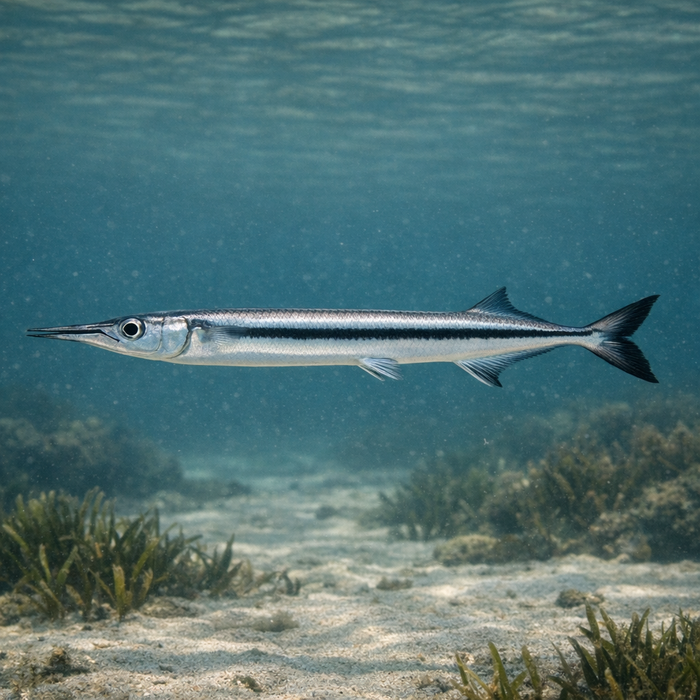
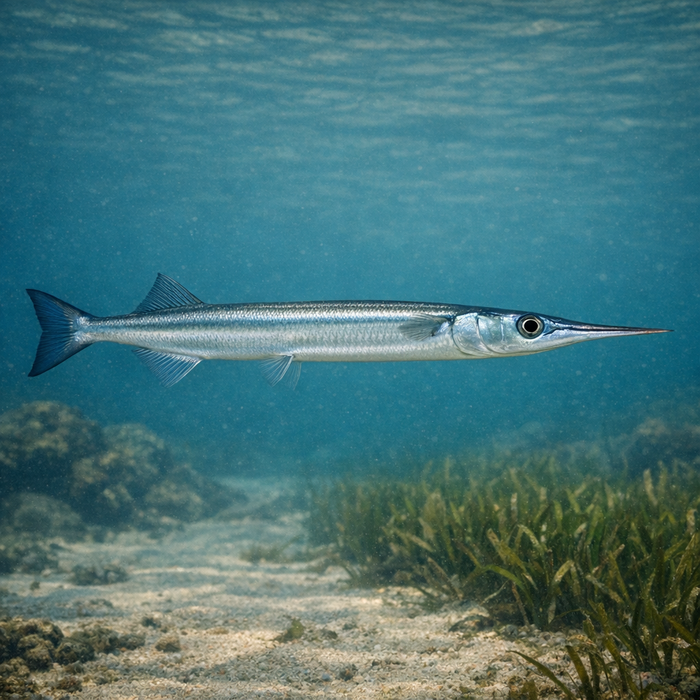
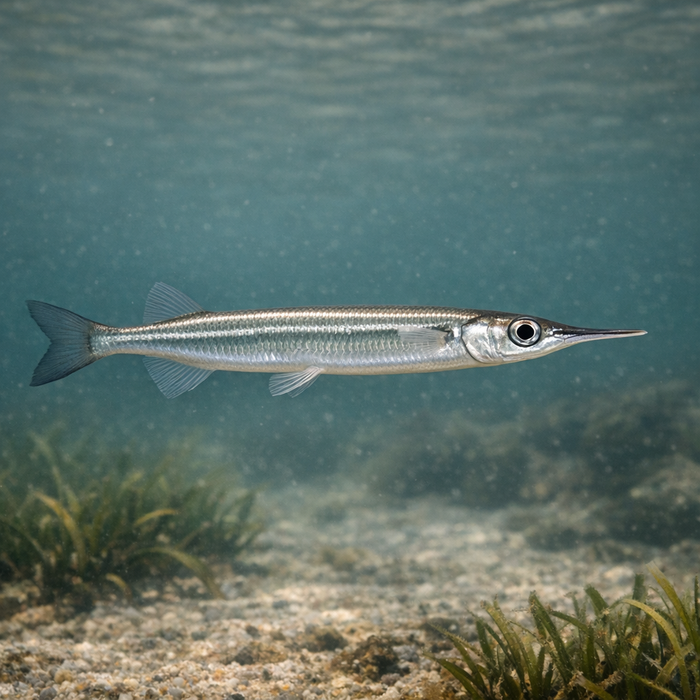
Pacific Agujon Needlefish (Tylosurus pacificus): All Beak, All Speed, All Surface DramaIntroductionIf you like your fish fast, flashy, and a little dangerous, the Pacific agujon needlefish is your spirit animal. It's basically a chrome missile with teeth, patrolling the skin of the ocean and punishing anything that panics. One second your lure is skating on glass; the next it's chaos, spray, and a slashing beak. Looking for Pacific agujon needlefish facts or just want to know how this beak-faced torpedo lives? Buckle up.What Makes the Pacific agujon needlefish Unique?Start with the business end: an elongated, bony beak packed with needles. That weapon isn't just for stabbing; it's for slashing sideways, maiming bait, then circling back to vacuum it up. Add a body built like a spear: long, rigid, and hydrodynamic, tuned to accelerate along the surface. And here's the party trick few expect: green bones. Thanks to biliverdin pigments, the skeleton shows up green on the cutting board. It's weird, memorable, and very needlefish. The Pacific agujon needlefish also leaps with zero regard for bystanders. Spooked fish go airborne like launched arrows, and night lights can trigger kamikaze flights. Respect the beak and give them room.Habitat & Global RangeThe Pacific agujon needlefish lives where air, light, and life blur together: right at the surface. Think shorelines, bays, passes, and the outside edges of reefs where bait stacks. Warm tropical to subtropical water is its comfort zone, and it roams freely along current lines, weed mats, and tide rips where food gathers. From Baja's inshore waters through Central America and down the Pacific side of South America, this fish plays the nearshore game hard. You'll hear locals use "agujon," and you'll often see them ghosting below birds, busting bait at gray light, or buzzing pier lights after dark. If you're profiling Pacific agujon needlefish habitat, picture sunlit skins of water, bait shadows, and moving tide.Behavior & TemperamentThis species is all about edge habitat and windows. Low light or night? Game on. Slack water and bright sun? Expect them to cruise, then suddenly detonate on nervous bait. They're visual hunters that track speed, flash, and confusion. They'll run in loose groups, explode into quick blitzes, and vanish as fast as they came. Hooked fish fight fast and dirty at the surface, riddled with jumps, head-shakes, and spit hooks. They're notorious for coming unbuttoned because that hard, narrow beak doesn't give hooks much to bite into. Fast retrieves, sudden changes of direction, and anything that looks wounded tend to trigger slashes.Ecological ImportanceThe Pacific agujon needlefish is a mid-level predator that recycles energy from dense baitfish schools back up the chain. It keeps small pelagics honest and contributes to the daily transfer of biomass along shorelines, rips, and reef edges. Birds, larger gamefish, and nearshore sharks all capitalize on the same bait events, and needlefish are both competitor and occasional snack. Their eggs sport sticky filaments that cling to seaweed and flotsam, spreading the next generation with the drifting life of the tropical Pacific.Conservation & Environmental PressuresNo major red flags define this species today, but what happens to baitfish and water quality happens to needlefish. Coastal development can sterilize nursery edges. Overharvest of forage species starves the food web. And chronic light pollution can flip nighttime behavior in ways we're only beginning to understand. They're not a high-profile commercial target, which helps, but localized netting and incidental bycatch do occur. As with many inshore species, consistent access to healthy estuaries and intact nearshore structure is the long game.The FishyAF TakeThe Pacific agujon needlefish is a surface junkie with attitude. It's not the heaviest hitter on the coast, but it's pure spectacle and a perfect test of clean casting and sharp hooks. When it's on, it writes its name in spray and silver. When it's off, it ghosts you and laughs with its whole beak. For anglers, the draw is obvious: sight-centric, fast-twitch fishing where one bad move costs the bite. For readers chasing Pacific agujon needlefish facts, remember this: fish the skin of the ocean, respect the beak, and embrace the mayhem when chrome missiles start flying.