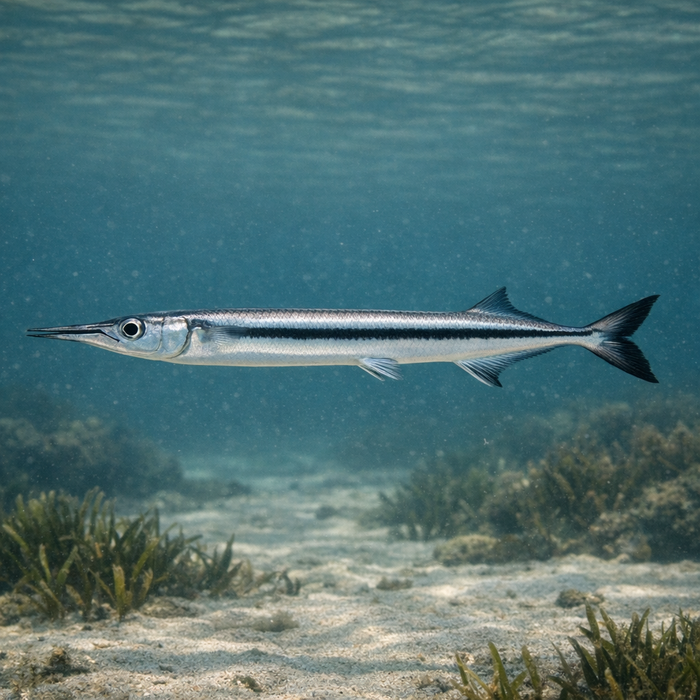
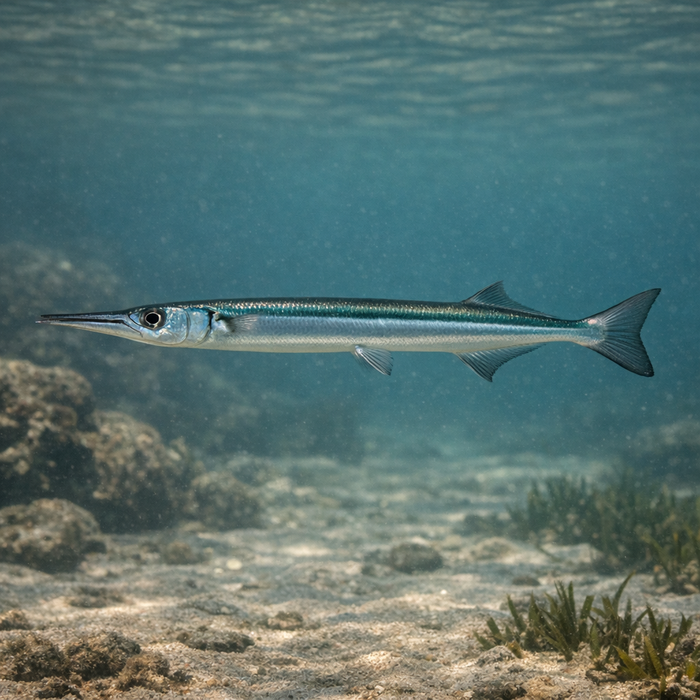
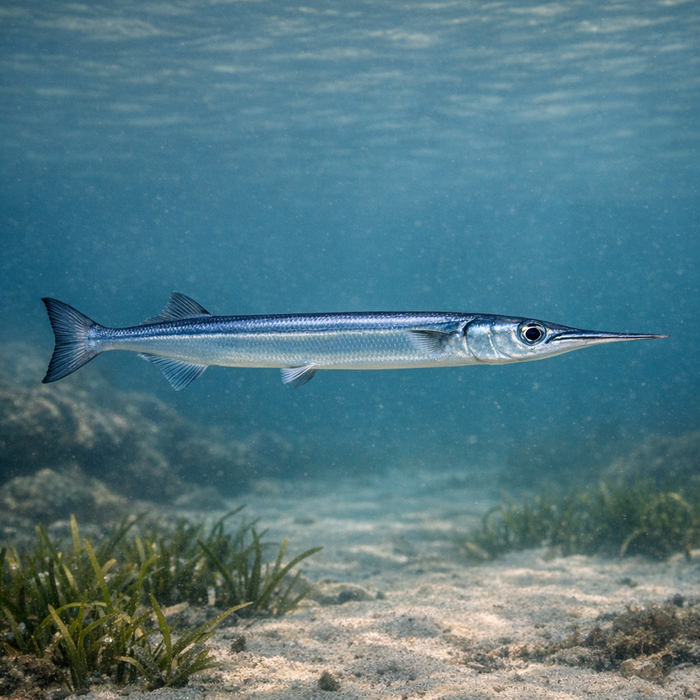
Agujon Needlefish (Tylosurus acus): A Bold, Memorable Hook LineIntroductionThe Agujon needlefish is that shiny missile slashing the top few inches of water, the one that sprays bait like confetti and jumps at exactly the wrong time. It's fast, sharp, and built to misbehave. If you fish warm coasts, you've seen its silver streak and maybe that green-boned fillet. This is a fish designed for the surface circus, and it rarely disappoints.What Makes the Agujon needlefish Unique?Two things put the Agujon needlefish in its own lane: the keels and the beak. Tylosurus acus has bony keels on the tail stalk that act like built-in stabilizers, letting it knife across wind-chopped skin of the sea without rolling. Then there's the rostrum: a long, slender jaw packed with fine, needly teeth meant for slashing, not chewing. It hits fast, often missing on the first pass, then wheels back to carve another swipe. That attack style frustrates anglers and thrills anyone who likes a challenge.Habitat & Global RangeIf you're after Agujon needlefish habitat, think warm, bright, and close to the surface. These fish haunt beaches, harbors, channels, and reef edges across the tropical and subtropical Atlantic, through the Caribbean, parts of the Gulf, the eastern Atlantic islands, and into the Mediterranean. They're classic coastal roamers that ride current lines, linger around bait-rich points, and absolutely love artificial light at night. Picture glassy marinas with microbait, a windy reef flat with flying baitfish, or a jetty rip shoving bait into a corner. That's their corridor.Behavior & TemperamentThe Agujon needlefish is a surface specialist. It tracks bait by sight and flashes into attack range in bright bursts. Hook one and it skitters high with head-shakes and tail beats, often clearing the surface like a thrown baton. They rarely dig deep; they race, slash, and leap. Despite the theatrics, they're not bullies. Big predators like tuna, dorado, and barracuda will happily make a snack of them, so they spook hard at shadows and sudden boat wakes. At night they become even bolder, stacking under dock lights and hunting by ambush as glass minnows cloud the surface.Ecological ImportanceNeedlefish are middle-lane predators that glue coastal food webs together. The Agujon needlefish trims down shoals of anchovies, silversides, and juvenile fishes, which in turn keeps plankton-grazing bait schools moving and responsive. Its eggs carry tendrils that cling to floating seaweed like Sargassum, making the species part-time gardener of the surface ecosystem. Juveniles hide amid the same weeds that cradle their eggs, trading shelter for easy meals. And yes, they feed bigger fish and seabirds, passing those high-octane calories up the chain.Conservation & Environmental PressuresGlobally, Tylosurus acus is considered stable, but that doesn't mean it's bulletproof. Coastal development chops up the quiet corners these fish hunt. Lights can both help and hurt, concentrating fish but also increasing predation and bycatch. Floating sargassum cycles, storm-driven weed losses, and pollution all hit the exact habitat stage their eggs depend on. Add in indiscriminate netting around harbors and you get local dips that anglers notice before the data does.The FishyAF TakeThe Agujon needlefish is pure coastal chaos with just enough attitude to keep you honest. It isn't the hardest-fighting fish in the ocean, but it's one of the most kinetic, and that counts. Want a crash course in timing and hook placement? Fish where the silver streaks are cutting V-wakes at dusk and try not to strike on the first swipe. You'll learn patience, leader choice, and why long-shank hooks still exist. If you collect quirky species and stories, this one's a lock. Green bones, boat-jumping drama, and that wicked beak? The Agujon needlefish delivers. File under: Agujon needlefish facts you actually want, and Agujon needlefish habitat spots you can hit after work.