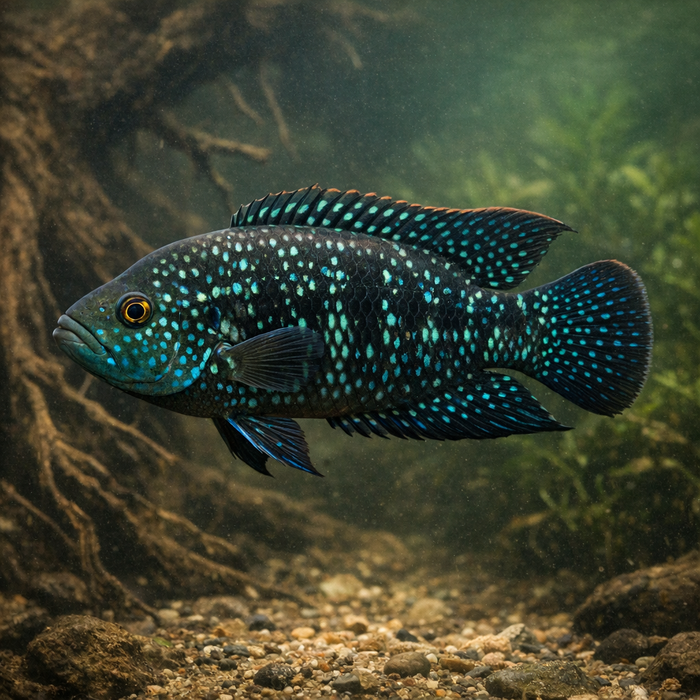
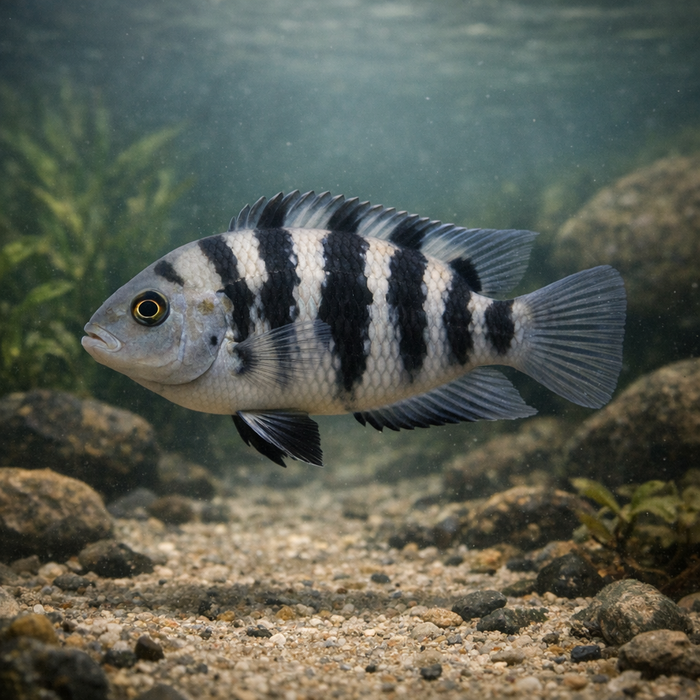
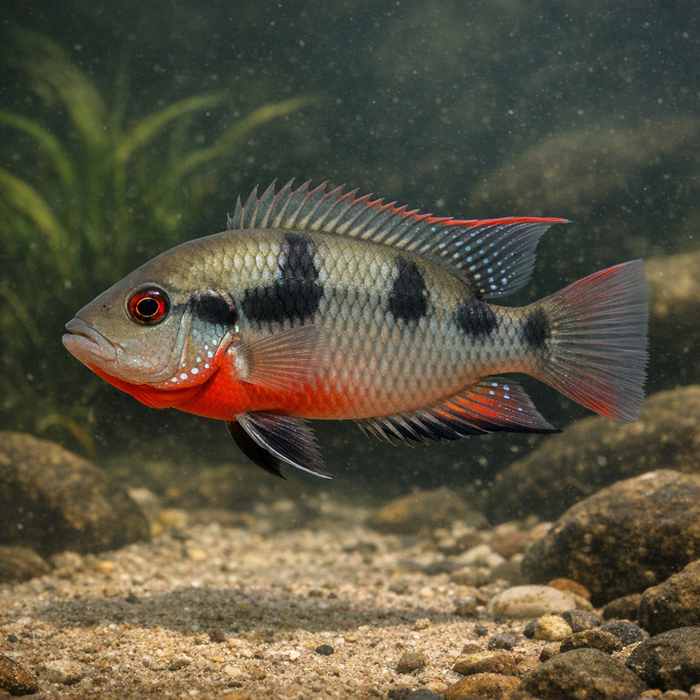
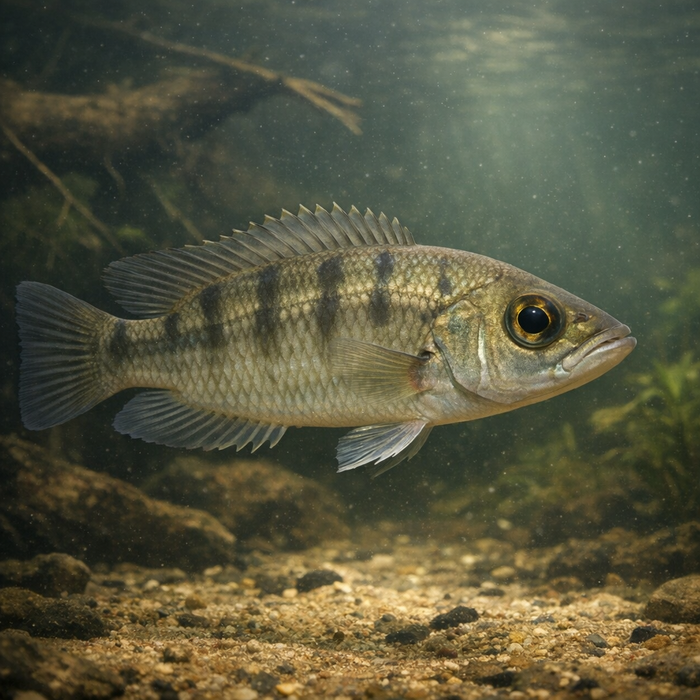
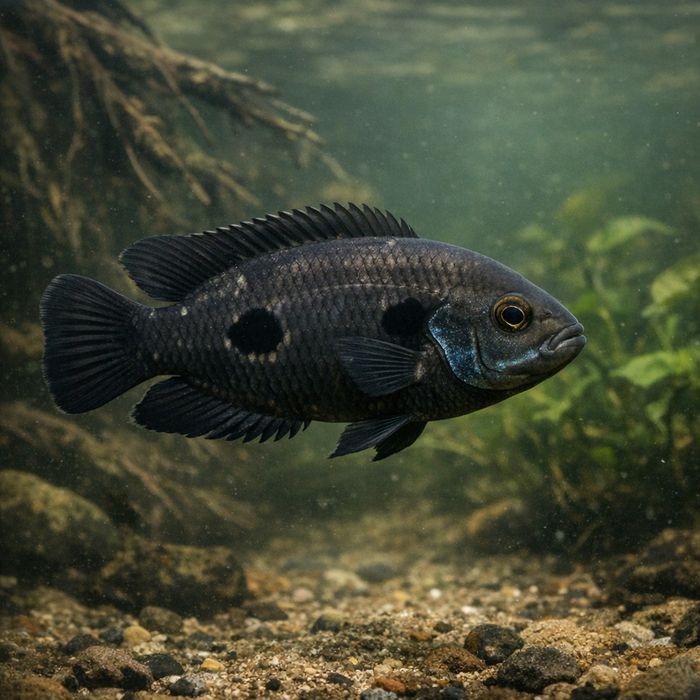
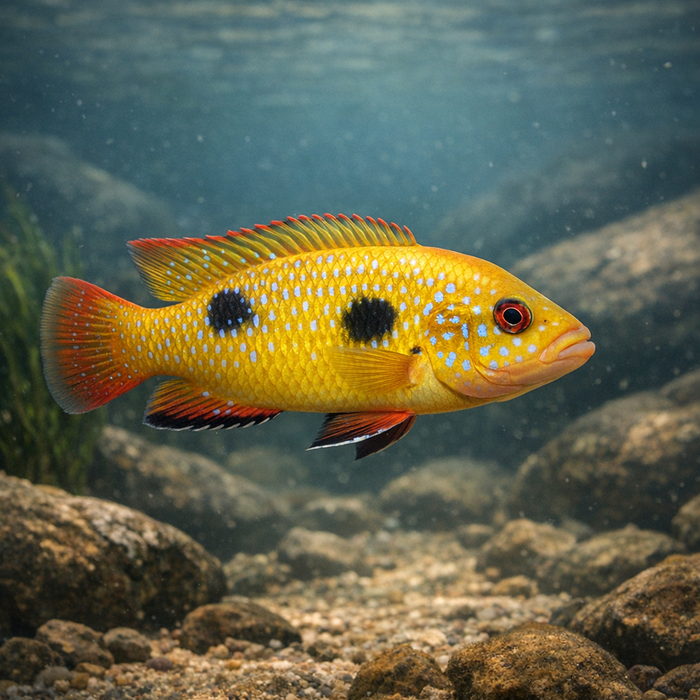
Midas Cichlid (Amphilophus citrinellus): The canal bruiser with a crown and an attitude.IntroductionIf you like punchy fish with no quit and plenty of personality, the Midas cichlid delivers. This chunky Central American native is famous for bold colors, brick-strong jaws, and a "who-you-looking-at" stare that dares you to fish closer. In its home lakes of Nicaragua and nearby regions, it's a scrappy omnivore that builds crater nests and patrols rock gardens like a bouncer. In South Florida canals, the Midas cichlid turned urban backwaters into playgrounds, becoming a surprisingly fun target on light tackle. If you want Midas cichlid facts and straight-up fishing intel, stick around.What Makes the Midas cichlid Unique?Two traits steal the show. First, the forehead. Breeding males grow a fleshy nuchal hump that looks like a headbutt in progress, making even mid-size fish appear heavyweight. Second, the engineering. Pairs don't just spawn; they excavate. The Midas cichlid digs pits, moves pebbles and shells, and stages eggs on carefully cleaned rock. Add in biting aggression and neon-gold morphs, and you've got a fish that refuses to be boring. For anglers, that means tight-quarters strikes, feisty runs, and nonstop attitude.Habitat & Global RangeThe classic Midas cichlid habitat is warm, clear, rocky water. Think Nicaragua's Lake Nicaragua and Lake Managua, plus nearby volcanic crater lakes where rock shelves, caves, and rubble dominate the scene. Hard edges are home base: riprap, boulders, fallen masonry, or concrete culverts. Outside its native range, it thrives in South Florida canals with steady warmth, low current, and miles of manmade cover. The fish is adaptable but not aimless. It orbits structure, tucks along banks, and seldom drifts far from something solid.Behavior & TemperamentThis species is all about territory. The Midas cichlid forms tight pairs, cleans rock surfaces, and guards nests with reckless enthusiasm. During spawning, they go from bright to brazen: darker bars deepen, gold flares brighter, and anything with fins gets chased. They're not marathon fighters, but the first burst is stout for their size. Expect quick dives back to the rocks, short surges, and bulldog headshakes that can rattle small hooks. They'll swipe at intruders, nip bait clean, or smash a small lure out of spite. Sight-fishing around cover is common because these fish often announce themselves.Ecological ImportanceIn native lakes, the Midas cichlid helps shape benthic communities. Its powerful pharyngeal jaws crush snails and process hard foods that many fish can't touch, influencing invertebrate populations and stirring substrate as it excavates nests. Those nest-building behaviors create microhabitats for other organisms, even while the cichlids themselves defend the neighborhood. Their famous crater-lake lineage is also a case study in rapid diversification, making Amphilophus species poster children for evolution in action.Conservation & Environmental PressuresGlobally, the Midas cichlid is listed as Least Concern, and native populations in large lakes remain fairly secure. The bigger storyline is human-caused mixing. Aquarium releases seeded nonnative populations, especially in South Florida. While they're not the most destructive invader, they compete for space and harass native fish during breeding. Habitat degradation, runoff, and sedimentation threaten water clarity in parts of their native range, which could pressure spawning success. Local regulations on transport and release aim to reduce spread, and anglers can help by never dumping unwanted aquarium fish.The FishyAF TakeThe Midas cichlid is the blue-collar peacock bass you didn't know you needed. It rarely wins on size alone, but wins on sheer chutzpah. Toss a small jig or a worm along riprap and it's game on. You want practical Midas cichlid facts? Keep it simple: light line, tiny hooks, and fish the hard stuff you can see. You want Midas cichlid habitat? Rock and concrete, front and center. These fish are great confidence-builders for beginners and a guilty pleasure for experts. When a golden brute with a forehead like a battering ram charges your lure, you'll understand why we keep a spare ultralight in the trunk.