Narrow Barred Spanish Mackerel (Scomberomorus commerson): Reef-Edge Speed With Teeth That Cancel Your Leader
The strike is sudden. The run is immediate. Then somebody checks the leader and discovers why optimism is not a rigging material. The Narrow Barred Spanish Mackerel is a streamlined saltwater predator with sharp teeth, serious acceleration, and a habit of turning ordinary coastal fishing into a very loud conversation with your reel. Its sporting reputation is thoroughly earned.
This member of the tuna and mackerel family belongs to the warm-water Indo-West Pacific, where commercial fleets and recreational anglers both pursue it. Australians commonly shorten its name to Spanish mackerel or Spaniard. For anglers, the attraction is straightforward: a substantial predator that can be encountered around coastal reefs without requiring a bluewater expedition.
What Makes the Narrow Barred Spanish Mackerel Unique?
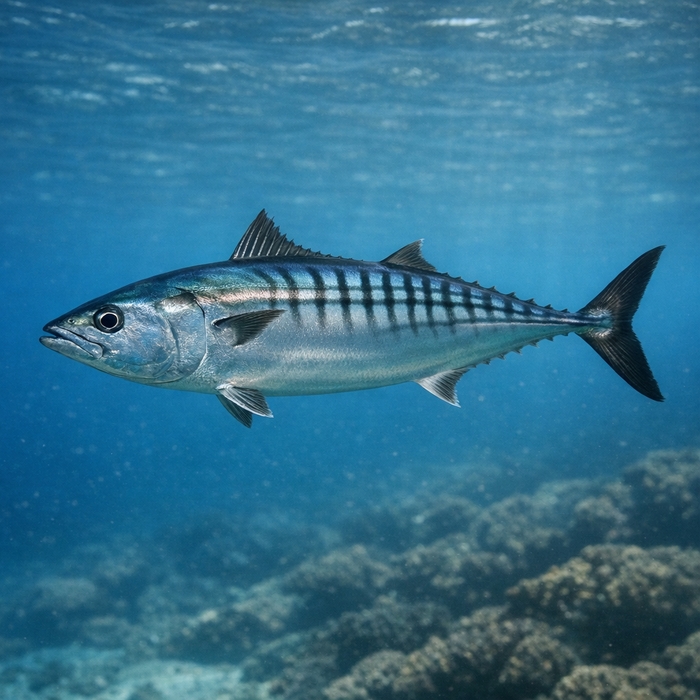
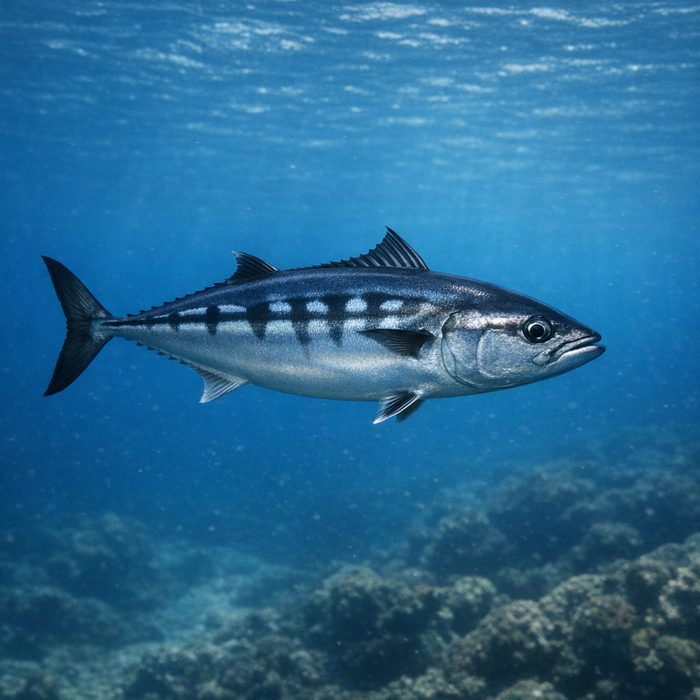
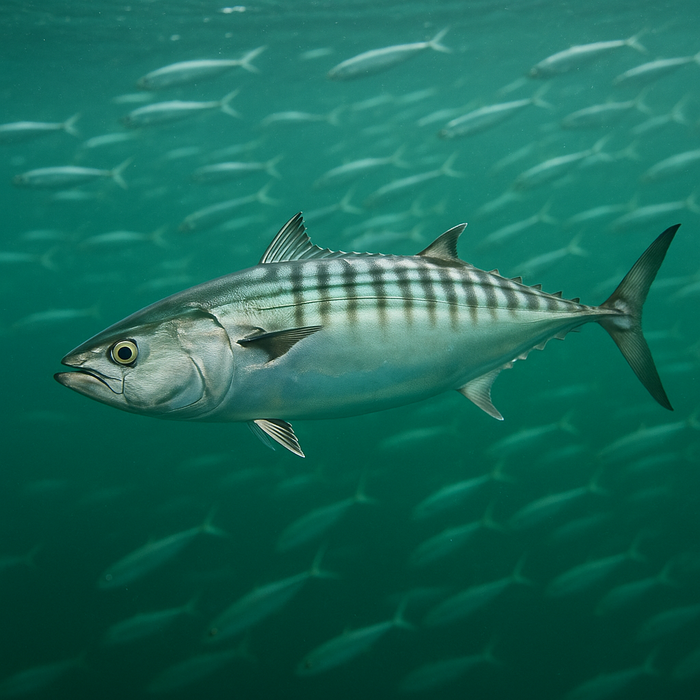
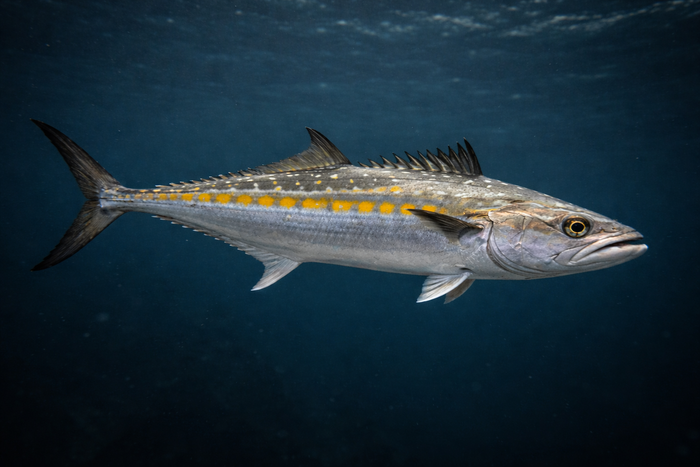
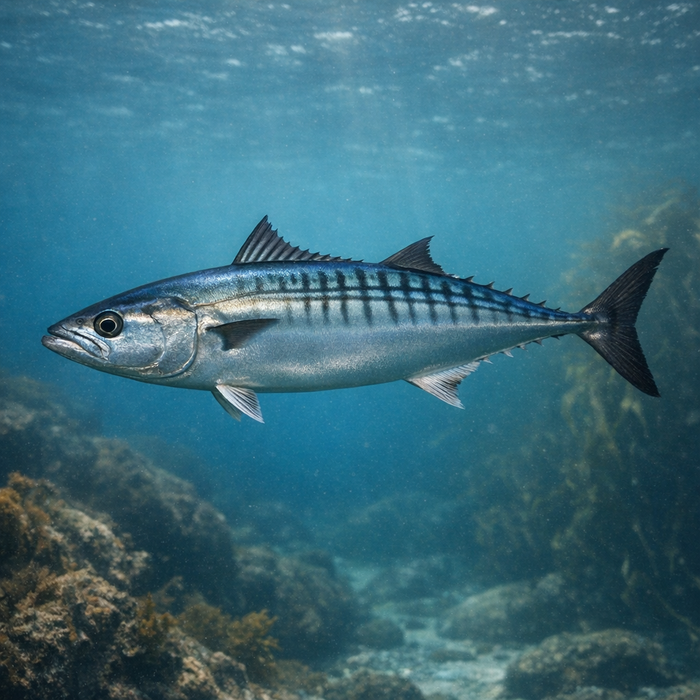
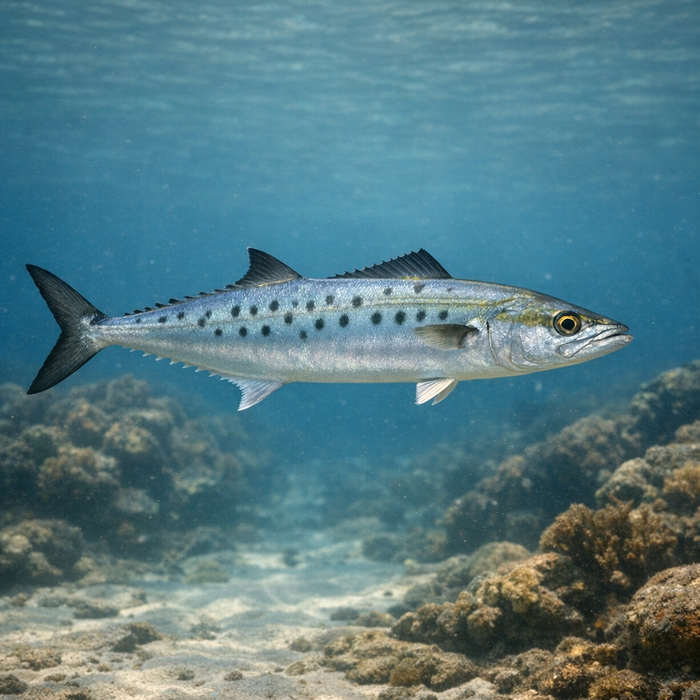
Start with the markings. Narrow, wavy vertical bars stripe the silver sides beneath a blue-grey back, giving adults a distinctive identification feature. The pattern changes as the fish grows: juveniles may carry spots, while larger specimens develop more bars. A big fish can have around 65, considerably more than a small youngster.
Then look at the lateral line, which drops abruptly behind the second dorsal fin rather than following a gentle curve. Combined with the elongated body and powerful tail, that feature helps distinguish the Narrow Barred Spanish Mackerel from similar-looking relatives. Identification matters here; the ocean stocks several toothy silver fish, and their rules are not interchangeable.
Finally, there is the reproductive output. Research in the Taiwan Strait estimated individual spawning batches exceeding two million eggs. These fish spawn repeatedly during a season rather than unloading their entire reproductive investment in one event. Among Narrow Barred Spanish Mackerel facts, that combination of substantial body size and repeated egg production deserves more attention than another exaggerated speed claim.
Habitat & Global Range
Narrow Barred Spanish Mackerel habitat includes coastal waters, offshore reef edges, shoals, bays, and headlands. Think swimming room beside structure rather than a fish parked inside a coral crevice. Reefs provide useful places to search, but the fish occupy the surrounding water column and can move between feeding areas. They are pelagic predators, not bottom residents.
The native range stretches from the Red Sea and southern Africa through the Indian Ocean into Southeast Asia and the western Pacific, including Australia. Within the listed FishyAF fishing areas, Ningaloo, Steep Point, the Mackerel Islands, Exmouth Gulf, and Groote Eylandt offer different versions of that coastal-and-reef setting. Their shared appeal is access to suitable predator country, not identical conditions.
Behavior & Temperament
The Narrow Barred Spanish Mackerel feeds primarily on fish, with squid and other prey also taken. It is an opportunistic hunter, and larger individuals tend to consume larger prey. Smaller fish commonly school, while larger fish can be more solitary. That gives anglers two very different possibilities: several bites from a group, or one substantial fish working its own patch.
Movement is not uniform across the species. Australia's east-coast population makes substantial movements along the coast, while northern and western populations include more localized adult components. A productive reef is therefore a starting point, not a permanent appointment. Understanding regional movement beats assuming every Spaniard follows the same migration calendar.
Ecological Importance
As a large fish-eating predator, the Narrow Barred Spanish Mackerel transfers energy from smaller pelagic prey into a higher level of the food web. Its feeding connects mobile baitfish populations with coastal and offshore environments. Larger prey become increasingly important as the predator grows, so a big adult does not necessarily feed like a smaller schooling fish.
Its early life is equally connected to the surrounding ocean. Eggs and larvae occur in open water, and spawning timing varies between regions. Research on Australia's east coast has linked recruitment variability with environmental conditions including floods, sea temperatures, and potential food availability. Producing enormous numbers of eggs does not guarantee enormous numbers of surviving adults.
Conservation & Environmental Pressures
The Narrow Barred Spanish Mackerel is globally classified as Near Threatened. That label should not be mistaken for a verdict that every local fishery is equally depleted. Fishing pressure, monitoring quality, and management differ across its extensive range. Strong market demand and concentrated harvest can nevertheless create substantial pressure, especially where reliable stock information is limited.
Spawning aggregations deserve particular care because predictable concentrations make fish easier to locate and harvest. Australian assessments distinguish several stocks rather than treating the entire coastline as one interchangeable population. For anglers, the practical response is simple: follow local restrictions, respect protected areas, and recognize that a busy bite does not establish the health of the wider stock.
The FishyAF Take
This is a fish worth preparing for, not merely hoping for. Our take: chase the Narrow Barred Spanish Mackerel for the strike and the fight, but leave the sloppy rigging at home. A well-presented bait or lure is only half the arrangement; the other half is tackle you have actually checked.
And resist the urge to turn every good session into a freezer inventory. The memorable part is the sudden connection, the disappearing line, and the moment your plan gets audited. Enjoy that. Keep what you can responsibly use where harvest is legal and safe. A Spaniard deserves better than becoming proof that you brought a bigger cooler.