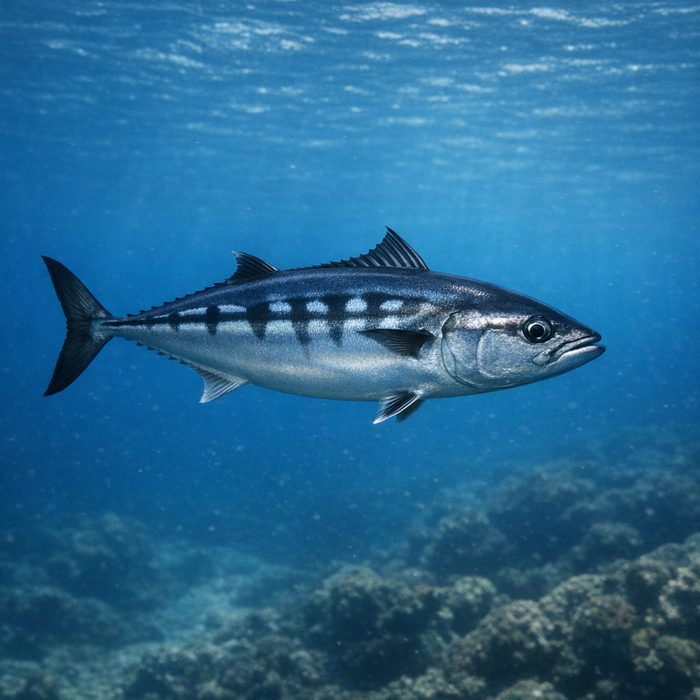
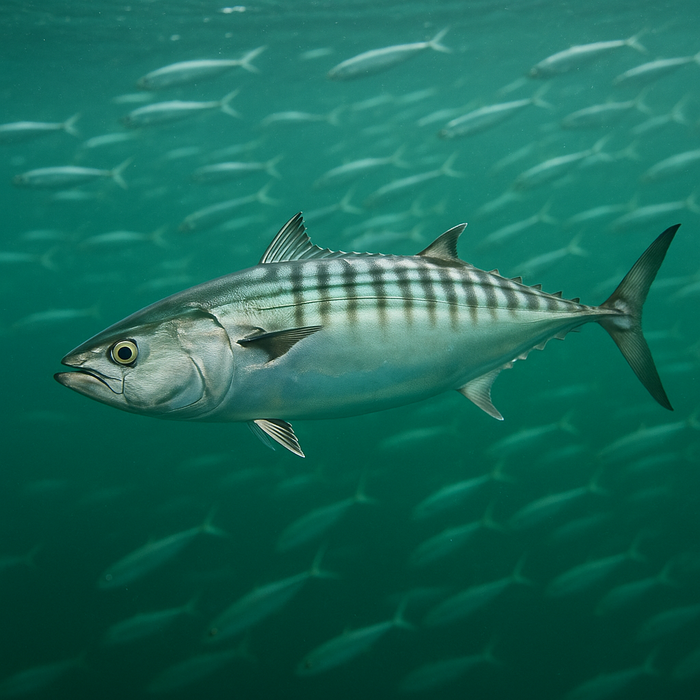
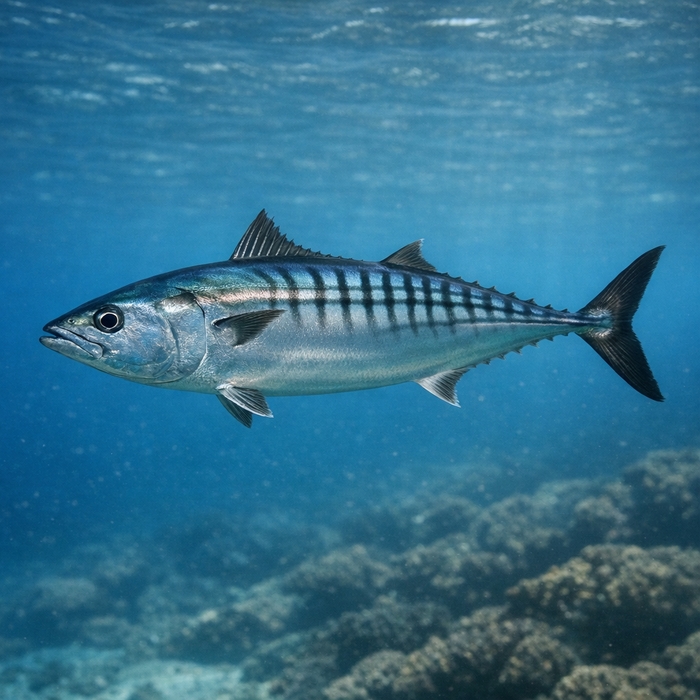
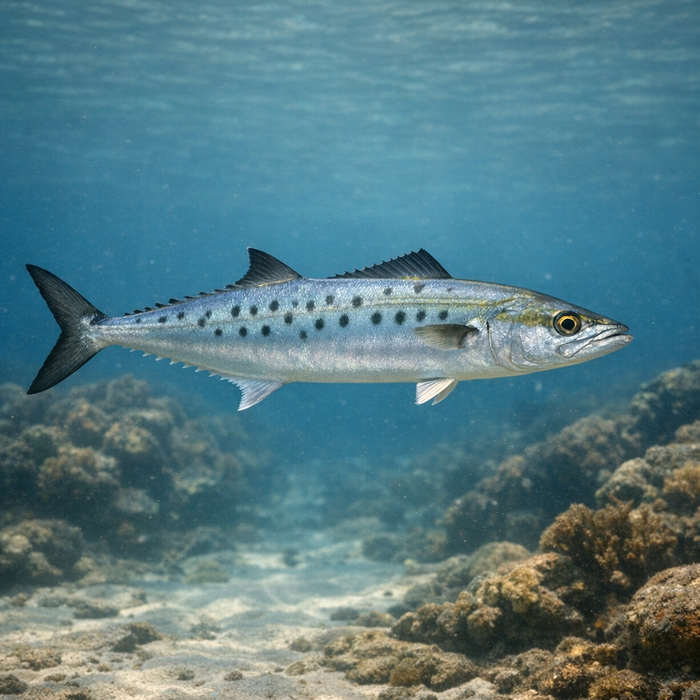
Pacific Bonito (Sarda lineolata): Fast, striped, and wired for chaos when the bait stacksIntroductionThe Pacific bonito is the coastal speedster that turns quiet water into a blender when it's on bait. Think mini-tuna build, mackerel attitude, and a mean right foot on the gas. When schools roll down the California and Baja coast, everything gets louder: birds ignite, foam pops at the surface, and your reel starts singing. Here are the essential Pacific bonito facts without the fluff.What Makes the Pacific bonito Unique?First, the look: a torpedo body etched with a crowd of slanted racing stripes across the back. Those oblique bars instantly separate Pacific bonito from other scombrids. Second, the engine room: lots of red muscle for high-speed cruising and no swim bladder to fuss with. They don't hover; they move. Third, the handling: finlets and a collapsible dorsal fin reduce drag, letting them pivot from cruising to ballistic in one heartbeat. For anglers, that means a fish that smashes fast baits, tracks down fleeing metals, and tests knots when they bolt under the boat.Habitat & Global RangeThe Pacific bonito is a Northeast Pacific player with range centered along the West Coast of North America into Baja California and beyond. They ride current edges, kelp lines, headlands, and bait-rich rips anywhere the water runs clean and lively. Think surface to midwater, over basins and banks rather than glued to hard structure. Warm-water events like El Niño can push schools far north, lighting up piers and kelp edges that rarely see them. If you're stalking Pacific bonito habitat, scan for birds, jumpy anchovies, and nervous water.Behavior & TemperamentBonito are roving pack hunters. When they're keyed on small anchovies, the feed window is savage and short; miss it and it's crickets. They slash fast, spin on a dime, and will pin bait to the surface until it's a foamer. They're not line-shy in the classic sense, but they punish slow or lazy presentations. Get speed, angle, and size right, and you're in. Once hooked, Pacific bonito run hard, then corkscrew when they see the boat. Good drag and clean knots are the entry fee.Ecological ImportanceThis species plays the middleweight predator role beautifully. It translates forage like anchovies, sardines, and small squid into protein for bigger predators such as yellowtail, sharks, and marine mammals. Spawning in warm months with pelagic eggs and larvae, Pacific bonito throw a lot of juveniles into the food web. Their boom-and-bust coastal appearances are a reliable signal that bait is healthy and currents are firing.Conservation & Environmental PressuresBroadly, Pacific bonito are considered stable, but they ride the same rollercoaster of ocean conditions as their forage. Shifts in temperature, current strength, and bait abundance change where and when they show. Localized pressure spikes can happen when summer bites get hot near big ports. Responsible harvest, quick icing to maintain quality, and attention to evolving regional rules keep this fishery sharp.The FishyAF TakePacific bonito are the perfect chaos gateway fish: fast, visible, and honest. They reward hustle and punish hesitation. When the birds spin and the water foams, stop debating and start casting. Keep it moving, keep it tight, and enjoy the kind of reel noise that makes strangers turn their heads. If you want Pelagic 101 with graduate-level speed, the Pacific bonito delivers. For anglers hunting Pacific bonito habitat or just collecting practical Pacific bonito facts, remember this: find the current, match the hatch, and never coast when the fish don't.