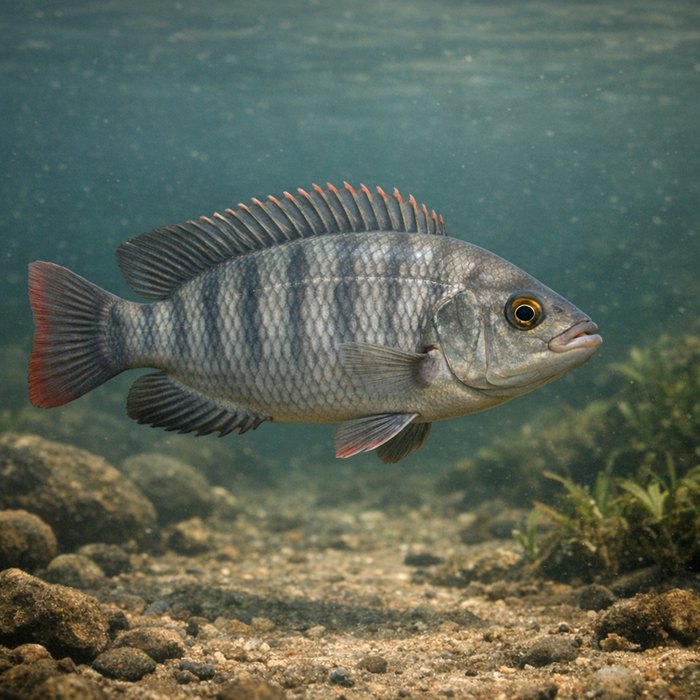
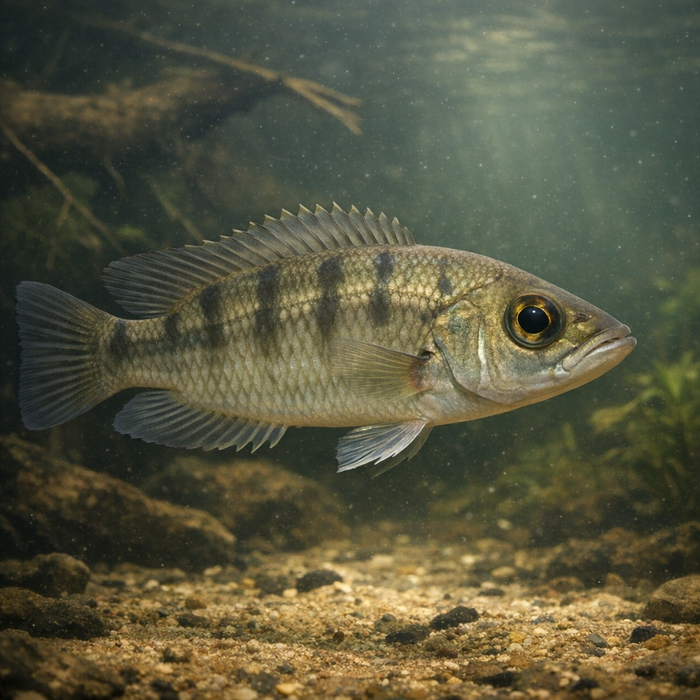
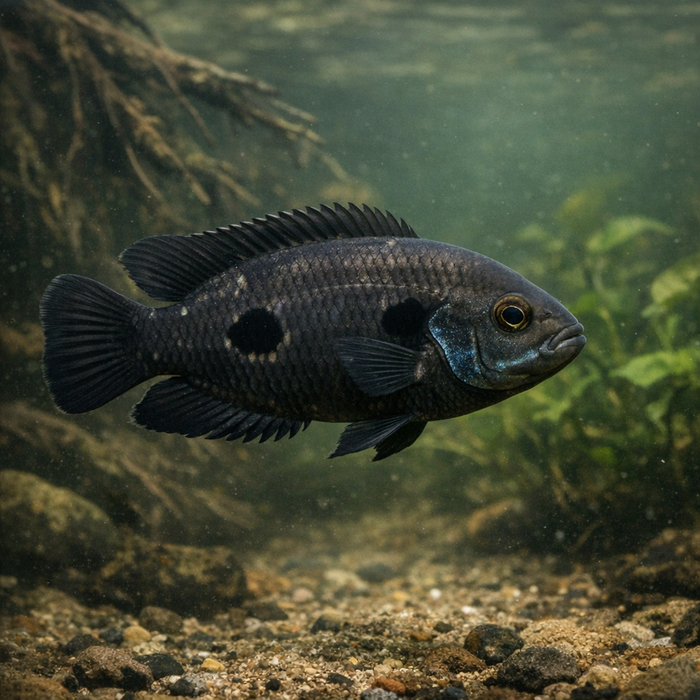
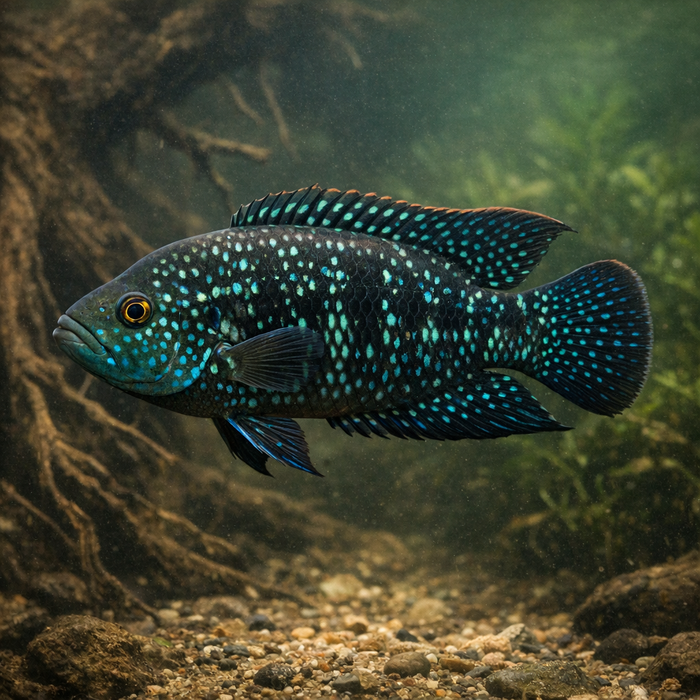
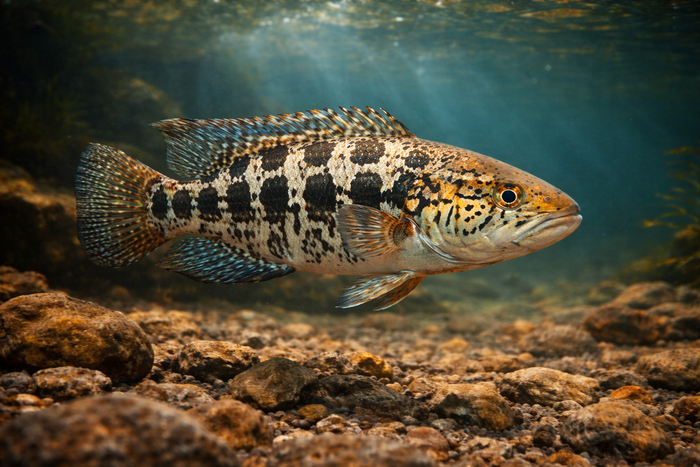
Nembwe (Serranochromis jallae): The Yellow-Bellied Bruiser Behind the Timber
A submerged branch, a narrow casting gap, and a lure that almost made it past unchallenged. That is the right sort of introduction to Nembwe fishing. This deep-bodied African cichlid turns structure into an ambush station, then makes anglers regret giving it a straight route back into cover. It belongs to the same family as familiar aquarium cichlids, but this is no decorative little passenger. Think substantial shoulders, a predatory mouth, and a freshwater trophy that rewards accurate casting more than frantic searching. The attraction is not simply catching something unusual. It is solving the water immediately in front of you.
What Makes the Nembwe Unique?
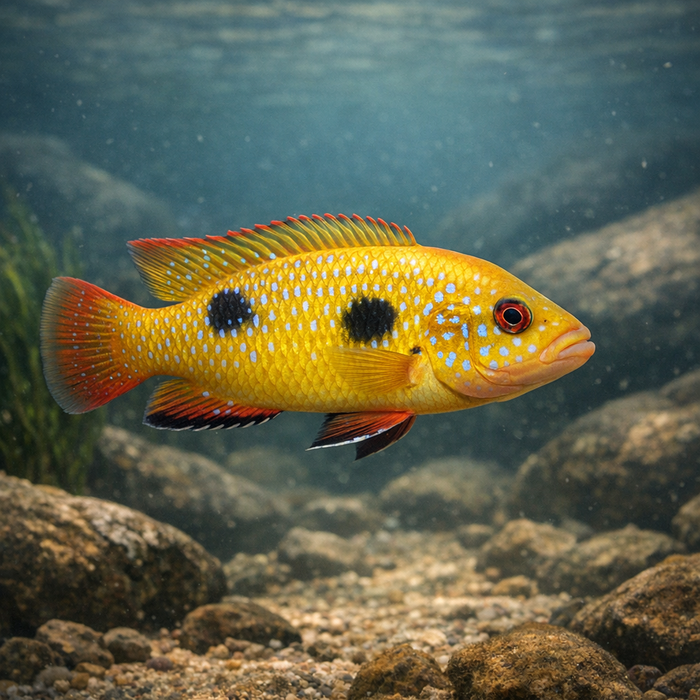
Start with the breeding colors. Yellow-green sides and an intensified yellow-orange throat and belly give mature fish their yellow-belly reputation. Fin edging adds a regional twist: breeding adults from the Okavango typically show orange margins, while upper Zambezi fish generally wear creamy yellow. Even the trim has a postcode.
Then there is the family arrangement. This predator is a mouthbrooder, incubating eggs inside the mouth rather than simply leaving them exposed on the bottom. Its spawning site is nevertheless a shallow depression, showing that nest preparation and mouth incubation are parts of the same reproductive sequence. Among useful Nembwe facts, that combination of muscular predator and protective brooder deserves more attention than another comparison with bass.
Habitat & Global Range
Nembwe habitat centers on freshwater systems in south-central Africa, including the upper Zambezi, Okavango, Kafue, Kasai, and Zambian Congo drainages. Introductions have also established the species in waters outside its native distribution, including Lake Kariba.
For anglers, the important distinction is between available water and useful water. Deep river channels, permanent lagoons, submerged timber, reed beds, and eroded banks provide the sort of broken terrain worth investigating. Juveniles make greater use of floodplain habitats and lagoons; larger fish are more strongly associated with the main river. A broad stretch of apparently empty channel can therefore conceal several very different fishing opportunities. Look for the interruption: wood, vegetation, a bank edge, or somewhere the current loses its grip.
Behavior & Temperament
This is an ambush predator, not a fish that needs to sprint continuously across open water. Holding near cover allows it to intercept passing prey, which explains why a carefully placed lure can matter more than a spectacularly long cast. Hooked fish are known for forceful, downward fights and attempts to regain structure. Leave the landing plan until after the strike and you have already donated an advantage.
Nembwe are not necessarily permanent residents of a single snag, either. Radio-tracked adults used relatively restricted home ranges but shifted into adjacent flooded areas as water rose. The lesson is refreshingly practical: yesterday's good-looking cover may remain physically present while the fish's useful neighborhood expands around it. Local water levels deserve more attention than rigid assumptions about where a predator ought to sit.
Ecological Importance
Fish dominate the adult diet, with squeaker catfishes particularly notable in upper Zambezi research. That is a more interesting ecological identity than the vague label of aggressive bream. Different predatory cichlids sharing these waters do not necessarily eat the same prey in the same proportions; research found limited dietary overlap among the species examined.
Protecting this fish consequently means protecting more than the obvious trophy-sized individuals. Its prey, juvenile habitats, river margins, and connections with seasonally flooded water all belong in the picture. A productive river is a working network, not just a collection of attractive casting targets. Treat the snag as one piece of that network rather than the entire ecosystem.
Conservation & Environmental Pressures
Nembwe is listed as Least Concern, but that category should not be mistaken for a guarantee that every local fishery is healthy. Fishing pressure and management challenges affect the wider transboundary river fisheries where anglers pursue it. Local depletion can matter enormously to a community or fishing operation without changing a species' global category.
Habitat protection and sensible harvest therefore remain relevant even where the species is widespread. Respect local rules, avoid moving fish between systems, and do not assume an introduced predator is harmless simply because it is desirable on a rod. Responsible trophy fishing should leave both the fishery and its surrounding community with something worth keeping.
The FishyAF Take
Nembwe deserves to be the reason for the trip, not the consolation prize when another species refuses to cooperate. It combines visual punch with the satisfying mechanics of close-cover fishing: choose the angle, put the lure where it belongs, and be ready to respond.
The bass comparison can help explain the approach, but it should stop there. This is its own fish, in its own flood-driven world, with enough character to carry the whole day. Bring dependable tackle and a little casting discipline. The glamour shot comes later. First, you have to get it out of the furniture.