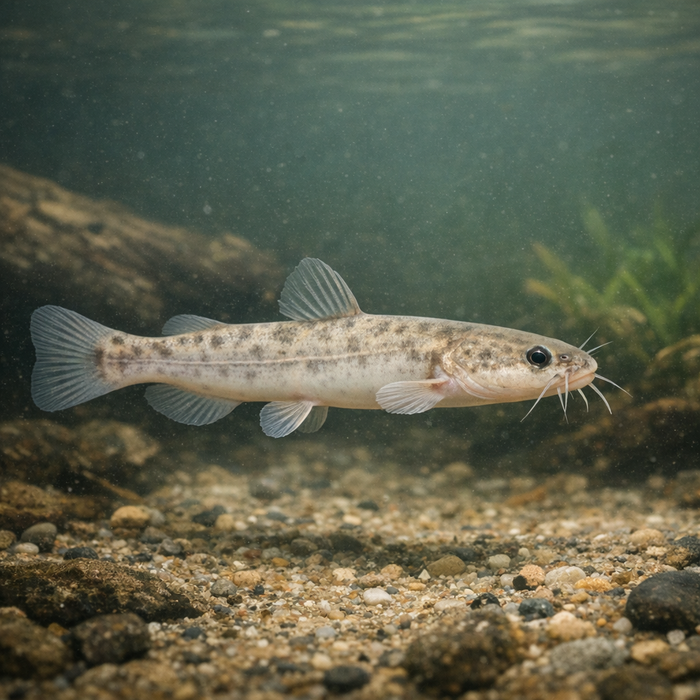
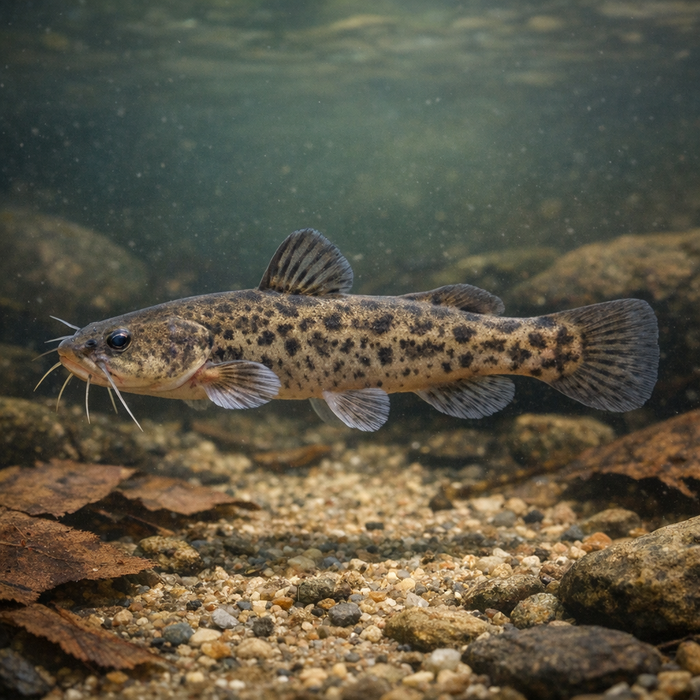
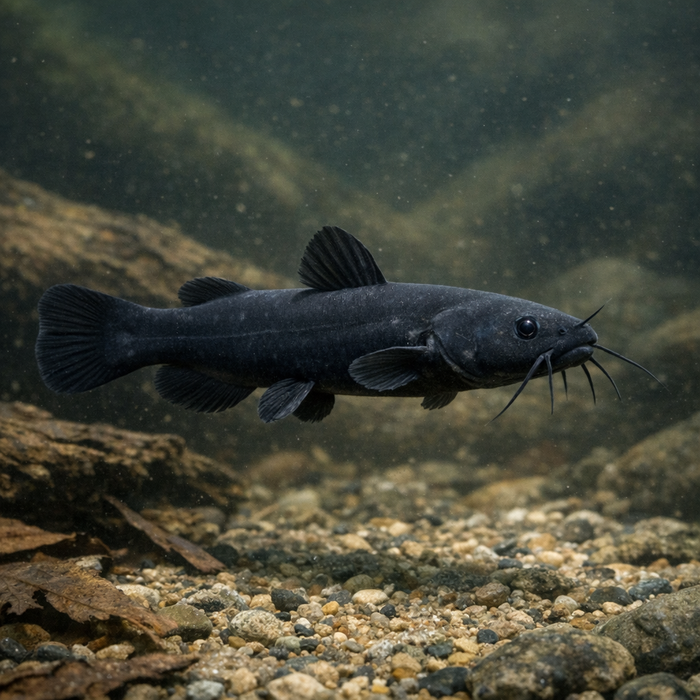
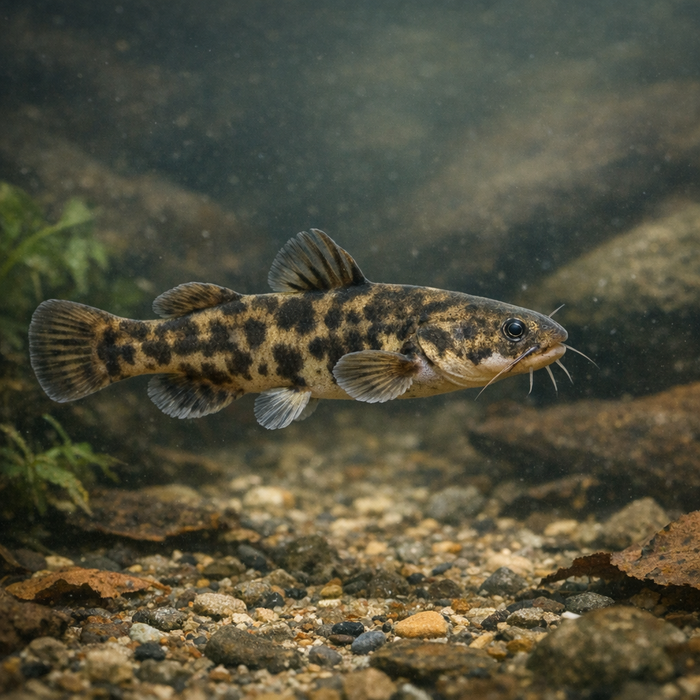
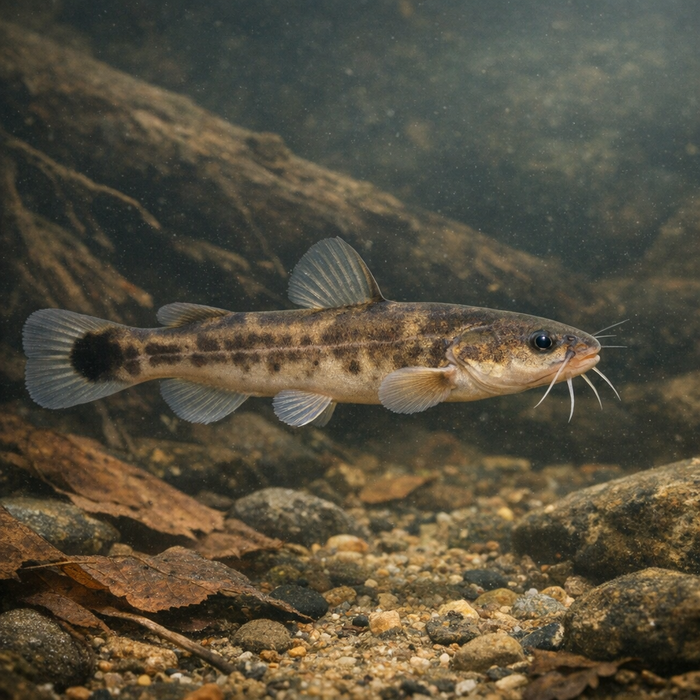
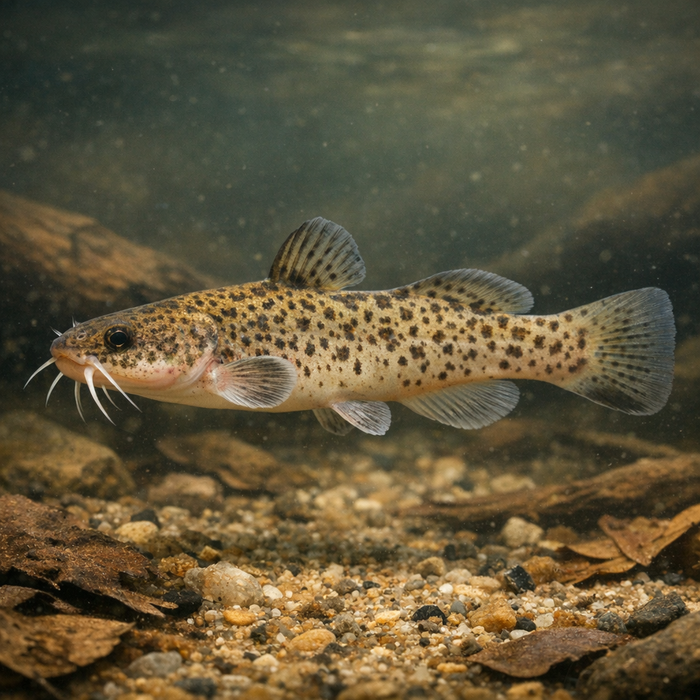
Northern Madtom (Noturus stigmosus): The Night-Shift Catfish With Sting And AttitudeIntroductionIf catfish had a secret agent, it would be the Northern madtom. This tiny, nocturnal bruiser slips through rocky riffles after dark, cloaked in camouflage and packing venom-tipped attitude in those serrated pectoral spines. You won't troll for it, you won't sight-fish it at noon, and you definitely won't forget the first time one buzzes your fingertips. For micro-species hunters and curious river rats, the Northern madtom is a rare, rewarding find.What Makes the Northern madtom Unique?Start with the hardware. The Northern madtom sports stiff, serrated pectoral spines that can deliver a mild venomous sting. Not dramatic, just a prickly reminder to handle with respect. Then there's the silhouette: a fused adipose fin flowing into the tail, true madtom style. Finally, its behavioral package is dialed for night work. Using ultra-sensitive barbels, it feels and tastes its way across cobble and gravel, sniping insect larvae and small crustaceans where current breaks and seams serve dinner. Among Northern madtom facts, those spines and night tactics headline the show.Habitat & Global RangeWhen anglers talk Northern madtom habitat, think moving water with backbone. Moderate to swift current, clean gravel or cobble, and rocky ledges are home base. You'll meet them in Great Lakes connecting waters and in larger river systems with healthy oxygen and low silt. They hole up beneath flat rocks by day and creep out as evening fades, working 1 to 6 feet of water more often than not. In lakes, they still cling to current and structure: breakwalls, riprapped shorelines, and inflow zones that mimic river riffles. Silted, stagnant stretches are the enemy; they need clean substrate and flow to thrive.Behavior & TemperamentThe Northern madtom is not a roamer. It's a structure addict with short-range patrols, hugging the bottom and using cover like a pro. Dusk is the switch. As light drops, activity spikes, especially on warm summer nights. Spawning runs through midsummer when water temps hit the sweet spot, and males take over parental duty with surprising gusto, guarding under-rock nests until fry scatter. Bite-wise, they're picky about presentation more than food item. Get a small bait pinned to bottom and you'll feel a tap-tap followed by stubborn bulldogging. For their size, they fight like a fist-sized anchor.Ecological ImportanceThese cats are the riffle cleanup crew. By hoovering insect larvae, they transfer energy up the chain and keep benthic communities humming. Their sensitivity to silt and pollution makes them a reliability test for river health. If Northern madtom numbers slip, odds are your substrate is clogging, your oxygen is dropping, or your chemistry went sideways. That makes them both fascinating for anglers and vital for managers trying to keep big rivers honest.Conservation & Environmental PressuresThe Northern madtom is locally scarce and legally protected in many places. Habitat loss does the heavy lifting here. Sedimentation from development, channelization that erases current breaks, and nutrient-fueled algal gunk all bulldoze the conditions this species needs. Add in night sampling difficulty and you get spotty data, which muddies management. Anglers can help by fishing light, handling gently, and keeping photos quick. If your state or province lists it as endangered or threatened, keep it in the water and treat it as a no-take marvel.The FishyAF TakeThe Northern madtom is proof that not all trophies are measured in pounds. It's a stealth mission: timing, finesse, and a little river voodoo. Score a legal, cleanly documented catch and you've joined a small club of anglers who notice the details under our feet. On a summer night, with current humming and stars out, a tap from a Northern madtom means your presentation is on point and your river still breathes. That's a flex we respect.